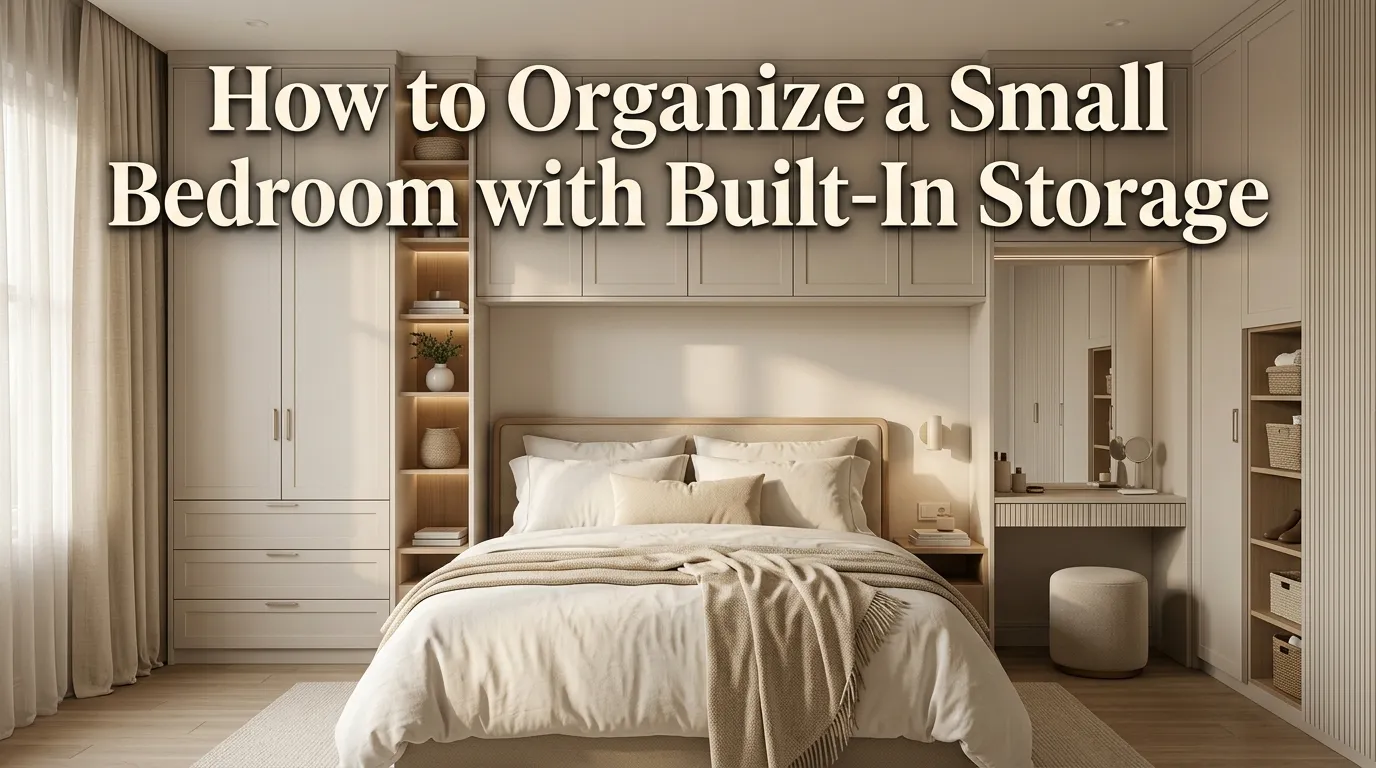
How to Organize a Small Bedroom with Built-In Storage
A small bedroom can feel surprisingly difficult to organize when every inch of space matters.
Clothes, shoes, bedding, books, accessories, and everyday essentials quickly compete for limited storage. When everything has to fit inside one small room, traditional dressers and bulky storage furniture can sometimes make the problem worse by consuming the floor space you need to move comfortably.
Built-in storage offers another approach.
Instead of treating storage as something that gets added to the room, you can make storage part of the architecture and use otherwise overlooked areas more efficiently. A built-in wardrobe, window seat, headboard storage, recessed shelving, or floor-to-ceiling cabinetry can provide valuable capacity while keeping the room visually streamlined.
The most successful small bedrooms aren’t necessarily the ones with the most storage. They’re the ones where storage is designed around how the room is actually used.
In my experience, the best strategy is to combine concealed storage for visually busy items with a few open shelves for things you genuinely want to display.
This creates a room that feels organized without becoming overly sterile.
Whether you’re working with a narrow bedroom, a compact guest room, or a small primary bedroom, these ideas can help you make better use of vertical space, awkward corners, and unused wall areas.
Table of Contents
1. Floor-To-Ceiling Wardrobe
Use vertical space for maximum storage.
2. Built-In Bed Storage
Turn the bed area into useful storage.
3. Window Seat Storage
Create seating with hidden compartments.
4. Recessed Wall Shelves
Use wall depth without taking floor space.
5. Built-In Nightstands
Combine bedside surfaces and storage.
6. Headboard Cabinets
Add storage directly behind the bed.
7. Under-Bed Drawers
Make the unused space beneath the bed functional.
8. Built-In Desk
Create a workspace without adding bulky furniture.
9. Corner Wardrobe
Turn awkward corners into useful storage.
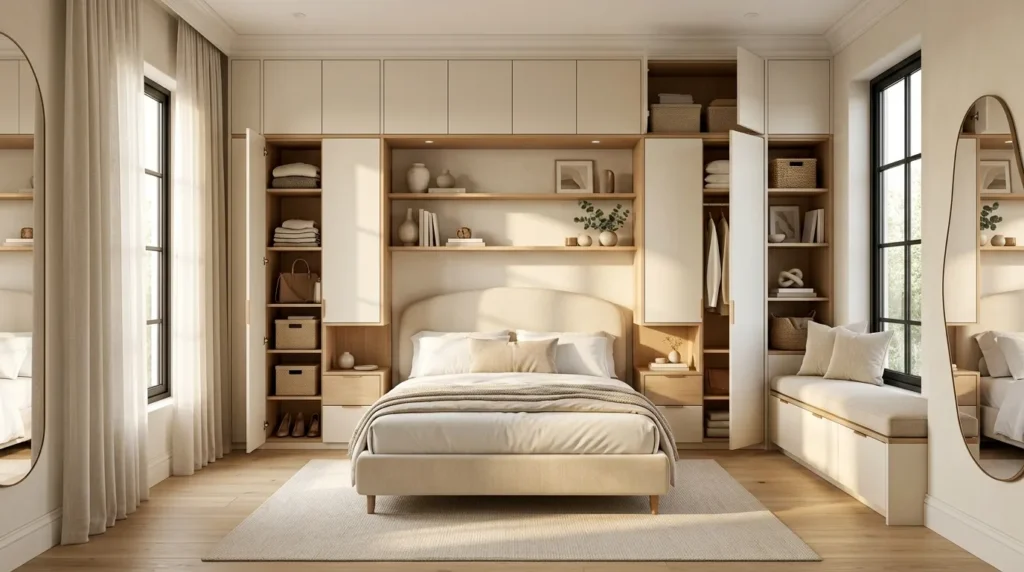
10. Full Wall Storage
Create a streamlined storage wall.
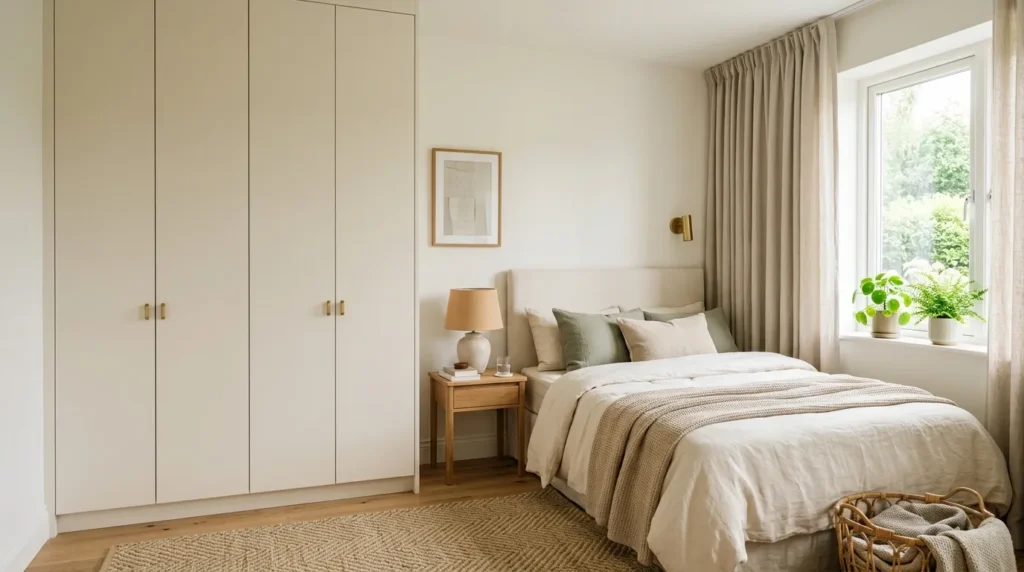
1. Floor-To-Ceiling Wardrobe
Quick Benefits
- Maximizes vertical space
- Creates substantial storage
- Reduces visual clutter
- Works well in narrow rooms
- Creates a custom appearance
Why It Works
Floor-to-ceiling cabinetry makes use of one of the most commonly wasted areas in a small bedroom: the upper portion of the wall.
Instead of stopping storage at the height of a traditional wardrobe, built-ins can extend upward and provide additional room for seasonal clothing, luggage, bedding, and less frequently used belongings.
The continuous vertical lines can also make the room feel taller.
How To Style It
Choose cabinetry that coordinates with the wall color for a streamlined appearance.
Use closed doors for clothing and visually busy belongings.
Place frequently used items between waist and eye level.
Reserve upper shelves for seasonal or occasional items.
If the room is especially small, avoid overly decorative hardware and keep the exterior visually simple.
2. Built-In Bed Storage
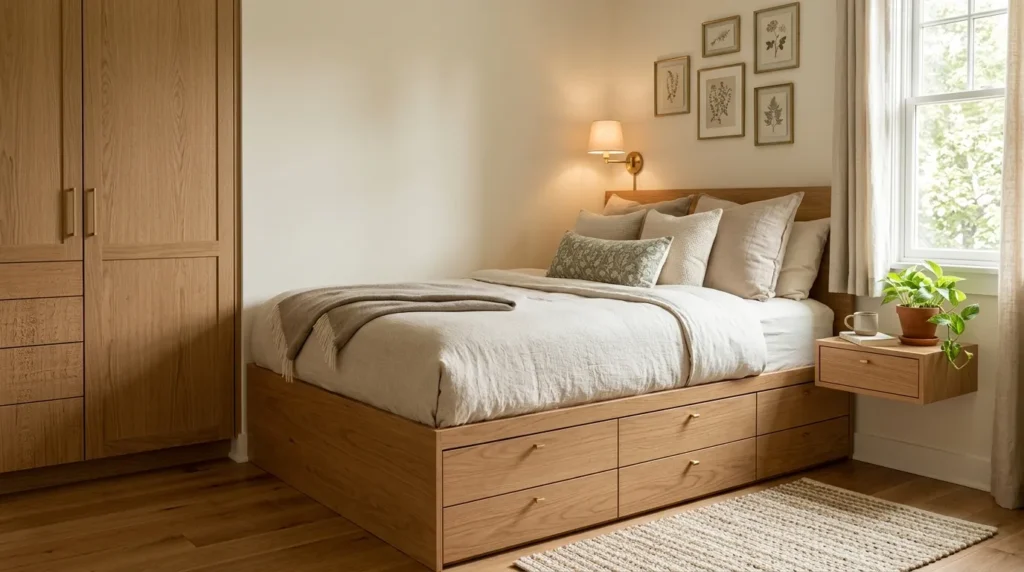
Quick Benefits
- Uses the bed footprint
- Adds hidden storage
- Reduces furniture needs
- Keeps essentials nearby
- Works well in compact bedrooms
Why It Works
The area surrounding a bed is often underused.
A platform bed with integrated drawers or cabinets can provide substantial storage without requiring another large piece of furniture.
This approach is particularly useful when the bedroom doesn’t have enough floor space for a separate dresser.
How To Style It
Choose drawers that open easily without interfering with nearby furniture.
Store clothing, bedding, shoes, or seasonal items based on how accessible they need to be.
Keep the visible portions of the bed simple.
Pair built-in storage with soft bedding and warm textiles so the room still feels comfortable rather than overly functional.
3. Window Seat Storage
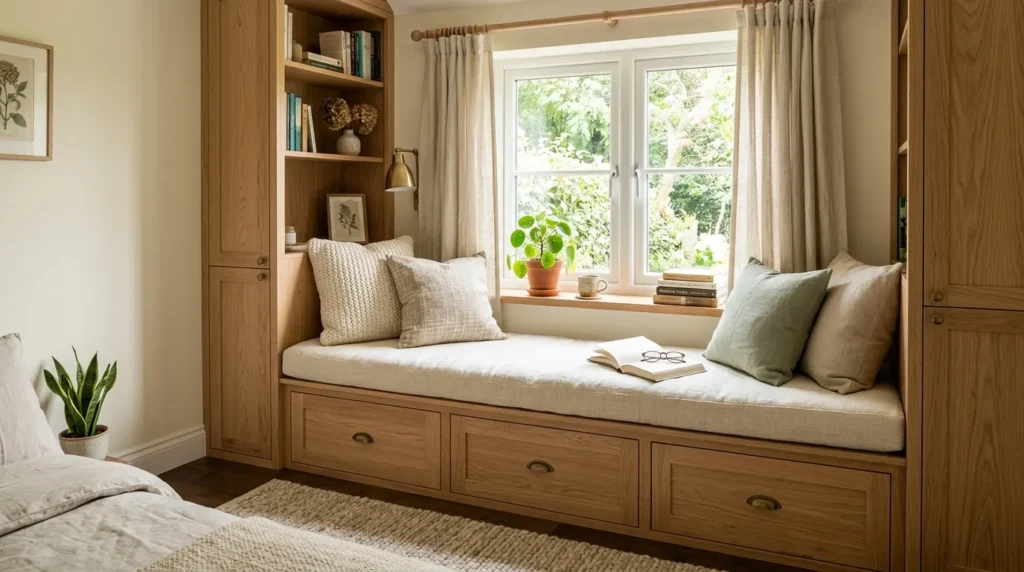
Quick Benefits
- Uses awkward wall space
- Adds seating
- Creates hidden storage
- Works well beneath windows
- Adds architectural character
Why It Works
The space beneath a window can be difficult to furnish with conventional storage.
A built-in window seat turns that limitation into an advantage.
The seat provides a comfortable reading or relaxing spot while the base can hide blankets, pillows, books, or seasonal belongings.
How To Style It
Use a properly supported built-in structure and design storage around the available dimensions.
Add a fitted cushion in a durable fabric.
Use one or two decorative pillows.
Keep the storage concealed if you want the room to feel visually calm.
A small wall-mounted reading light can make the area even more useful.
4. Recessed Wall Shelves
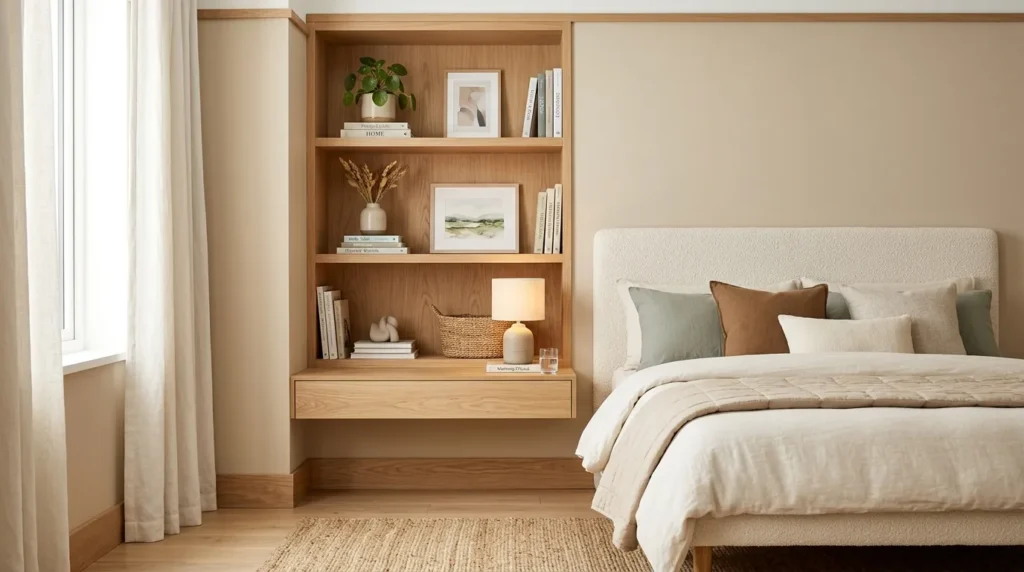
Quick Benefits
- Saves floor space
- Adds display storage
- Uses wall depth
- Works in narrow rooms
- Creates custom character
Why It Works
Recessed shelving can take advantage of wall cavities where construction conditions permit.
Because the shelves sit within the wall rather than projecting significantly into the room, they can provide useful storage without making a narrow bedroom feel tighter.
How To Style It
Use recessed shelves for books, artwork, small plants, and carefully selected accessories.
Avoid filling every shelf.
Combine stacked books with one decorative object or small plant.
For bedrooms with limited visual space, keep the shelf palette coordinated with the rest of the room.
5. Built-In Nightstands
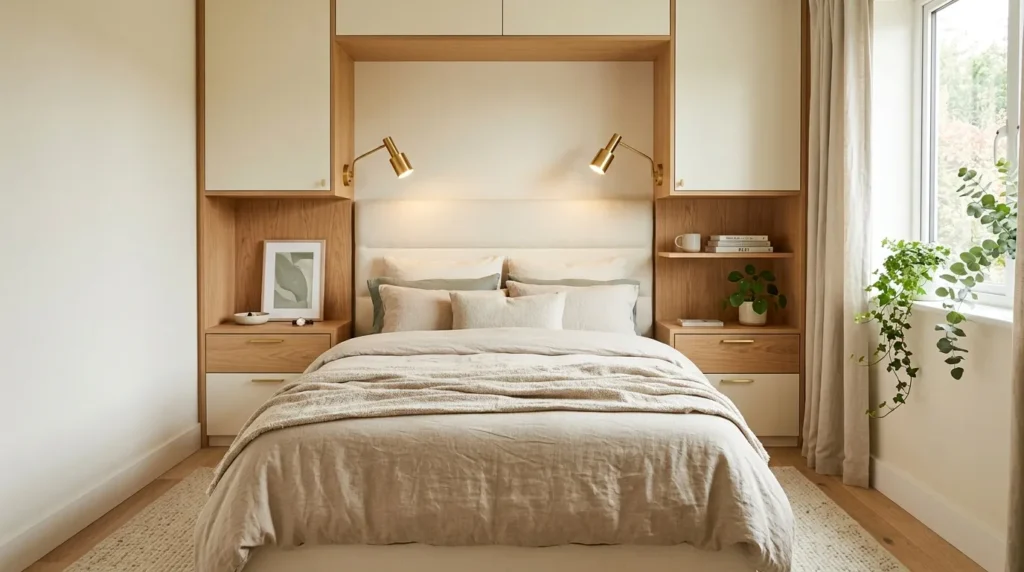
Quick Benefits
- Saves floor space
- Creates bedside storage
- Reduces furniture
- Keeps essentials accessible
- Creates a cohesive look
Why It Works
A traditional nightstand requires its own footprint.
A built-in bedside unit can provide the same functionality while becoming part of the wall or bed structure.
This is particularly effective when the bed occupies most of the available wall.
How To Style It
Include one drawer or cabinet for personal items.
Add a small open shelf for books if useful.
Install lighting above or beside the storage rather than taking up the entire tabletop.
Keep the surface minimal with only the essentials.
6. Headboard Cabinets
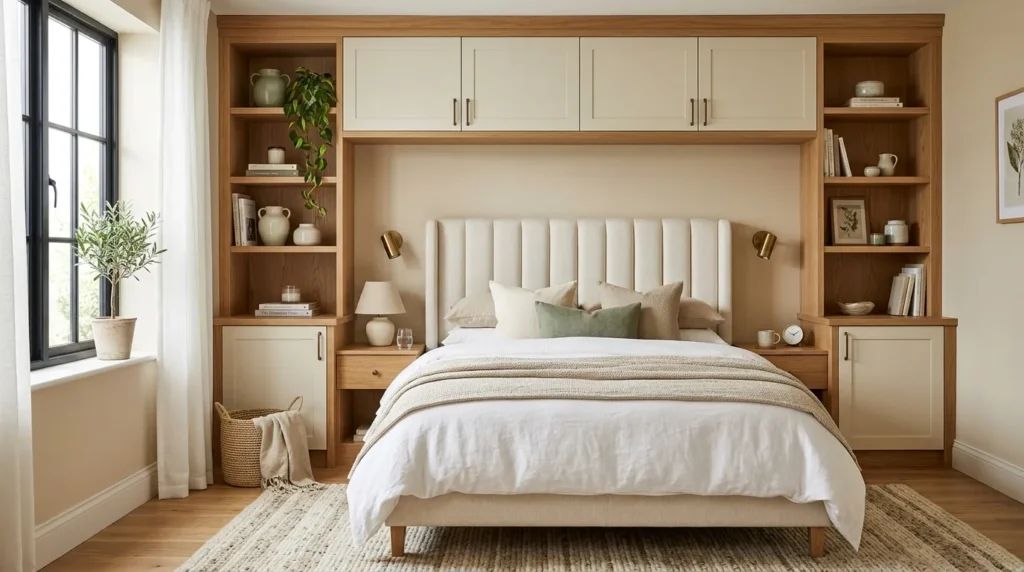
Quick Benefits
- Uses wall space
- Creates hidden storage
- Eliminates bulky furniture
- Keeps essentials close
- Creates a custom focal point
Why It Works
A headboard can be much more than decoration.
Extending it into shallow cabinets or shelving creates useful storage directly around the bed.
This approach works especially well in rooms where there isn’t enough space for traditional bedside furniture.
How To Style It
Use shallow cabinetry for books, accessories, and everyday essentials.
Keep deeper storage for items that don’t need immediate access.
Choose cabinetry that complements the bed and wall color.
Soft integrated lighting can make the headboard area feel intentional and sophisticated.
7. Under-Bed Drawers
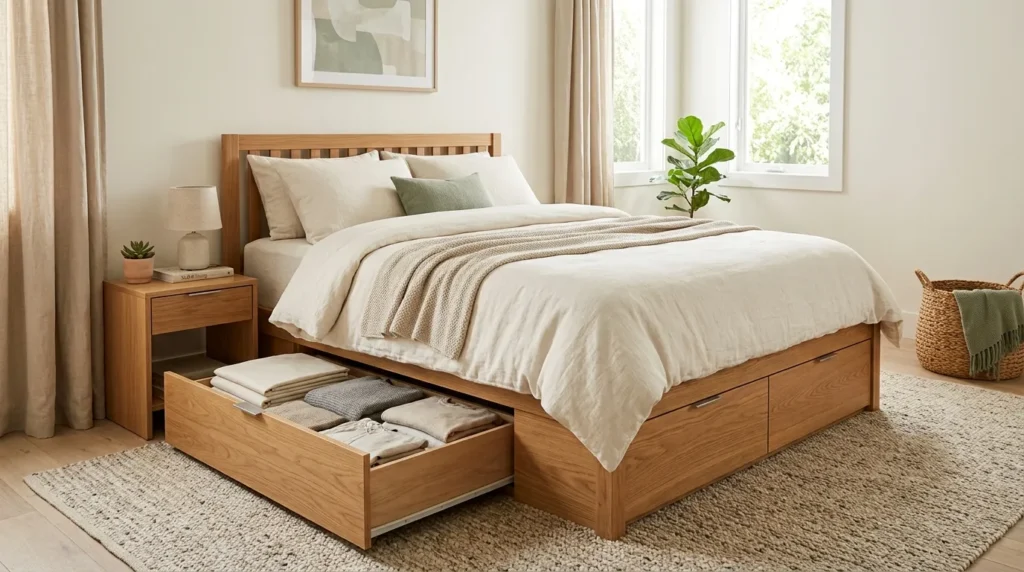
Quick Benefits
- Uses hidden space
- Keeps items dust-protected
- Reduces closet pressure
- Works for seasonal items
- Doesn’t consume additional floor area
Why It Works
The space beneath a bed is valuable storage real estate.
Instead of allowing that area to become a random collection of boxes, purpose-built drawers create a more organized solution.
How To Style It
Use appropriately designed drawers that can support the intended weight.
Store items you don’t need every day.
Seasonal clothing, spare bedding, shoes, and luggage accessories can work well here.
Label containers or drawer sections if several categories are stored beneath the bed.
8. Built-In Desk
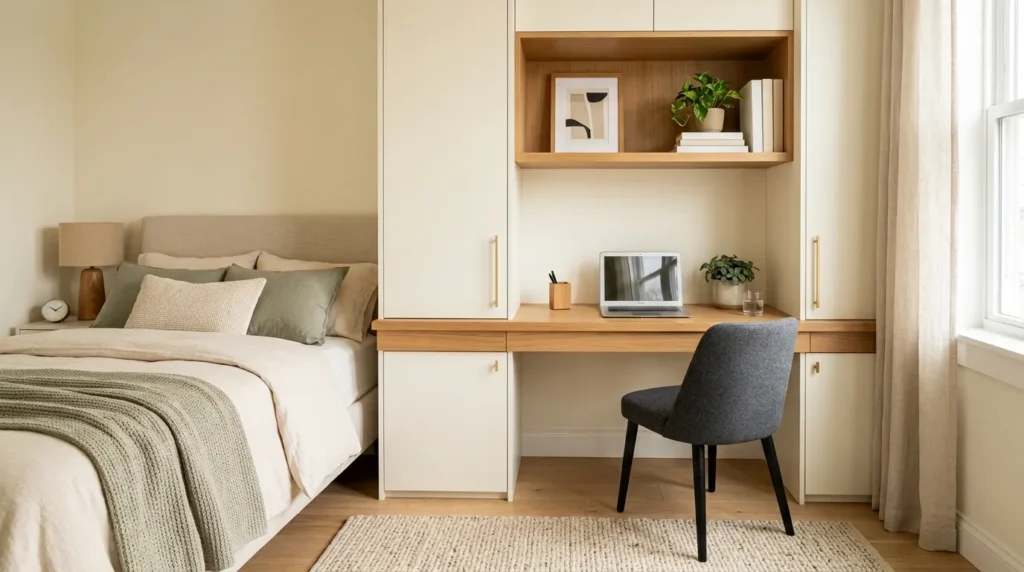
Quick Benefits
- Creates a workspace
- Uses wall space
- Avoids bulky desks
- Works in multipurpose bedrooms
- Can include storage
Why It Works
A small bedroom sometimes needs to serve multiple purposes.
A built-in desk can create a functional workspace without introducing another large freestanding piece of furniture.
When the desk is integrated into cabinetry, the entire wall can function as one cohesive storage system.
How To Style It
Choose a shallow desk depth if floor space is limited.
Add drawers or shelves for office supplies.
Mount lighting on the wall if possible.
Keep the desktop relatively clear so the workspace doesn’t visually overwhelm the bedroom.
9. Corner Wardrobe
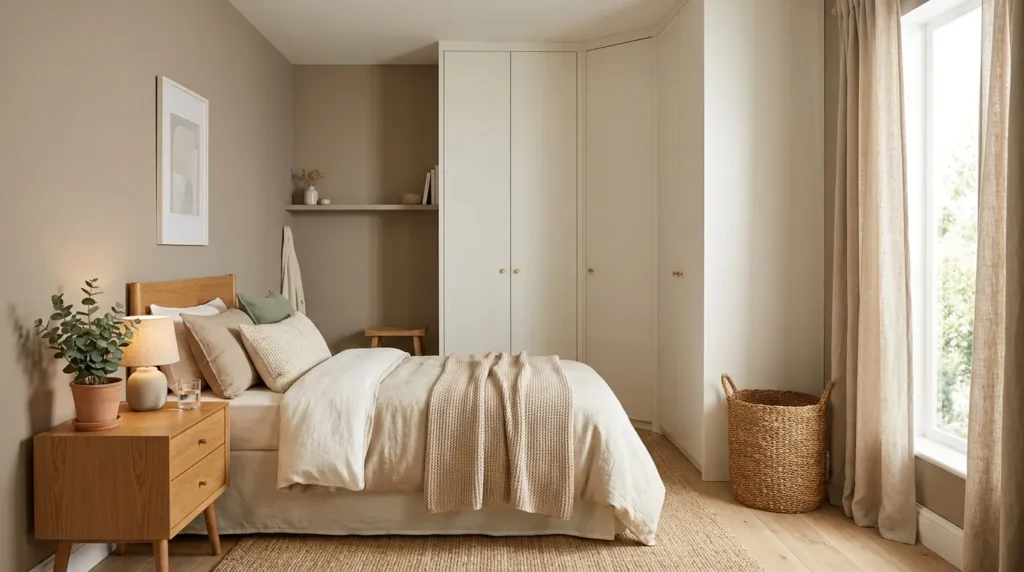
Quick Benefits
- Uses difficult corners
- Adds substantial storage
- Reduces wasted space
- Works in irregular rooms
- Creates a custom solution
Why It Works
Corners are often difficult to use efficiently with standard furniture.
A custom corner wardrobe can connect two walls and create storage where a traditional dresser or closet system may not fit.
How To Style It
Use doors that allow comfortable access.
Consider lighter cabinetry colors if the room is very small.
Keep the exterior simple.
Inside, use a combination of hanging space, drawers, shelves, and appropriately sized compartments based on what you actually store.
10. Full Wall Storage
Quick Benefits
- Maximizes storage
- Creates a unified appearance
- Reduces furniture clutter
- Uses vertical space
- Can conceal multiple functions
Why It Works
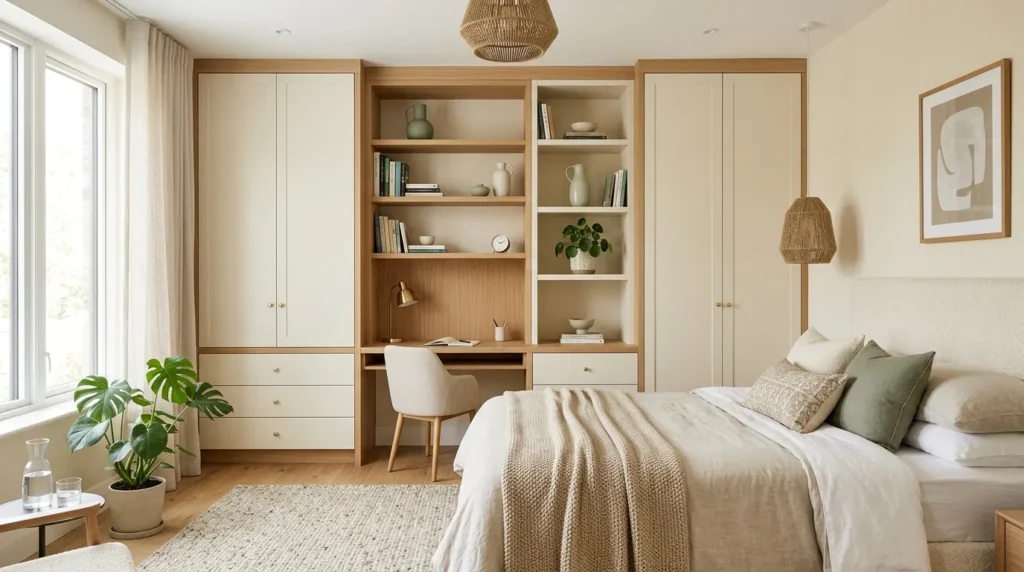
A full wall storage system can replace several separate furniture pieces.
Instead of having a wardrobe, dresser, shelves, and desk scattered around the room, a single built-in system can combine those functions.
The result can feel surprisingly clean when the cabinetry is designed thoughtfully.
How To Style It
Divide the wall into zones.
Create one section for hanging clothes.
Another can contain drawers.
Use a smaller area for books or a desk.
Close the majority of storage behind doors.
Leave only selected areas open for decorative objects.
How To Plan Built-In Storage For A Small Bedroom
Start with your belongings rather than the cabinetry.
Make a rough inventory of what you need to store.
Separate clothing, shoes, bedding, books, accessories, electronics, and seasonal items.
Then determine which things need daily access.
Daily essentials should be easiest to reach.
Occasional items can occupy higher shelves or deeper storage.
Also measure doors, windows, radiators, outlets, and other fixed features before planning cabinetry.
For permanent built-ins, professional design and installation can be worthwhile, especially when electrical, structural, or wall modifications are involved.
How To Make Built-In Storage Look Less Bulky
The easiest strategy is visual continuity.
Matching the cabinetry to the wall color can make it recede.
Flat or simple door fronts create fewer visual interruptions.
Consistent hardware helps the storage read as one element rather than multiple pieces.
You can also introduce open shelving sparingly.
A small amount of decorative display prevents the room from feeling like a wall of cabinets.
Best Colors For Small Bedroom Storage
Consider:
- Warm white
- Soft cream
- Light beige
- Pale greige
- Natural oak
- Light taupe
- Soft gray
- Muted sage
Light colors can help maintain an airy appearance, while natural wood can add warmth.
If you prefer dark cabinetry, balance it with lighter bedding, walls, curtains, and flooring.
Common Built-In Storage Mistakes
Designing Before Decluttering
Know what you actually need to store.
Ignoring Accessibility
Storage isn’t useful if everyday items are difficult to reach.
Using Every Inch
Leave some visual breathing room.
Forgetting Electrical Outlets
Plan around existing electrical and lighting requirements.
Making Everything Open
Closed storage is useful for reducing visual clutter.
Choosing Style Over Function
A beautiful cabinet isn’t helpful if it doesn’t store the things you need.
FAQ
Is built-in storage good for a small bedroom?
Yes. Built-ins can use vertical walls, corners, areas beneath windows, and the space around the bed more efficiently than many freestanding furniture pieces.
Is floor-to-ceiling storage better than a traditional wardrobe?
It can provide more usable vertical storage, especially in rooms with limited floor space. The best option depends on the room dimensions, ceiling height, budget, and what you need to store.
How can I add storage without making a small bedroom feel smaller?
Use streamlined cabinetry, lighter finishes, vertical storage, concealed doors, and furniture that combines multiple functions. Keeping the floor relatively open can also make the room feel more spacious.
What should I store in high built-in cabinets?
Use upper areas for items you don’t need frequently, such as seasonal clothing, spare bedding, luggage, and occasional-use belongings. Use appropriate storage containers to keep these areas organized.
Can built-in storage include a desk?
Yes. A built-in wall system can combine wardrobes, shelving, drawers, and a compact desk. This is especially useful in bedrooms that also function as home offices.
Are built-in wardrobes expensive?
The cost varies considerably based on materials, dimensions, hardware, customization, and installation. Simple modular systems may cost less than fully custom cabinetry.
How do I keep built-in bedroom storage organized?
Assign each section a clear purpose. Keep frequently used items at comfortable heights, use drawers or dividers for small belongings, and reserve upper storage for less frequently used items.
Conclusion
A small bedroom doesn’t need to sacrifice storage to look beautiful.
The secret is to make the storage work with the room rather than forcing additional furniture into limited floor space.
Floor-to-ceiling wardrobes can use vertical space.
Bed drawers can turn unused areas into practical storage.
Window seats can combine seating and hidden compartments.
Built-in desks can support work without requiring another bulky piece of furniture.
And a full storage wall can replace several separate pieces while creating a much more cohesive appearance.
Before investing in built-ins, take time to understand what you actually own and how you use it.
Plan accessibility first.
Think about vertical space.
Keep frequently used items within easy reach.
Use concealed storage to control visual clutter.
Then add a few open shelves for the things you genuinely want to display.
The result should not simply be a bedroom with more cabinets.
It should be a room that feels calmer, easier to maintain, and better suited to everyday life.
Related Articles
- How to Organize a Small Bedroom Without Buying Storage
- 10 Cozy Aesthetic Bedroom Ideas for Small Rooms
- How to Make a Small Bedroom Feel Less Cramped
- 10 Modern Bedroom Ideas That Feel Fresh and Bright
- 10 Bedroom Wall Decor Ideas with Oversized Art