
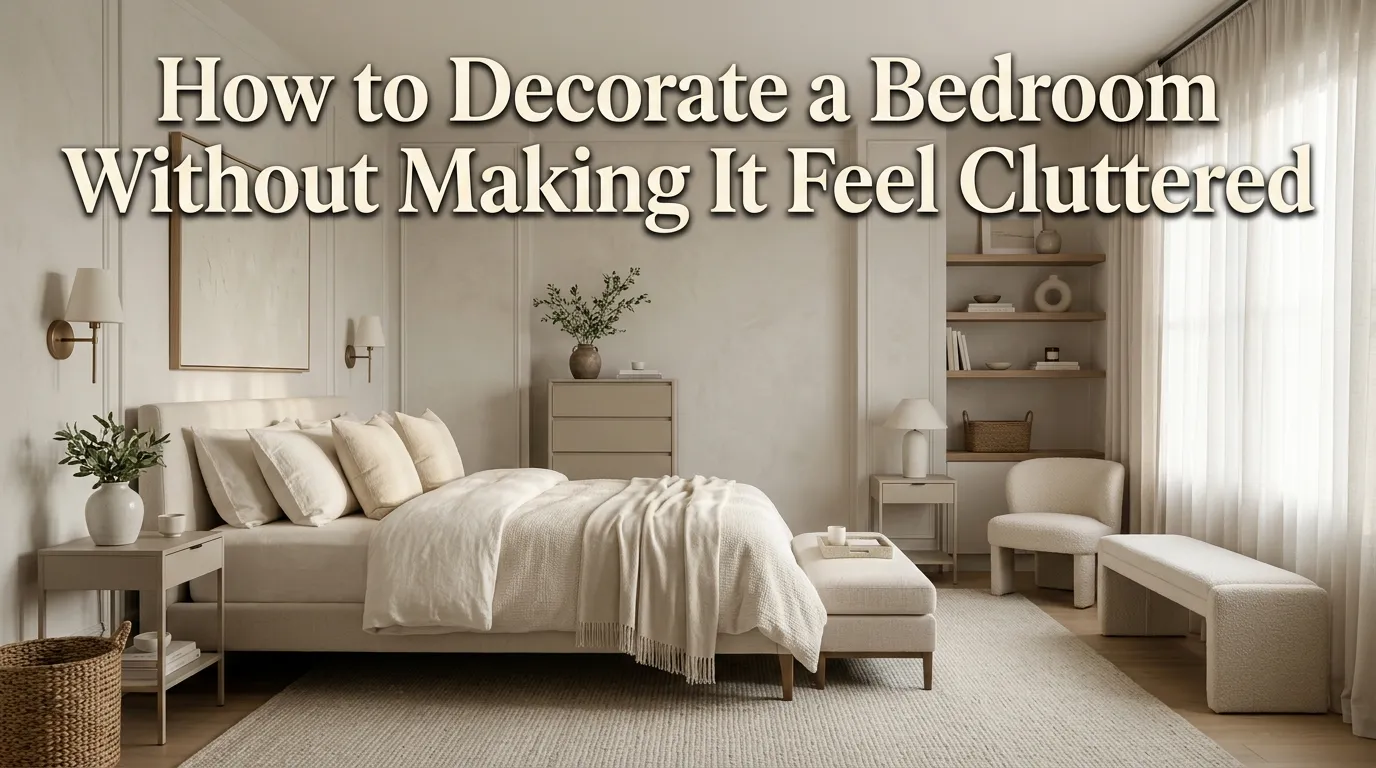
How to Decorate a Bedroom Without Making It Feel Cluttered
A beautiful bedroom doesn’t need to be filled with decor to feel finished. In fact, one of the biggest decorating challenges is knowing when to stop.
Bedrooms naturally collect things. Books end up on nightstands, clothing lands on chairs, skincare products gather around the mirror, and decorative pieces slowly multiply. Even when everything is technically useful, the room can begin to feel visually crowded.
The good news is that creating a polished bedroom isn’t about removing all personality. It’s about giving everything a purpose and allowing enough empty space for the important pieces to stand out.
In my experience, the most comfortable bedrooms usually have a simple foundation, thoughtful storage, layered textiles, and a few meaningful decorative elements. Instead of trying to decorate every wall and surface, you can create impact by choosing larger, more intentional pieces.
This approach is especially helpful in apartments, guest rooms, and smaller bedrooms where floor space is limited. You don’t have to sacrifice style simply because the room needs to work hard.
The goal is a bedroom that feels calm when you walk in, practical when you’re getting ready, and personal without looking overfilled.
These ideas will help you decorate with intention, control visual clutter, and create a bedroom that feels collected rather than crowded.
Table of Contents
1. Choose A Simple Palette
Create visual consistency before adding decorative details.
2. Start With The Bed
Make the largest piece the foundation of the room.
3. Keep Surfaces Edited
Limit visible objects on nightstands and dressers.
4. Use Closed Storage
Hide everyday clutter while maintaining a clean appearance.
5. Layer Bedding Carefully
Add comfort and texture without excessive decoration.
6. Choose Oversized Art
Create impact with fewer, larger pieces.
7. Use Vertical Space
Decorate walls without consuming valuable floor space.
8. Create Clear Zones
Give every part of the room a specific purpose.
9. Add Functional Decor
Choose pieces that are beautiful and useful.
10. Leave Breathing Room
Use negative space to make the room feel calmer.
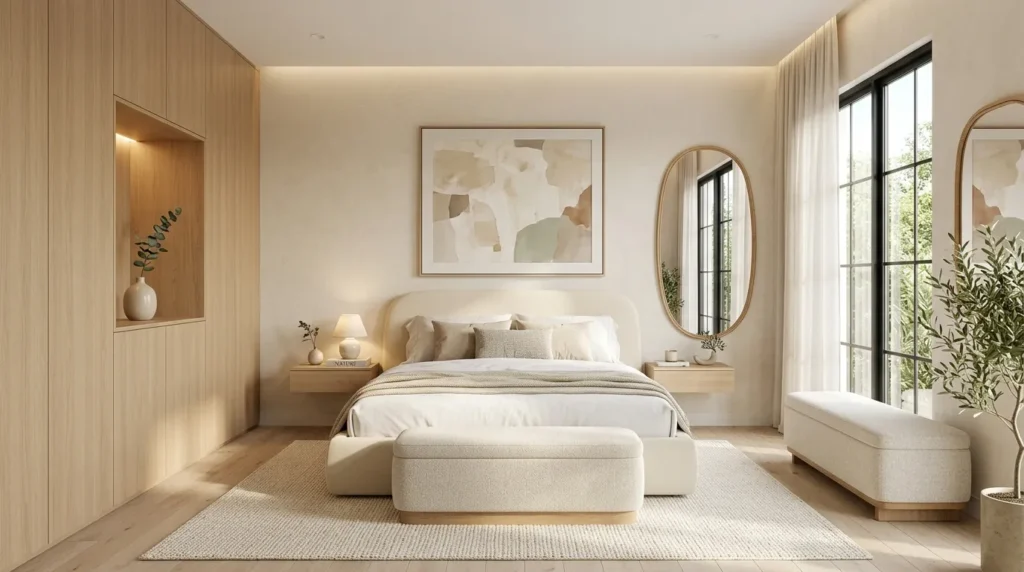
1. Choose A Simple Palette
Quick Benefits
- Creates visual harmony
- Makes decorating easier
- Reduces visual noise
- Helps the room feel larger
- Makes statement pieces stand out
Why It Works
Too many unrelated colors can make even a spacious bedroom feel busy.
A restrained palette gives the eye fewer things to process.
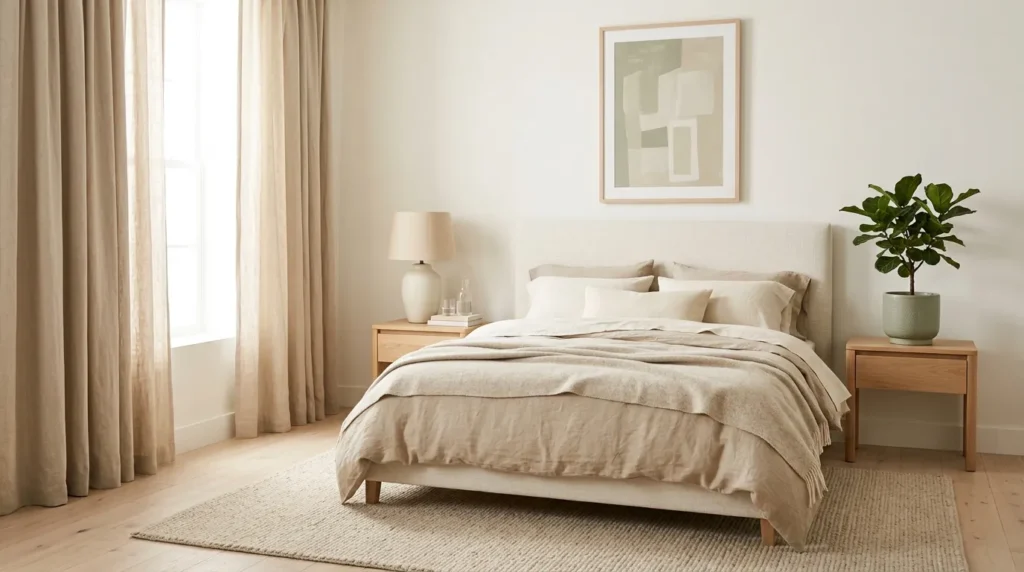
This doesn’t mean everything needs to be the same color. Instead, choose two or three primary tones and repeat them throughout the room.
Warm white, beige, soft gray, pale wood, muted green, and gentle blue can all create a peaceful foundation.
How To Style It
Start with your largest pieces.
For example, use warm white walls, cream bedding, and light wood furniture.
Then introduce one accent shade through pillows, artwork, curtains, or a small rug.
Repeat that accent in two or three locations so it feels intentional.
If you already have colorful furniture or flooring, use neutral accessories to balance it rather than replacing everything.
2. Start With The Bed
Quick Benefits
- Establishes the room’s focal point
- Simplifies decorating decisions
- Creates visual structure
- Makes bedding more intentional
- Reduces the temptation to overdecorate
Why It Works
The bed is usually the largest object in the bedroom, so it naturally attracts attention.
When the bed looks polished, the entire room can feel more finished.
Instead of adding decorative objects everywhere, focus on creating a comfortable and attractive bed.
This provides the visual anchor the rest of the room can build around.
How To Style It
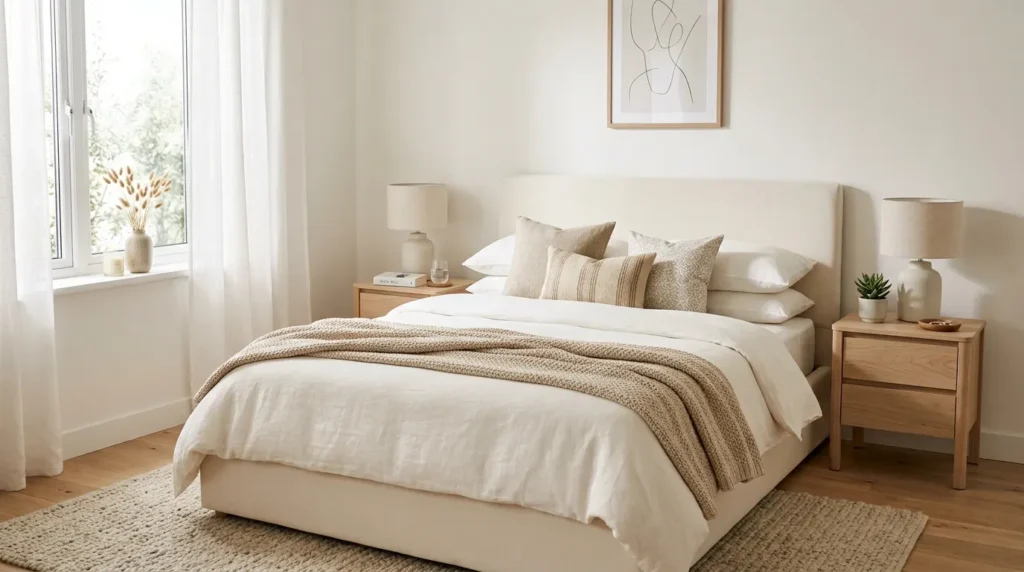
Choose simple bedding in a color that complements the room.
Layer a duvet or comforter with two sleeping pillows, decorative cushions, and one throw.
Don’t feel obligated to use a dozen pillows.
A restrained arrangement can look more sophisticated.
Add one textured blanket at the foot of the bed for warmth and visual interest.
3. Keep Surfaces Edited
Quick Benefits
- Reduces visual clutter
- Makes cleaning easier
- Creates a calmer atmosphere
- Highlights favorite objects
- Keeps everyday essentials accessible
Why It Works
Flat surfaces naturally attract belongings.
Nightstands and dressers often become temporary storage areas for items that don’t have another home.
The solution isn’t necessarily more furniture.
It is better editing.
When only a few objects remain visible, each one has more visual importance.
How To Style It
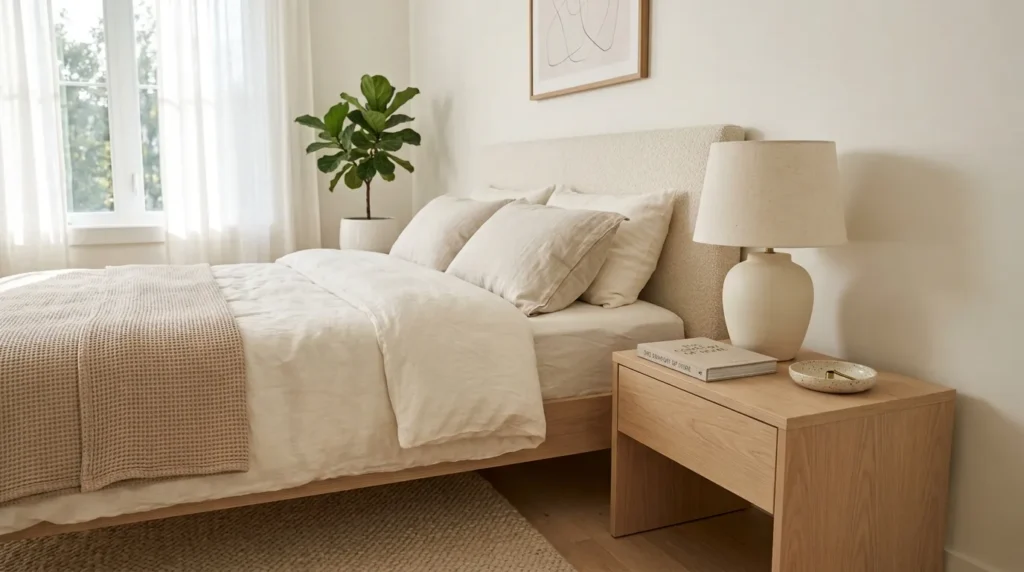
Clear your nightstand completely.
Return only the essentials.
A lamp, book, small dish, or vase may be enough.
Apply the same principle to dressers.
Choose one decorative arrangement rather than spreading small objects across the entire surface.
Keep frequently used items accessible but visually contained.
4. Use Closed Storage
Quick Benefits
- Hides everyday mess
- Makes the room look cleaner
- Protects belongings from dust
- Works well in small rooms
- Creates visual simplicity
Why It Works
Open shelving can look beautiful, but too many visible items can quickly create visual noise.
Closed storage provides a place for things that are useful but not necessarily decorative.
This is especially important in bedrooms because clothing, electronics, accessories, and personal care products can accumulate quickly.
How To Style It
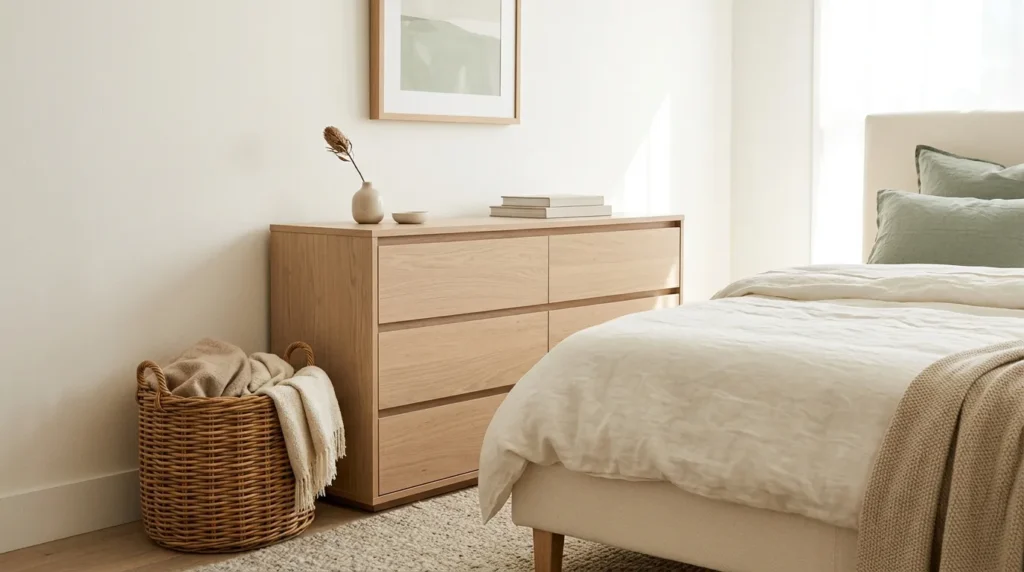
Use dressers, wardrobes, under-bed drawers, storage benches, and nightstands with drawers.
Inside storage, use simple organizers to keep categories together.
For example, keep accessories in one container and seasonal clothing in another.
If you use baskets, choose a consistent material and color so they contribute to the room’s design rather than competing with it.
5. Layer Bedding Carefully
Quick Benefits
- Adds softness
- Creates visual depth
- Improves comfort
- Avoids a flat appearance
- Makes seasonal changes simple
Why It Works
Minimal doesn’t have to mean boring.
The trick is creating interest through texture rather than adding numerous colors and patterns.
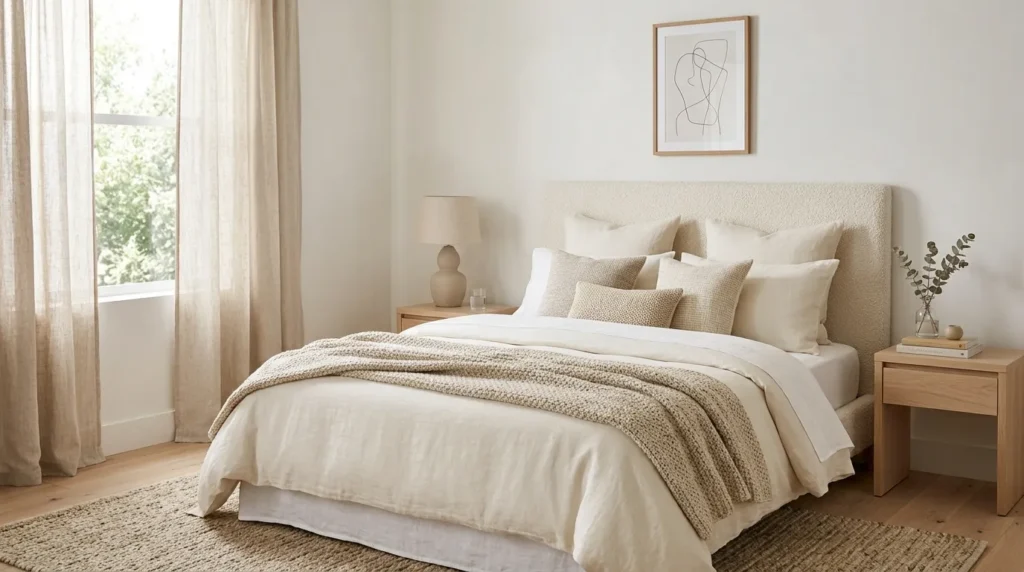
Linen, cotton, boucle, wool-look throws, and woven fabrics can create a layered appearance while keeping the palette simple.
How To Style It
Start with one dominant bedding color.
Add a slightly contrasting duvet or coverlet.
Use pillows in complementary shades rather than several unrelated colors.
Finish with a textured throw.
If you like patterns, choose one subtle pattern and keep the remaining layers relatively quiet.
6. Choose Oversized Art
Quick Benefits
- Creates a focal point
- Reduces the need for multiple pieces
- Makes walls feel intentional
- Adds personality
- Works well in modern rooms
Why It Works
A common decorating mistake is using many tiny pieces of artwork because the wall feels empty.
The result can sometimes feel more cluttered rather than more finished.
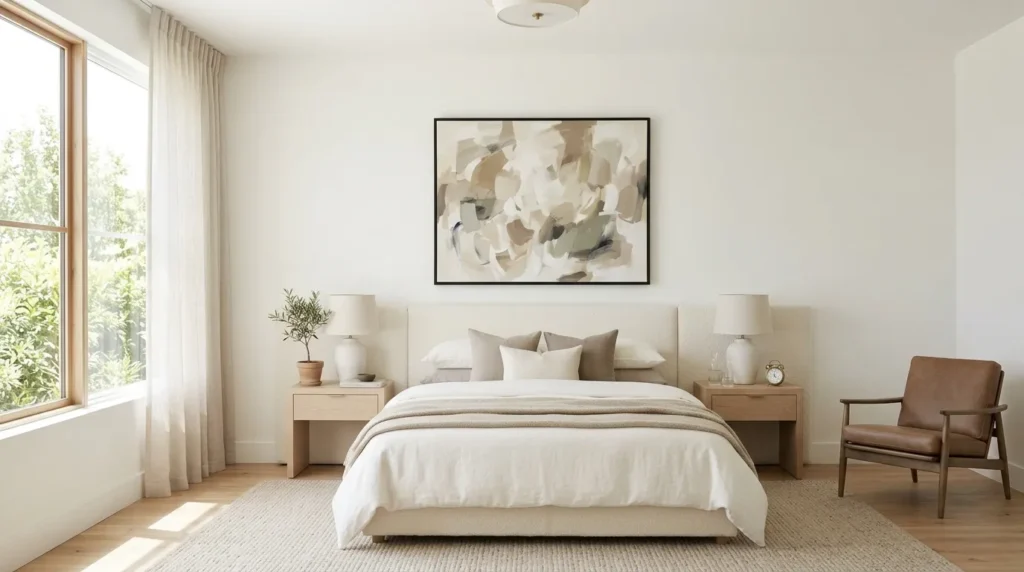
One large artwork can have greater visual impact while using fewer elements.
How To Style It
Choose artwork that connects with the room’s palette.
A large abstract print above the bed can create a sophisticated focal point.
A botanical illustration works well with natural textures.
For a minimalist bedroom, black-and-white photography can add contrast.
Give the artwork enough surrounding space to stand out.
7. Use Vertical Space
Quick Benefits
- Saves floor space
- Adds visual interest
- Draws the eye upward
- Works in small bedrooms
- Creates useful storage
Why It Works
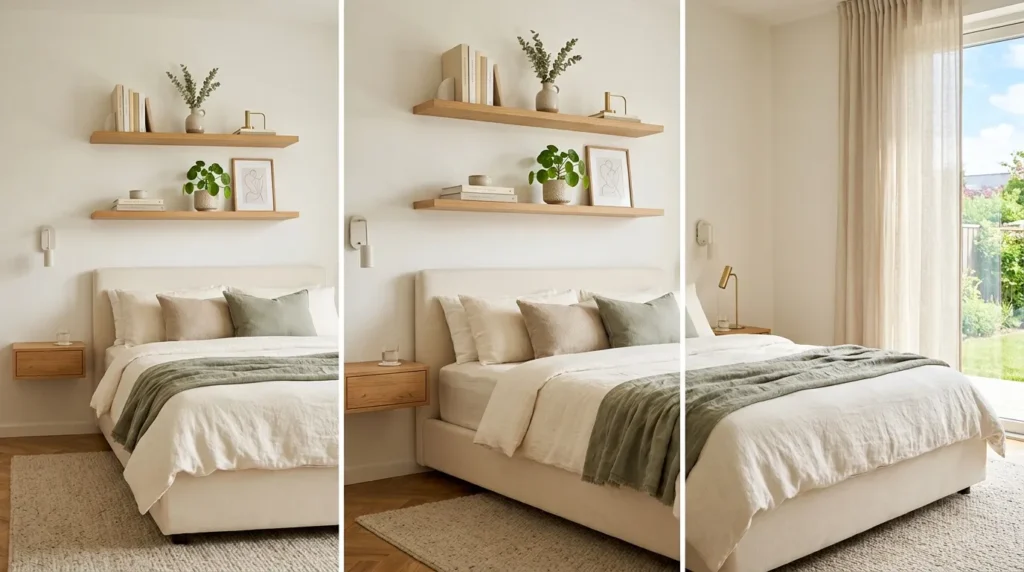
When floor space is limited, walls become valuable decorating real estate.
Vertical storage and wall-mounted decor can provide function without adding bulky furniture.
Using height also changes how the room is perceived.
How To Style It
Consider floating shelves, wall-mounted lighting, tall artwork, peg rails, or narrow vertical storage.
Don’t cover every inch of the wall.
Choose one or two areas where vertical elements solve a genuine design or storage problem.
Mount shelves where they remain practical and don’t interfere with doors, windows, or circulation.
8. Create Clear Zones
Quick Benefits
- Improves organization
- Makes the room easier to use
- Prevents furniture from feeling random
- Creates visual order
- Helps small bedrooms work harder
Why It Works
A bedroom can serve several purposes.
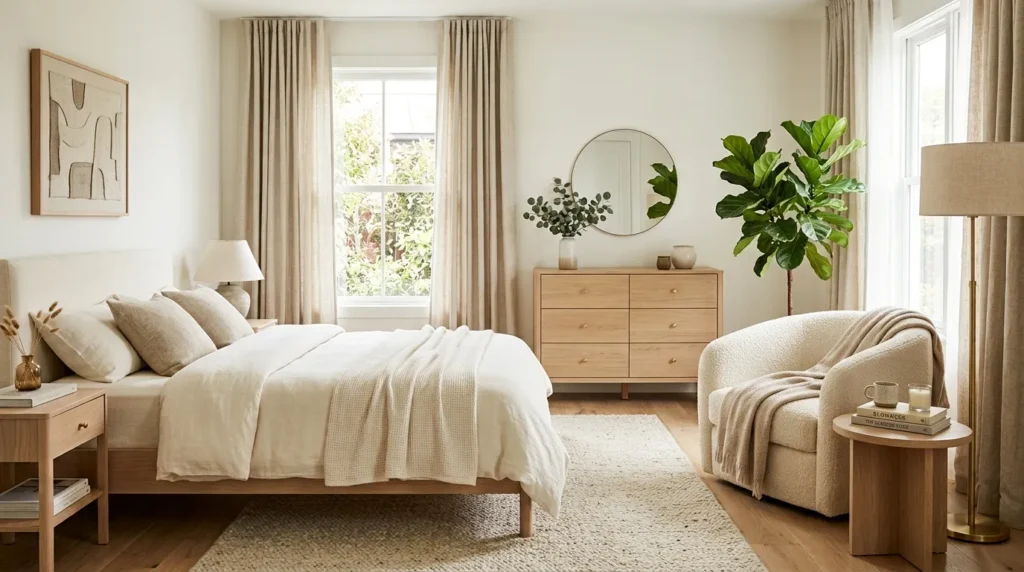
It may include sleeping, dressing, reading, working, or relaxing.
Without clear zones, furniture can begin to feel scattered.
Even small spaces benefit from giving each area a specific function.
How To Style It
Keep the bed area focused on rest.
Place a dresser near the clothing zone.
If you have a desk, keep work supplies contained within that area.
A small reading chair can create a separate relaxation corner.
Use rugs, lighting, or furniture placement to subtly distinguish zones without physically dividing the room.
9. Add Functional Decor
Quick Benefits
- Saves space
- Reduces unnecessary objects
- Adds personality
- Improves everyday usability
- Creates intentional styling
Why It Works
One of the easiest ways to avoid clutter is to choose decorative pieces that also serve a purpose.
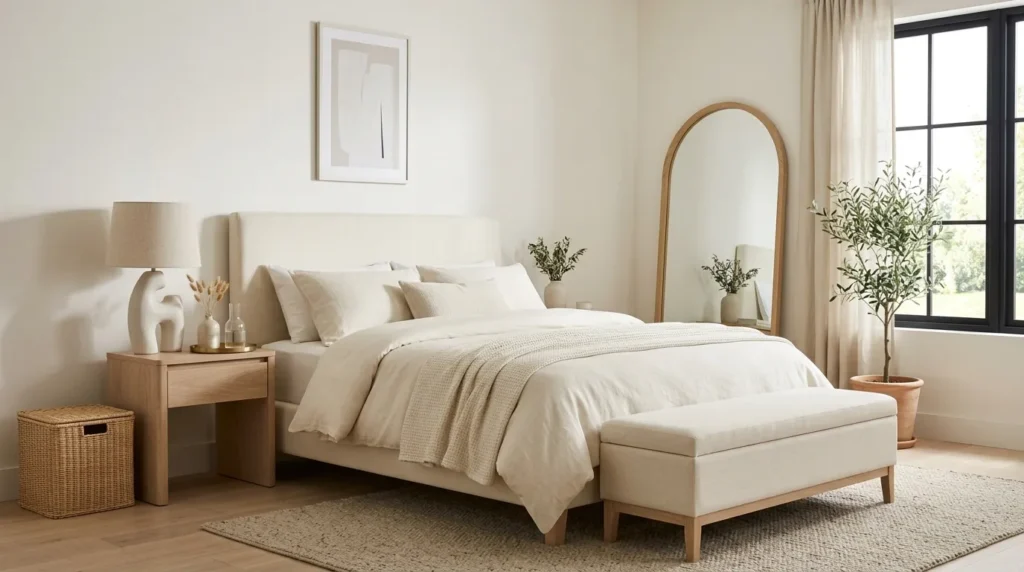
A beautiful lamp provides lighting.
A woven basket stores blankets.
A decorative mirror helps with getting ready.
A storage bench provides seating and hidden organization.
When each item has a role, the room can feel decorated without becoming overloaded.
How To Style It
Before buying a decorative item, ask whether it solves a problem or genuinely contributes something meaningful.
Choose a sculptural lamp instead of a lamp plus several small accessories.
Use a beautiful tray to organize everyday items.
Select furniture with built-in storage whenever possible.
10. Leave Breathing Room
Quick Benefits
- Makes the room feel calmer
- Highlights important pieces
- Improves movement
- Makes furniture easier to appreciate
- Prevents overdecorating
Why It Works
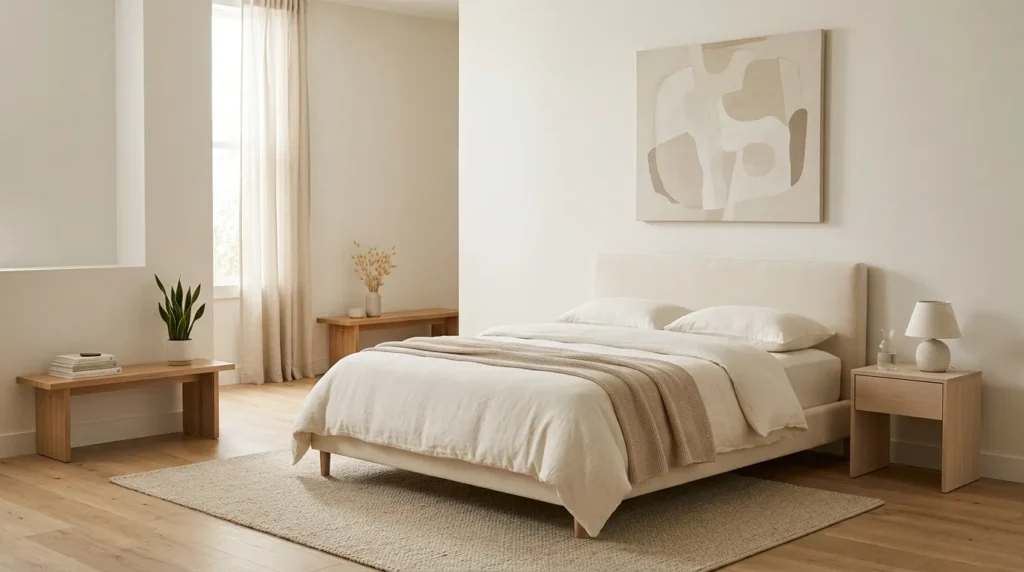
Empty space is not wasted space.
It gives the eye somewhere to rest and allows furniture and artwork to become more noticeable.
This is especially important in bedrooms because the room should support relaxation.
When every wall, shelf, and surface is filled, the room can feel mentally busy even when it is physically organized.
How To Style It
Don’t immediately fill an empty wall.
Live with the room for a while before deciding what belongs there.
Keep pathways clear.
Leave some space between furniture pieces where possible.
On shelves, group objects together and leave intentional gaps.
If something doesn’t improve the room, remove it.
How Much Decor Should A Bedroom Have?
There isn’t a universal number of decorative pieces that works for every bedroom.
Instead, consider the size of the room and the amount of furniture already present.
A small bedroom generally benefits from fewer, larger, more useful pieces.
A larger room can handle additional layers, but it still needs visual breathing room.
A useful rule is to look at each surface individually.
If the nightstand, dresser, and shelves are all crowded, remove a few items before adding anything new.
How To Keep A Bedroom Looking Clean Every Day
Good organization makes decorating much easier.
Create simple homes for frequently used items.
Keep laundry contained in a hamper.
Use a bedside basket for books and electronics.
Store extra bedding together.
Keep everyday beauty products inside drawers when possible.
The goal isn’t perfection.
It’s making the easiest behavior the organized behavior.
Common Bedroom Decorating Mistakes
Buying Decor Before Measuring
A beautiful piece can still look wrong if it is too large for the room.
Filling Every Empty Wall
Not every blank wall needs artwork.
Using Too Many Colors
Multiple unrelated colors can create visual noise.
Ignoring Storage
A room without adequate storage will struggle to stay uncluttered.
Choosing Style Over Function
Furniture should work for your actual routine.
Overloading The Bed
Too many decorative pillows can make a beautiful bed inconvenient to use.
FAQ
How do I decorate my bedroom without making it cluttered?
Start with a simple color palette and focus on a few important areas. Keep surfaces edited, use closed storage for everyday items, and choose larger statement pieces instead of many small decorations. Leave some empty wall and floor space so the room can visually breathe.
How many pillows should be on a bed?
There is no required number. Two sleeping pillows plus two or three decorative pillows can create a polished appearance without making the bed difficult to use. If you prefer minimal styling, even two or four pillows can look beautiful.
How can I make a small bedroom feel less cluttered?
Prioritize furniture with storage, keep pathways clear, use vertical space, reduce visible objects, and choose a restrained color palette. Avoid oversized furniture that leaves little room for movement.
Should bedroom decor match?
It doesn’t need to match exactly. Coordinating colors, materials, and finishes usually creates a more sophisticated result than buying an identical furniture set. Repeating one or two elements throughout the room can create cohesion.
How do I decorate a bedroom on a budget without clutter?
Work with what you already own first. Rearrange furniture, simplify surfaces, change bedding, move artwork from another room, and add one or two meaningful accessories. Editing what you have can make as much difference as buying something new.
What should I put on my bedroom dresser?
Keep the arrangement simple. A mirror or artwork can anchor the wall, while the dresser surface might hold a lamp, tray, plant, or one decorative object. Leave some empty space rather than covering the entire top.
How can I make my bedroom feel peaceful?
Use calming colors, soft lighting, comfortable textiles, organized storage, and limited visual distractions. Keep technology and miscellaneous objects contained when possible and prioritize a clear, comfortable sleeping area.
Conclusion
Decorating a bedroom without creating clutter comes down to intentional choices.
You don’t need an empty room or a completely minimalist aesthetic.
Instead, focus on what genuinely improves the space.
Start with the bed, establish a simple color palette, and choose bedding that adds texture without excessive pattern. Keep nightstands and dressers edited, and use closed storage to hide the things you need but don’t want constantly visible.
When you want more personality, choose one large artwork instead of several tiny pieces.
Use vertical space when the floor is limited, and look for furniture that combines beauty with function.
Most importantly, remember that empty space has value.
A bedroom should have room for movement, relaxation, and everyday life.
If your room currently feels cluttered, don’t try to fix everything in one afternoon. Start with one surface, one storage area, or one corner. Remove what you don’t need, organize what remains, and then decide whether anything else is actually missing.
A thoughtfully decorated bedroom isn’t the one with the most things.
It’s the one where every visible element feels like it belongs.
Related Articles
- 10 Cozy Aesthetic Bedroom Ideas for Small Rooms
- 10 Modern Bedroom Ideas That Feel Fresh and Bright
- 10 Bedroom Wall Decor Ideas with Oversized Art
- How to Organize a Small Bedroom with Built-In Storage
- How to Make a Small Bedroom Feel Less Cramped