How to Make a Small Bedroom Feel Less Cramped
A small bedroom can feel cozy and intimate, but when furniture, clothing, and decor start competing for the same limited space, it can quickly feel cramped.
The solution isn’t always to remove everything or renovate the room.
Often, a few smart changes to furniture placement, color, lighting, storage, and visual balance can make a noticeable difference.
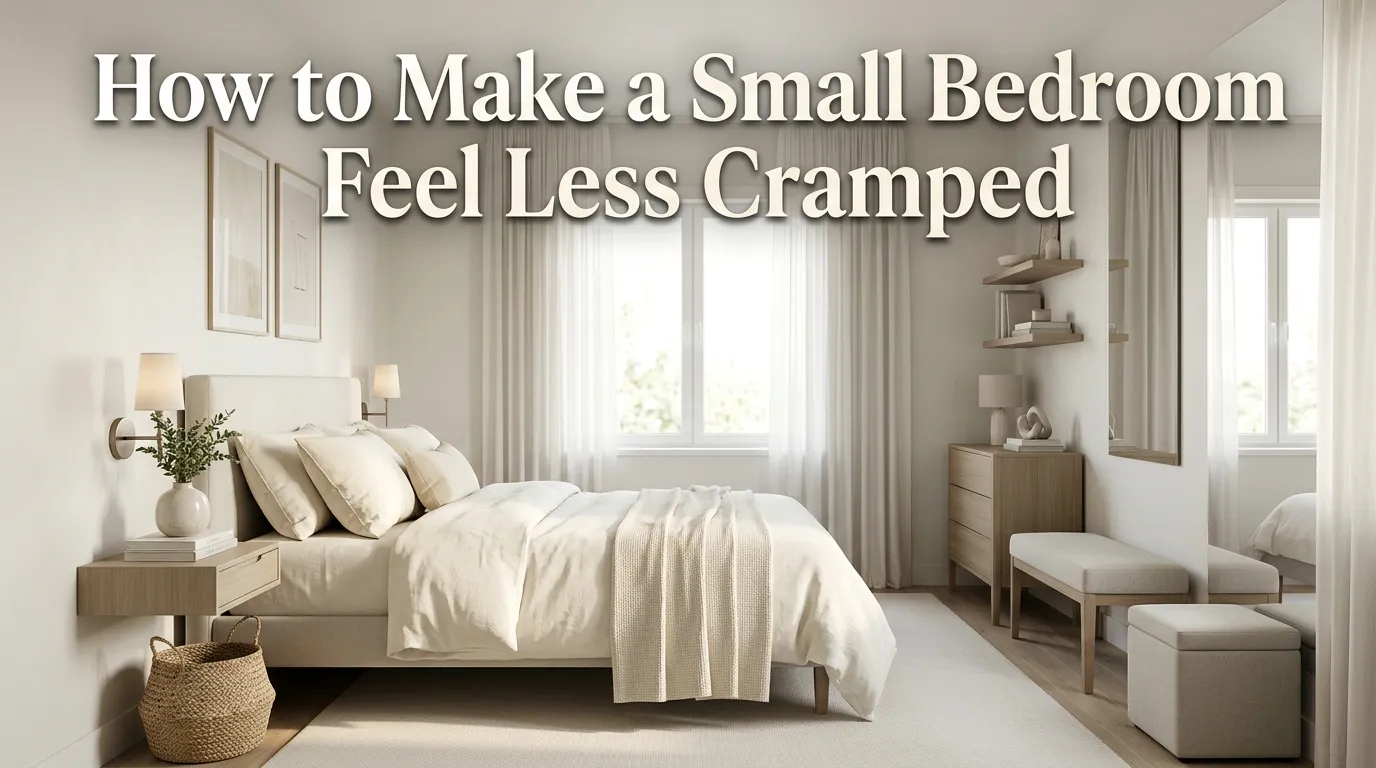
The most spacious-looking small bedrooms aren’t necessarily empty. Instead, they use space intentionally. Furniture is appropriately scaled, walking paths remain open, walls are used vertically, and visual clutter is kept under control.
In my experience, one of the biggest mistakes people make in a small bedroom is trying to solve a space problem by adding more storage furniture. While storage is important, too many cabinets and dressers can reduce the usable floor area and make the room feel even smaller.
A better approach is to make the existing space work harder.
Think about what you can move upward, what can be hidden, what can serve more than one purpose, and what simply doesn’t need to be in the bedroom.
From choosing lighter colors to using mirrors strategically, these ideas can help your bedroom feel more open without sacrificing comfort.
Table of Contents
- Choose Smaller Furniture
- Keep Walking Paths Clear
- Use Light Colors
- Add Strategic Mirrors
- Use Vertical Storage
- Choose Multi-Function Pieces
- Simplify Bedding
- Improve Natural Light
- Reduce Visual Clutter
- Create Open Space
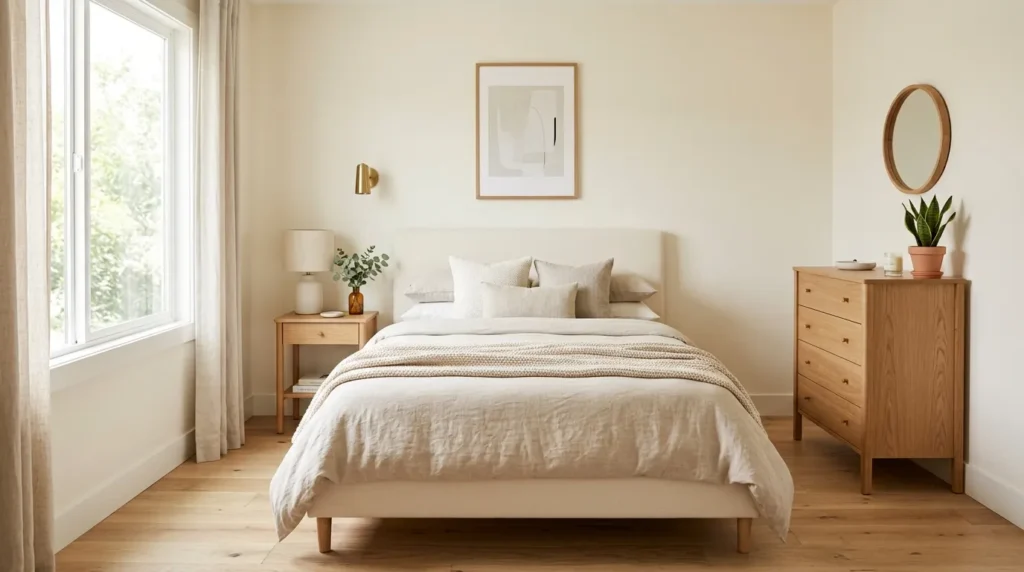
1. Choose Smaller Furniture
Quick Benefits
- Frees valuable floor space
- Improves movement
- Makes proportions feel balanced
- Creates more breathing room
- Prevents visual heaviness
Why It Works
Oversized furniture can make a small bedroom feel significantly tighter.
A king-size bed may not always be necessary if a smaller mattress provides enough sleeping space. Likewise, a large dresser can often be replaced with a narrower storage unit or built-in solution.
Furniture should fit the room rather than simply fit the wall.
How To Style It
Measure the room before purchasing anything new.
Pay attention to the width of doors and walking paths.
Choose a bed frame with a relatively streamlined profile.
Look for narrow nightstands or floating shelves.
If you need a dresser, choose one that provides useful storage without occupying an excessive amount of floor space.
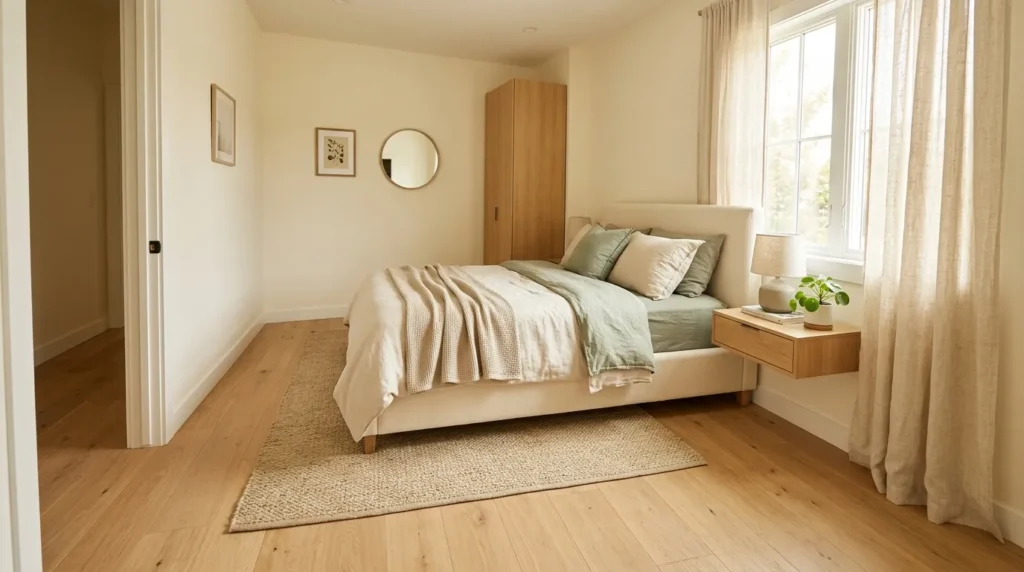
2. Keep Walking Paths Clear
Quick Benefits
- Improves movement
- Makes the room feel larger
- Creates visual breathing room
- Makes cleaning easier
- Improves functionality
Why It Works
A room can have enough physical space but still feel cramped when pathways are blocked.
Clear movement around the bed creates the impression of openness.
This is particularly important in narrow bedrooms.
How To Style It
Identify the main routes through the bedroom.
Keep the path from the door to the bed clear.
Avoid placing baskets, chairs, or decorative objects where you naturally walk.
If furniture repeatedly blocks a pathway, reconsider its placement.
Sometimes simply moving one piece several inches can noticeably improve the room.
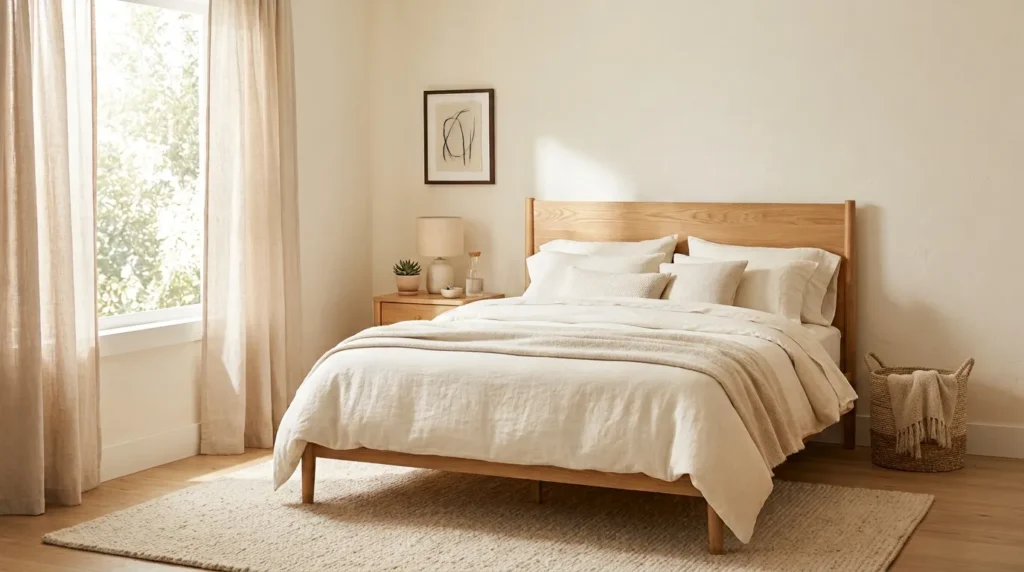
3. Use Light Colors
Quick Benefits
- Reflects natural light
- Creates an airy feeling
- Makes walls feel less heavy
- Works with many styles
- Creates a calm foundation
Why It Works
Light colors reflect more available light, which can help a small room feel brighter and more open.
Warm whites, cream, pale beige, soft greige, and gentle pastel shades can create this effect without making the room feel sterile.
How To Style It
Use a lighter shade on the largest surfaces.
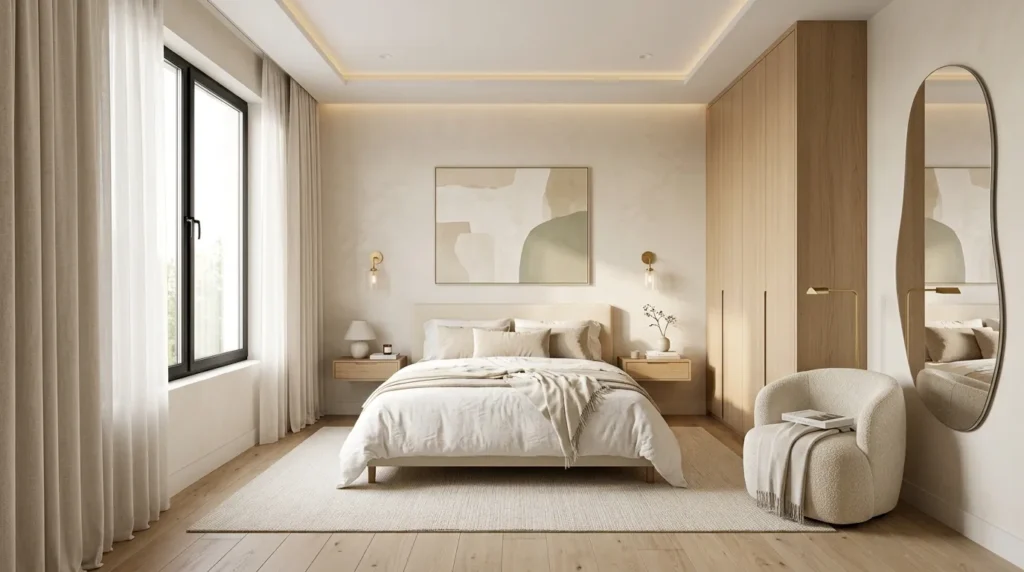
Walls, bedding, curtains, and larger furniture can share related tones.
Then introduce contrast through natural wood, artwork, black accents, or muted greenery.
A tonal palette can create visual continuity that makes the room feel less fragmented.
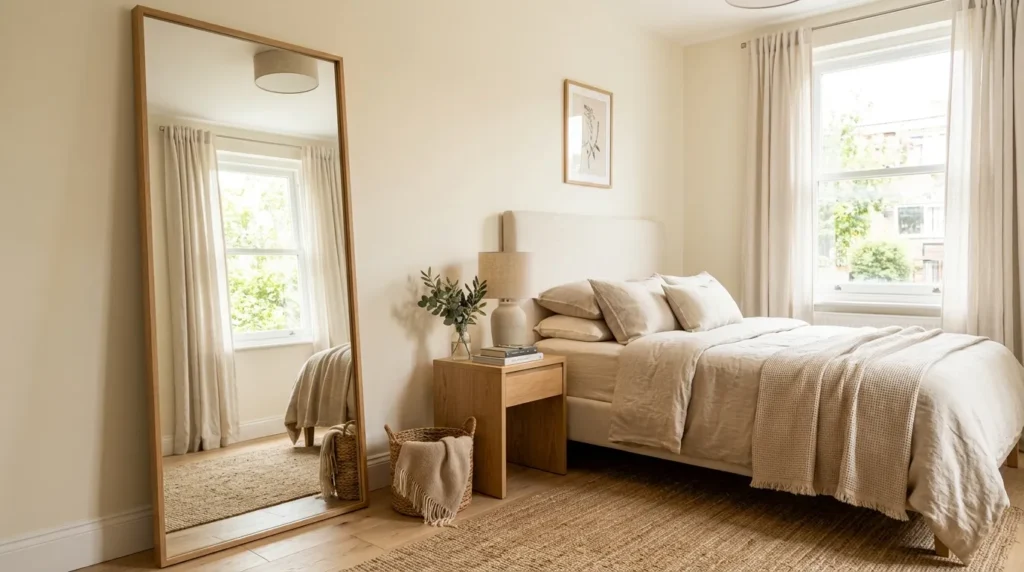
4. Add Strategic Mirrors
Quick Benefits
- Reflects light
- Adds depth
- Visually expands the room
- Creates a decorative focal point
- Works without taking floor space
Why It Works
Mirrors can make a small bedroom appear more spacious by reflecting light and parts of the room.
Placement matters more than simply adding a large mirror.
How To Style It
Place a mirror where it can reflect natural light or an attractive part of the room.
A tall wall mirror can emphasize vertical space.
A mirrored wardrobe door can combine storage and reflection.
Avoid placing mirrors where they create an uncomfortable visual reflection or excessive visual activity.
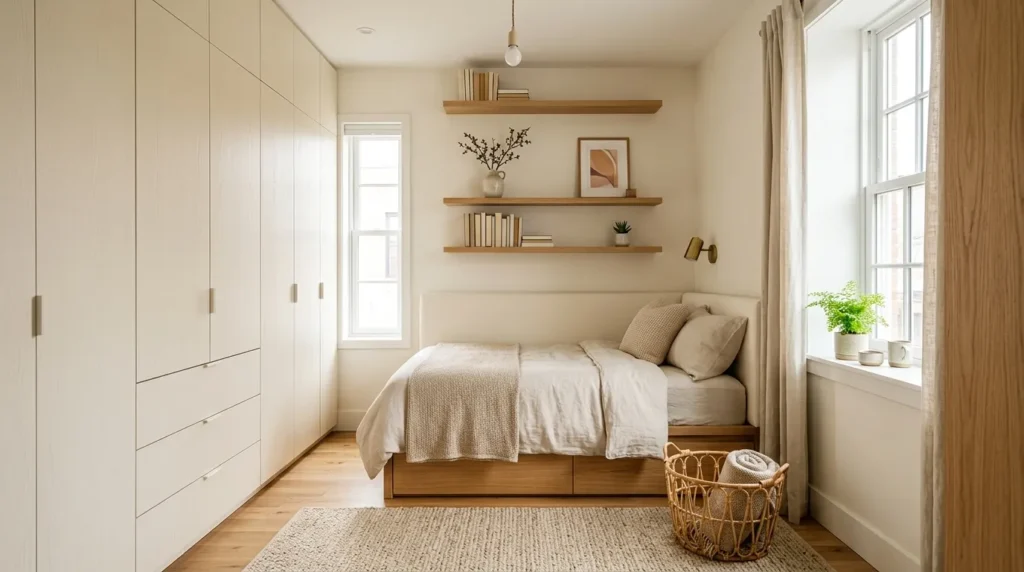
5. Use Vertical Storage
Quick Benefits
- Maximizes wall space
- Keeps floors open
- Adds useful capacity
- Reduces furniture clutter
- Creates a taller visual effect
Why It Works
When floor space is limited, the walls become valuable storage territory.
Tall wardrobes, floating shelves, wall-mounted hooks, and vertical cabinets can hold belongings without occupying as much floor area as additional furniture.
How To Style It
Take storage upward.
Use higher shelves for seasonal items.
Keep everyday belongings within easy reach.
Choose closed cabinetry when you want to reduce visual clutter.
Use one or two open shelves for carefully selected decorative pieces.
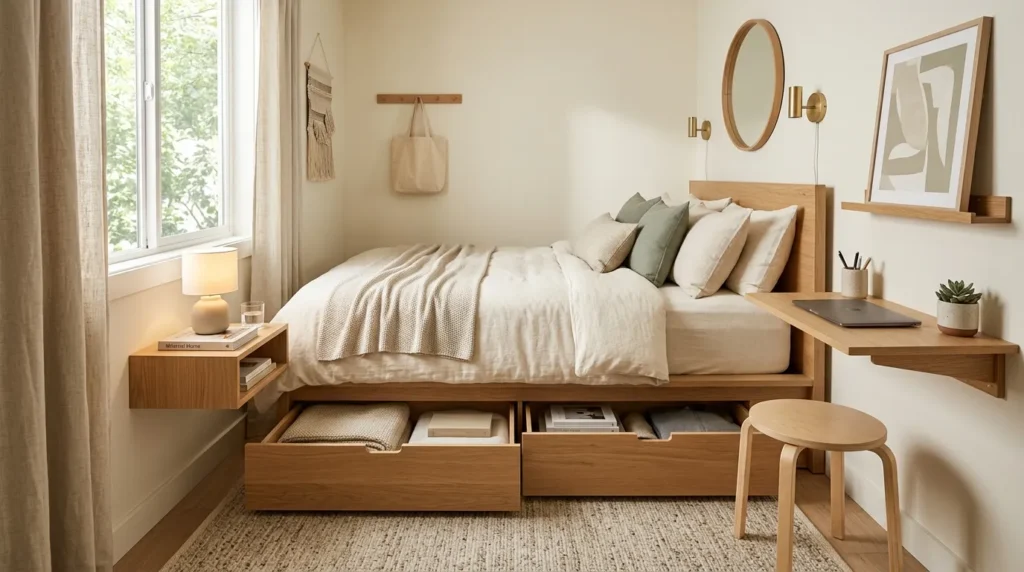
6. Choose Multi-Function Pieces
Quick Benefits
- Saves space
- Reduces furniture quantity
- Adds flexibility
- Improves organization
- Makes small rooms more practical
Why It Works
In a compact bedroom, one piece that performs two jobs can be more useful than two separate pieces.
A storage bed can provide sleeping space and clothing storage.
A wall-mounted desk can provide a workspace without requiring a large desk.
A storage bench can provide seating and hidden compartments.
How To Style It
Look for furniture that solves a specific problem.
Choose pieces based on actual needs rather than novelty.
If you don’t need a workspace, don’t add a desk simply because the furniture offers storage.
Every multifunctional piece should still make sense for your lifestyle.
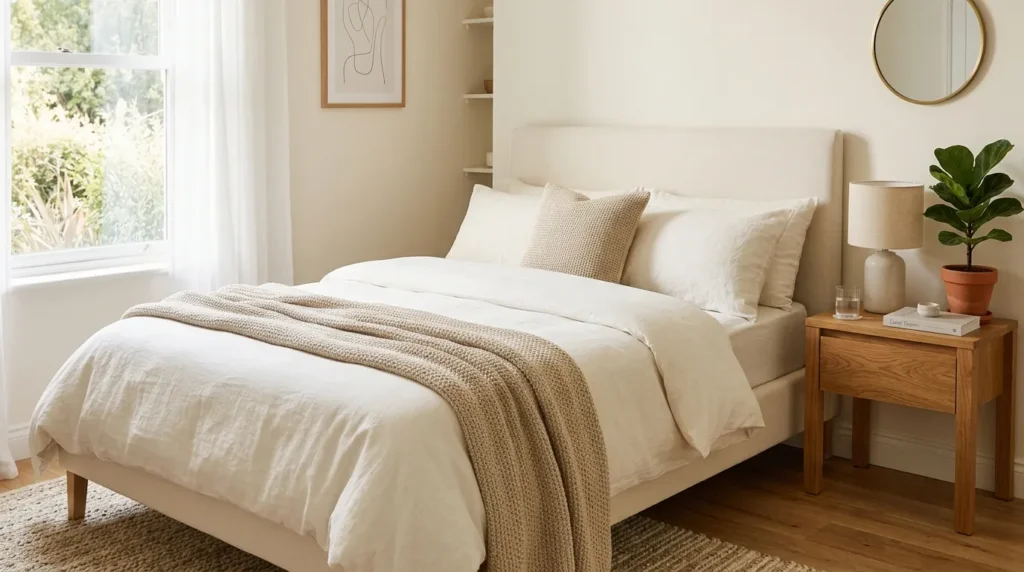
7. Simplify Bedding
Quick Benefits
- Reduces visual bulk
- Creates a cleaner appearance
- Makes the bed feel lighter
- Simplifies maintenance
- Creates a polished look
Why It Works
The bed is often the largest object in a small bedroom.
Heavy layers, oversized pillows, multiple blankets, and complicated patterns can make it visually dominant.
A simpler arrangement can make the entire room feel calmer.
How To Style It
Choose a streamlined duvet or quilt.
Use a limited number of pillows.
Layer one textured throw rather than several blankets.
Keep colors coordinated with the walls and curtains.
This creates continuity instead of making the bed appear like a separate visual block.
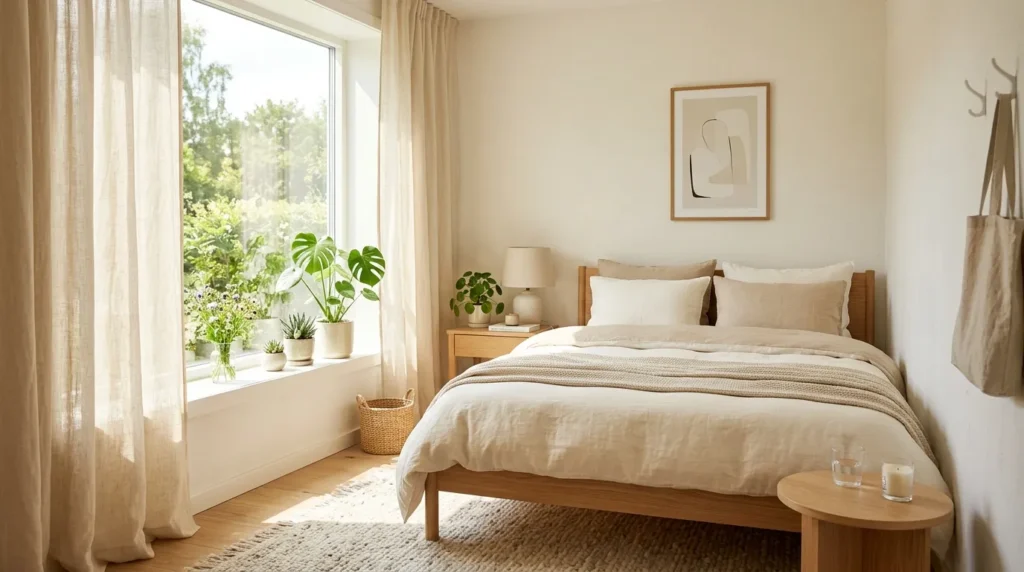
8. Improve Natural Light
Quick Benefits
- Makes the room brighter
- Creates an airy feeling
- Highlights the room’s dimensions
- Improves daytime atmosphere
- Reduces visual heaviness
Why It Works
Natural light can make even a compact room feel more open.
Heavy curtains or crowded windows can reduce this effect.
The goal is to allow daylight into the room while still maintaining the privacy you need.
How To Style It
Use lightweight curtains when appropriate.
Keep window sills relatively clear.
Choose simple shades or blinds if additional privacy is necessary.
Position reflective surfaces where they can bounce daylight into darker areas.
Avoid placing tall furniture directly in front of windows unless necessary.
9. Reduce Visual Clutter
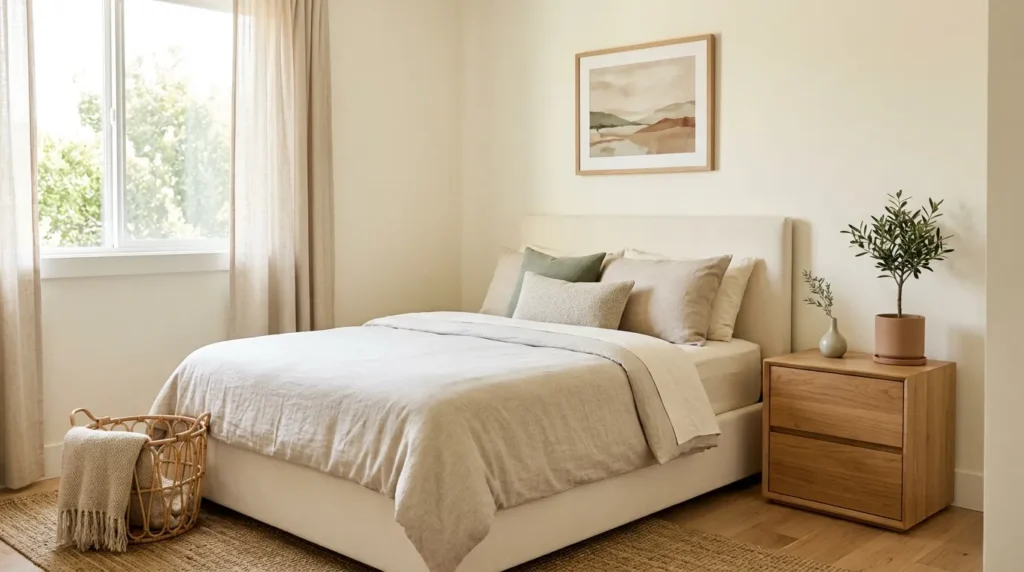
Quick Benefits
- Creates calm
- Makes surfaces appear larger
- Improves organization
- Makes cleaning easier
- Reduces visual noise
Why It Works
Physical size isn’t the only factor that determines how large a room feels.
Visual clutter can make the eye perceive a space as smaller.
Too many colors, objects, patterns, and exposed belongings can create this effect.
How To Style It
Choose a small number of decorative pieces.
Keep nightstands mostly clear.
Store clothing inside drawers and wardrobes rather than leaving it visible.
Use baskets for smaller items.
Group similar objects together instead of scattering them around the room.
10. Create Open Space
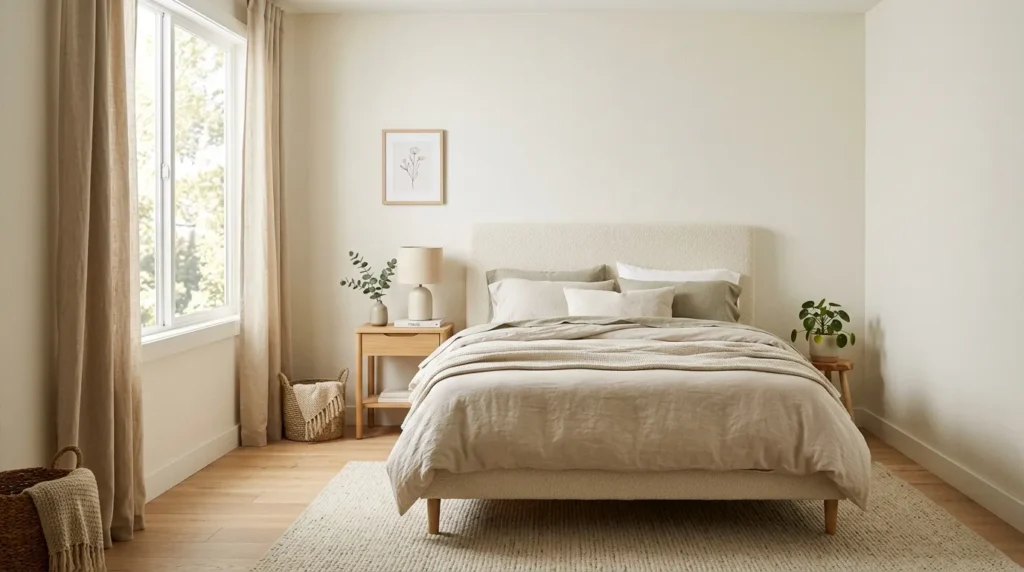
Quick Benefits
- Makes the room breathe
- Improves movement
- Creates visual balance
- Highlights furniture
- Makes cleaning easier
Why It Works
Empty space isn’t wasted space.
In a small bedroom, a clear area can make the entire room feel more comfortable.
You don’t need to decorate every corner.
How To Style It
Leave some wall space empty.
Avoid filling every corner with a chair, plant, basket, or table.
Give the bed enough visual space around it.
Use one focal point rather than competing displays throughout the room.
A little restraint can make a small bedroom feel surprisingly spacious.
How To Make a Small Bedroom Look Bigger on a Budget
You don’t need to replace all your furniture.
Start by rearranging the room.
Remove unnecessary pieces.
Declutter the nightstand and dresser.
Move bulky storage upward where possible.
Use lighter bedding.
Hang curtains higher if appropriate.
Add a strategically placed mirror.
Improve the lighting.
Then step back and evaluate the room before buying anything.
Often, the biggest improvement comes from editing rather than spending.
Best Furniture for a Small Bedroom
Consider:
- Storage beds
- Floating nightstands
- Narrow dressers
- Wall-mounted desks
- Slim wardrobes
- Storage benches
- Folding furniture
- Built-in cabinetry
- Tall bookcases
- Compact accent chairs
Choose based on the actual dimensions of your room.
A beautiful piece isn’t useful if it blocks movement.
Colors That Make Small Bedrooms Feel More Open
Try:
- Warm white
- Soft cream
- Light beige
- Pale greige
- Soft gray
- Dusty blue
- Muted sage
- Blush beige
You can still use darker colors.
Use them strategically through artwork, cushions, wood tones, or small accessories rather than covering every large surface.
Common Small Bedroom Mistakes
Oversized Bed
Choose the largest bed that comfortably fits without overwhelming the room.
Too Many Storage Pieces
Use vertical and integrated storage first.
Heavy Curtains
Choose lighter treatments when privacy requirements allow.
Cluttered Surfaces
Keep decorative objects selective.
Too Many Patterns
Coordinate patterns rather than mixing several competing designs.
Ignoring Corners
Corners can become useful storage or functional zones when planned carefully.
FAQ
How can I make a small bedroom feel less cramped?
Start by removing unnecessary furniture and keeping walking paths clear. Then use lighter colors, vertical storage, strategic mirrors, multifunctional furniture, and simple bedding to reduce visual and physical crowding.
Does a mirror really make a small bedroom look bigger?
A well-positioned mirror can create the impression of additional depth and reflect natural or artificial light. Placement matters, so position it where the reflection adds brightness or visual openness.
What color makes a small bedroom look bigger?
Light warm neutrals such as cream, warm white, pale beige, and soft greige can make a bedroom feel brighter and more open. The best color depends on natural light and the existing finishes.
Should I use a large rug in a small bedroom?
A properly proportioned rug can add warmth, but it shouldn’t interfere with movement. If a large rug overwhelms the room, consider a smaller rug or runner beside the bed.
What furniture should I avoid in a small bedroom?
Avoid furniture that is oversized, unnecessarily deep, or difficult to move around. Multiple bulky storage pieces can quickly consume valuable floor space.
How do I make a small bedroom look expensive?
Use a coordinated color palette, quality-looking textiles, warm lighting, simple window treatments, natural materials, and carefully selected artwork. Keeping the room uncluttered is one of the most effective ways to create a polished appearance.
How do I create more storage without making the room smaller?
Use vertical cabinetry, under-bed drawers, floating shelves, wall-mounted storage, and multifunctional furniture. These options can add capacity while keeping more of the floor open.
Conclusion
A small bedroom doesn’t have to feel cramped.
The key is to think beyond square footage.
Furniture proportions matter.
Clear pathways matter.
Color matters.
Lighting matters.
And perhaps most importantly, visual clutter matters.
Start by removing anything you don’t genuinely need.
Then choose furniture that fits the room rather than forcing the room to accommodate oversized pieces.
Use walls for storage.
Use mirrors strategically.
Keep bedding simple.
Let natural light in.
And leave some areas intentionally empty.
The goal isn’t to make your bedroom look enormous.
It’s to make the available space feel comfortable, balanced, and easy to live in.
With a few thoughtful changes, even a very compact bedroom can feel airy, organized, and inviting.
Related Articles
- 10 Cozy Aesthetic Bedroom Ideas for Small Rooms
- How to Organize a Small Bedroom with Built-In Storage
- How to Organize a Small Bedroom Without Buying Storage
- 10 Modern Bedroom Ideas That Feel Fresh and Bright
- 10 Bedroom Wall Decor Ideas with Oversized Art