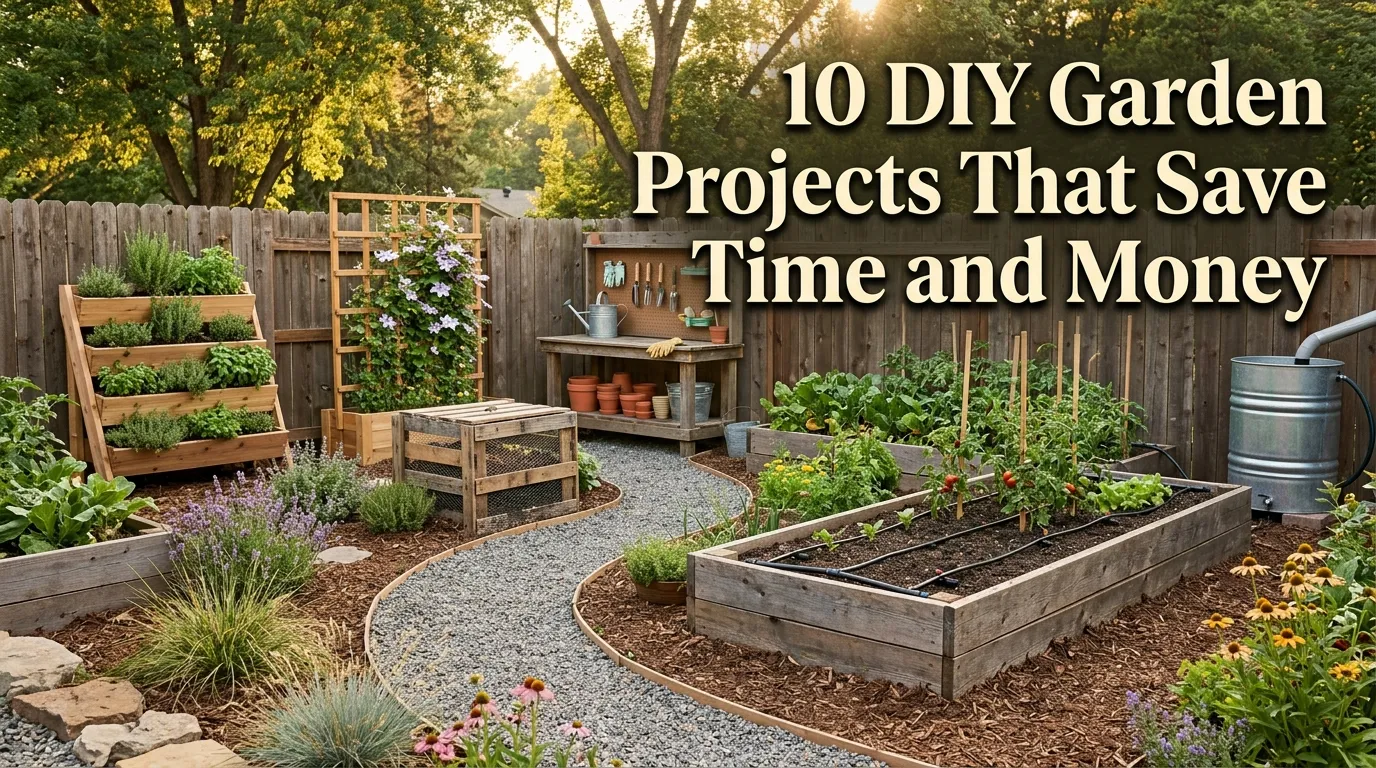
10 DIY Garden Projects That Save Time and Money
Creating a beautiful backyard doesn’t have to mean spending a fortune or dedicating every weekend to maintenance.
Some of the best garden improvements are surprisingly simple. A few inexpensive materials, a little creativity, and a practical plan can turn an ordinary outdoor space into somewhere that feels intentional and inviting.
DIY garden projects are especially useful when you want to personalize your backyard without committing to a major landscape renovation. You can build simple planters, create defined garden paths, improve organization, or add decorative features using materials you already have or can source affordably.
The smartest projects aren’t necessarily the most elaborate ones.
They’re the ones that solve a problem while making the garden look better.
In my experience, projects that reduce repetitive maintenance are particularly valuable. A simple edging solution can keep mulch contained. A well-planned container garden can make watering easier. A designated tool station can eliminate the frustration of searching for equipment.
Before starting a project, think about how you’ll use the garden throughout the season. Choose durable materials, measure carefully, and avoid creating features that require more maintenance than they’re worth.
Here are ten practical DIY garden projects that can help you save both time and money while making your backyard more beautiful.
Table of Contents
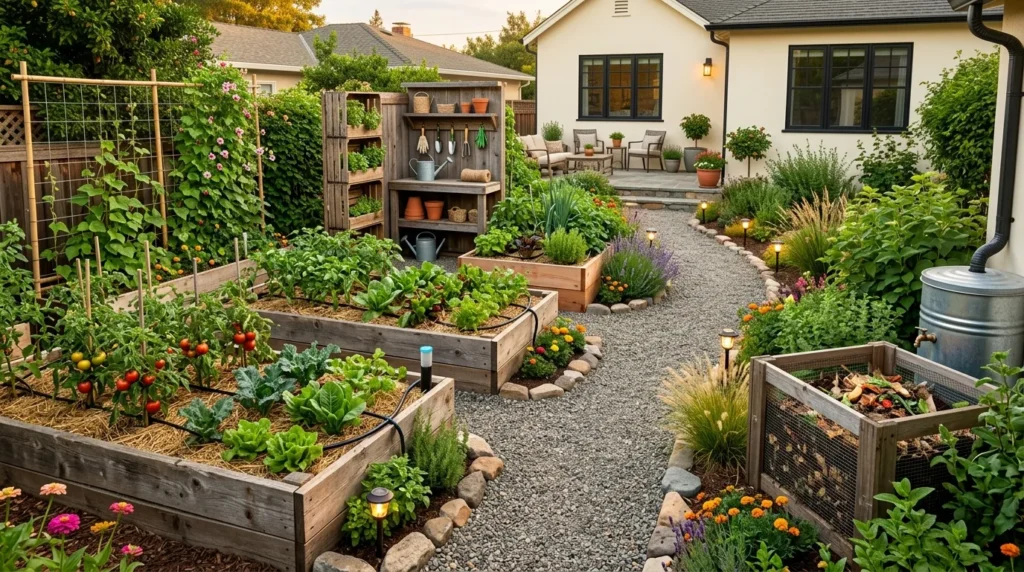
- DIY Raised Garden Beds
- Simple Garden Edging
- Upcycled Container Planters
- DIY Gravel Garden Paths
- Vertical Herb Garden
- Rainwater Collection Area
- DIY Garden Tool Station
- Mulch Garden Borders
- Simple Compost Station
- Low-Maintenance Planter Boxes
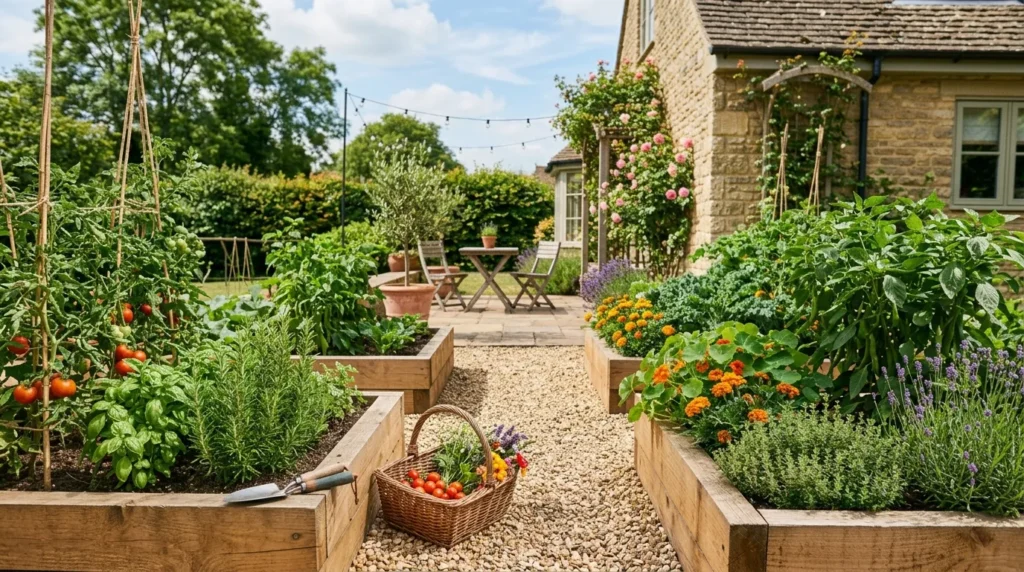
1. DIY Raised Garden Beds
Quick Benefits
- Improves planting organization
- Defines garden areas
- Can reduce bending
- Helps control soil
- Works in small backyards
Why It Works
Raised garden beds create a clear boundary between growing areas and the rest of the landscape.
Instead of spreading plants throughout the yard, you can concentrate vegetables, herbs, or flowers in organized sections.
This can make watering, weeding, and harvesting easier.
Simple raised beds can be constructed from untreated wood or other suitable outdoor materials.
How To Style It
Keep the shape simple.
Rectangular beds are generally easier to construct and maintain.
Leave enough space between beds for comfortable movement.
Fill the beds with appropriate soil and compost, then group plants according to their growing requirements.
For a polished appearance, repeat the same bed material throughout the garden.
2. Simple Garden Edging
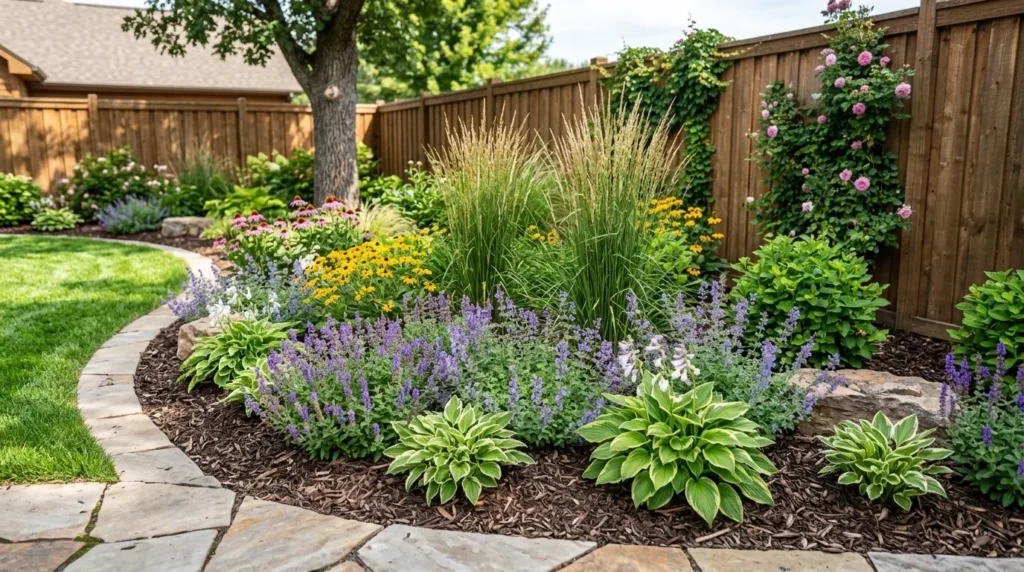
Quick Benefits
- Keeps garden borders defined
- Helps contain mulch
- Makes mowing easier
- Improves visual organization
- Requires relatively little material
Why It Works
Garden beds can quickly lose their shape when soil, mulch, and grass begin mixing together.
Simple edging creates a physical boundary.
This can reduce the amount of time spent repairing borders and make the entire yard appear more professionally maintained.
How To Style It
Create clean, consistent curves or straight lines.
Depending on the garden style, you can use suitable stone, brick, timber, or other landscape edging materials.
Keep the edging proportional to the garden.
A simple border is often more attractive than an overly decorative one.
3. Upcycled Container Planters
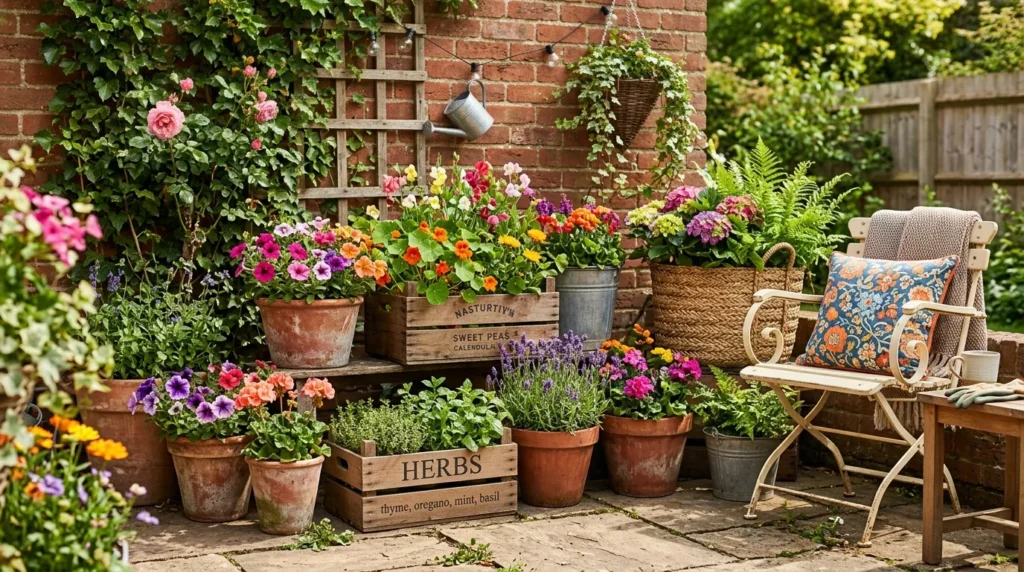
Quick Benefits
- Saves money
- Reuses existing materials
- Adds personality
- Works in small spaces
- Easy to rearrange
Why It Works
Container gardening doesn’t require expensive decorative planters.
Repurposed containers can become attractive homes for herbs, flowers, and compact vegetables as long as they’re suitable for outdoor use and provide proper drainage.
How To Style It
Group containers in sets of three or five.
Mix different heights while keeping the color palette coordinated.
Use larger containers for statement plants and smaller ones for herbs or seasonal flowers.
Place them near patios, steps, entrances, or other areas where you want easy access.
4. DIY Gravel Garden Paths
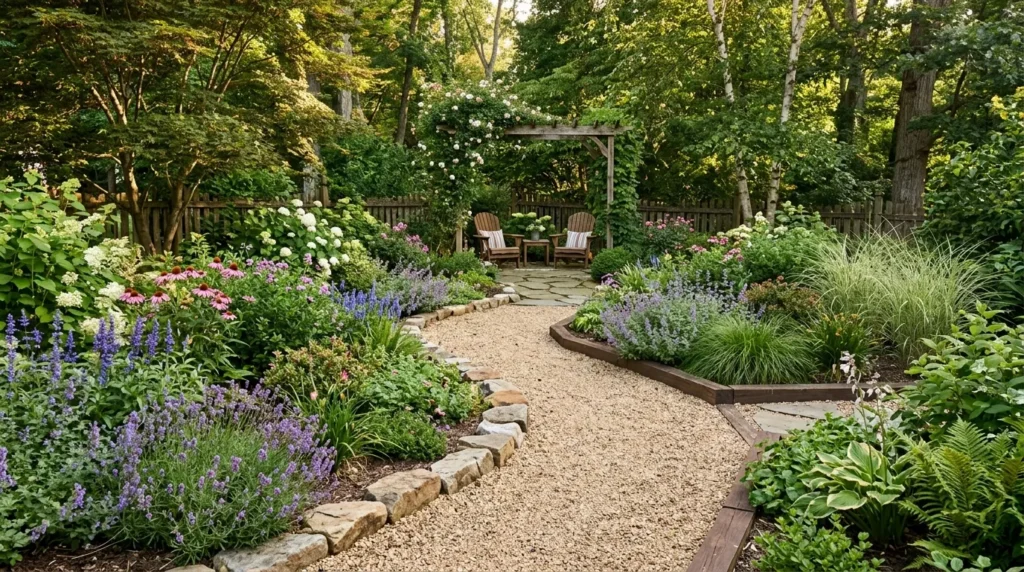
Quick Benefits
- Affordable
- Relatively simple to install
- Defines walking routes
- Improves drainage
- Creates a finished appearance
Why It Works
A gravel path can be much more affordable than a fully paved walkway.
It also creates a clear route through the garden, which helps prevent people from walking through planting areas.
How To Style It
Plan the path before buying materials.
Mark the desired route and establish a consistent width.
Prepare the base appropriately for your site, install suitable edging, and use landscape fabric when appropriate for the conditions.
Choose gravel that complements your home’s exterior and surrounding plants.
5. Vertical Herb Garden
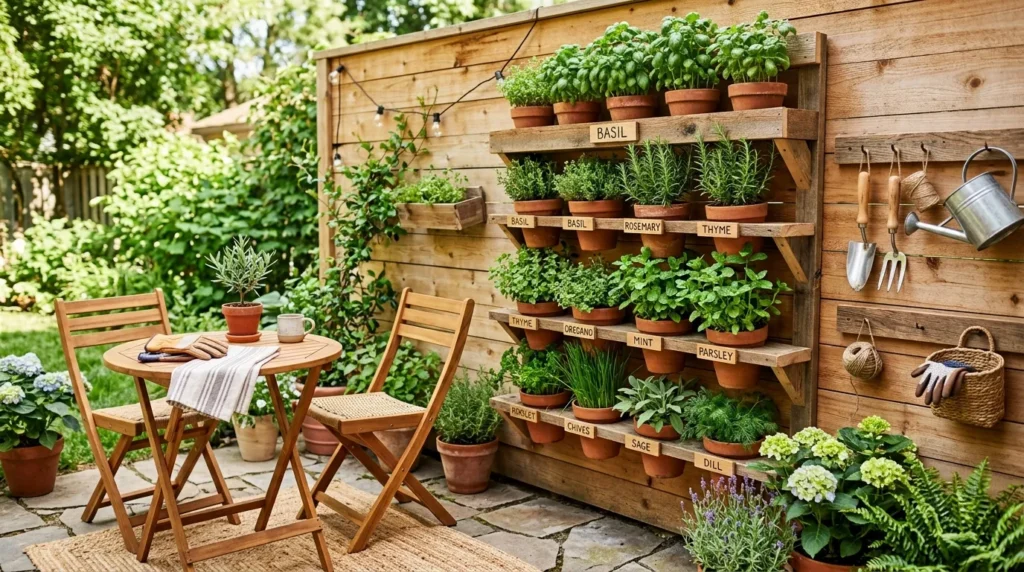
Quick Benefits
- Saves floor space
- Keeps herbs accessible
- Adds greenery
- Works on patios
- Makes watering easier
Why It Works
Growing herbs vertically allows you to use walls, fences, or other suitable structures rather than dedicating a large portion of the garden to herbs.
It’s particularly helpful for small yards.
How To Style It
Use wall-mounted planters, suitable hanging containers, or a simple vertical planter system.
Group herbs according to watering and sunlight needs.
Place frequently used herbs where they are easy to reach.
Add small labels if you grow several varieties.
6. Rainwater Collection Area
Quick Benefits
- Helps reduce water waste
- Provides supplemental garden water
- Can lower watering costs
- Encourages efficient gardening
- Makes use of rainfall
Why It Works
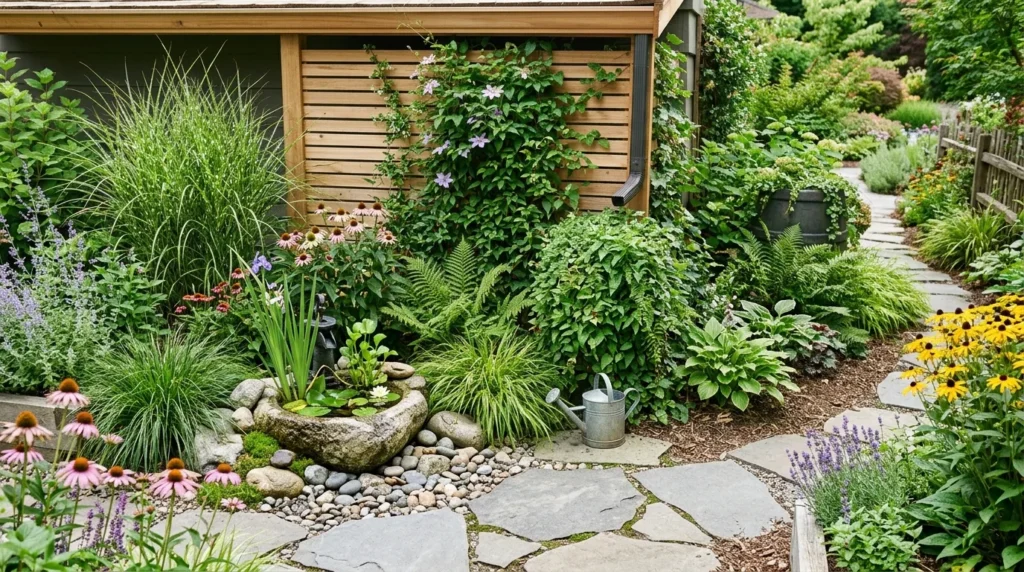
Collecting rainwater can provide an additional water source for suitable garden uses.
The system should be designed carefully for your climate and local requirements.
The simplest approach may involve directing runoff into an appropriate collection container or planted drainage area.
How To Style It
Keep collection equipment visually integrated into the landscape.
Use screening plants or a simple enclosure when appropriate.
Make sure containers are stable and safely covered where needed.
The goal is to make water collection functional without making it the visual focus of the backyard.
7. DIY Garden Tool Station
Quick Benefits
- Keeps tools organized
- Saves searching time
- Protects equipment
- Uses wall space
- Reduces shed clutter
Why It Works
Garden tools are often stored in a messy pile, which makes even simple outdoor tasks more frustrating.
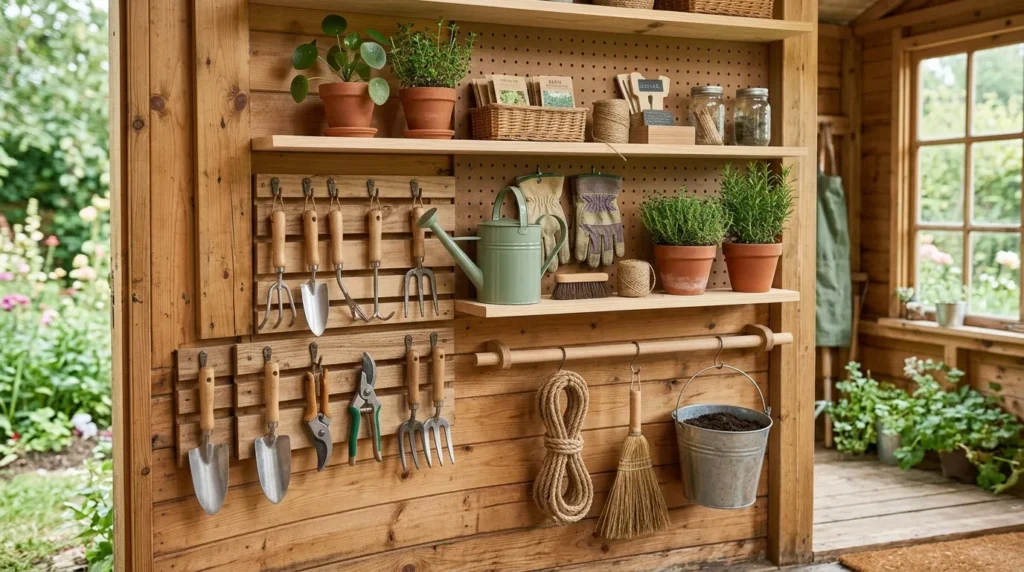
A basic wall-mounted organization system can give every frequently used tool a designated location.
How To Style It
Install hooks or suitable storage hardware on a sturdy wall or inside a shed.
Group tools by type.
Keep frequently used hand tools at an easy height.
Store heavier equipment appropriately and safely.
Add simple labels if multiple people use the garden.
8. Mulch Garden Borders
Quick Benefits
- Helps conserve soil moisture
- Reduces weed competition
- Gives beds a finished look
- Can reduce maintenance
- Protects soil
Why It Works
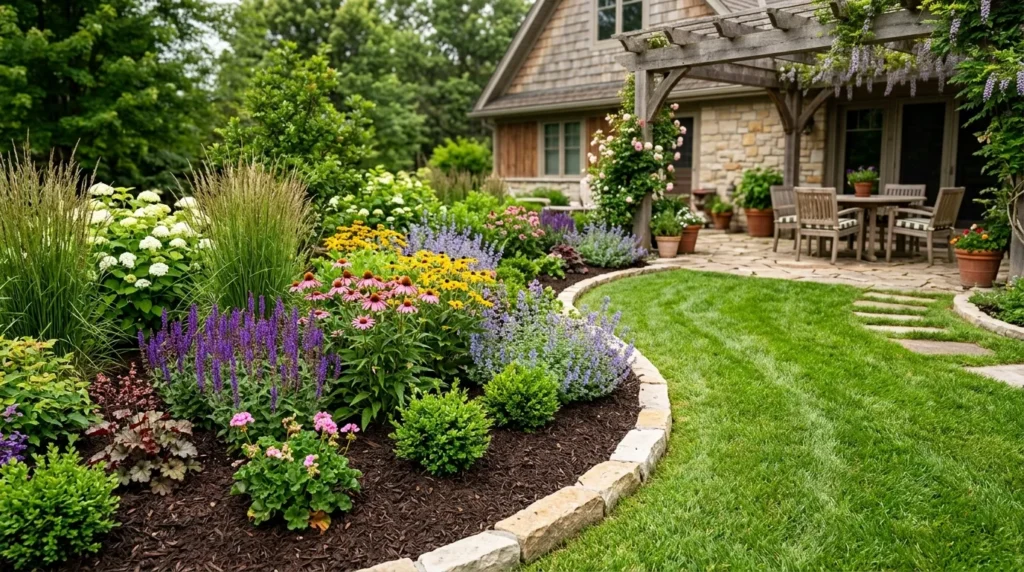
A properly applied layer of suitable mulch can help reduce some garden maintenance while giving planting beds a neat, intentional appearance.
It can also visually connect different garden areas.
How To Style It
Keep mulch at an appropriate depth for the material and plants.
Avoid piling it directly against tree trunks or plant stems.
Create consistent bed edges.
Choose a mulch color that complements your home’s exterior and surrounding hardscape.
9. Simple Compost Station
Quick Benefits
- Reuses suitable garden waste
- Produces useful organic material
- Reduces certain household waste
- Supports garden health
- Saves money on amendments
Why It Works
Composting can turn suitable organic materials into a useful soil amendment.
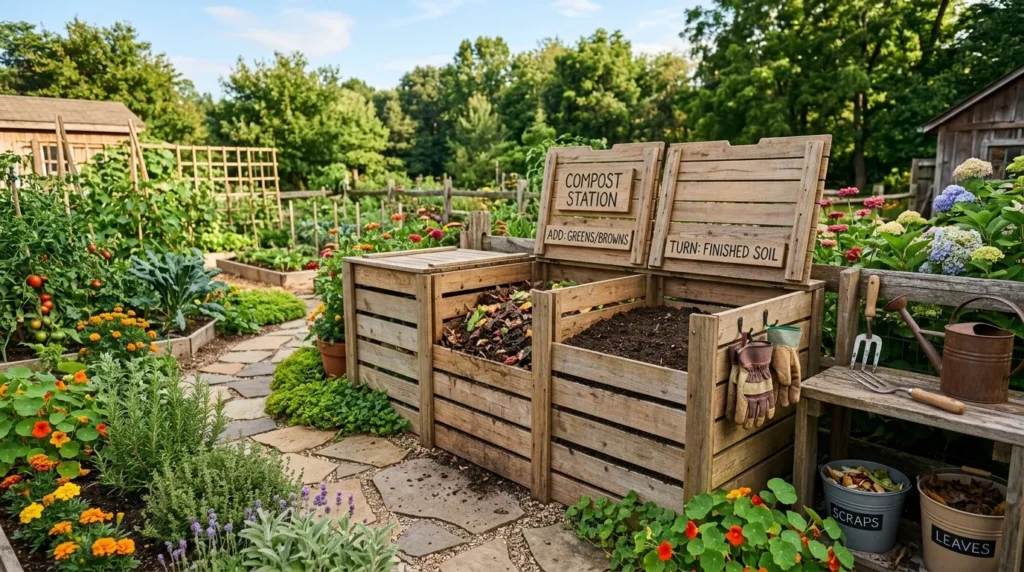
A simple designated compost area is often enough to get started.
You don’t need an elaborate structure if you’re learning the basics.
How To Style It
Choose a practical location with appropriate shade, drainage, and access.
Use a suitable compost bin or designated enclosure.
Keep the system organized and follow appropriate composting practices for your area.
Position it where it is convenient enough to use regularly but doesn’t interfere with outdoor entertaining.
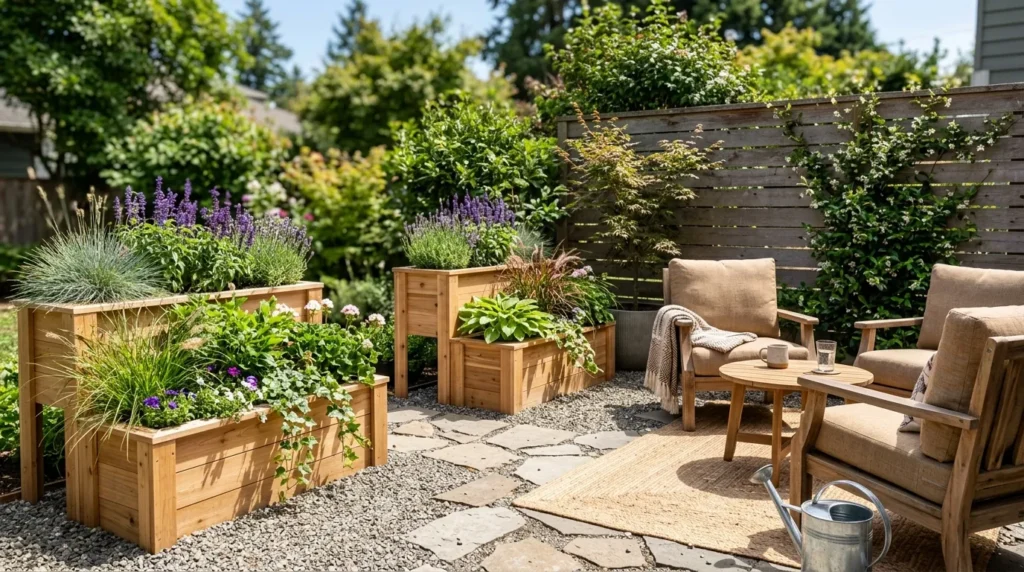
10. Low-Maintenance Planter Boxes
Quick Benefits
- Organizes plants
- Simplifies maintenance
- Works in small yards
- Creates structure
- Adds curb appeal
Why It Works
Planter boxes create controlled growing spaces and can be easier to manage than scattered planting beds.
They work particularly well around patios, decks, fences, and entrances.
How To Style It
Choose durable outdoor materials.
Use plants suited to your climate, light conditions, and available watering.
Group plants with similar care requirements together.
Repeat the same planter design in several locations for a cohesive landscape.
How To Save More Money on DIY Garden Projects
The easiest way to reduce costs is to plan before purchasing materials.
Measure everything.
Make a materials list.
Reuse suitable materials whenever possible.
Start with one project rather than attempting to renovate the entire yard at once.
You can also prioritize projects that solve an existing problem.
For example, a simple tool station may save time every time you garden, while decorative additions may be better saved for later.
DIY Garden Projects Worth Prioritizing
If your goal is saving time, start with:
- Garden edging
- Tool organization
- Mulch beds
- Easy-access planters
- Defined pathways
If your goal is saving money, consider:
- Upcycled planters
- Simple raised beds
- DIY gravel paths
- Composting
- Container gardening
The best projects often accomplish both.
Materials That Work Well for Budget Garden Projects
Depending on the project and your local conditions, consider:
- Natural stone
- Gravel
- Untreated appropriate outdoor lumber
- Reclaimed materials suitable for garden use
- Terracotta containers
- Metal planters
- Compost
- Organic mulch
- Simple hardware
- Outdoor-rated hooks
Always choose materials appropriate for outdoor exposure and intended use.
Common DIY Garden Mistakes
Skipping Measurements
Incorrect measurements can waste both materials and money.
Choosing Plants Without Checking Conditions
Consider sunlight, soil, drainage, climate, and watering needs.
Creating Too Many Maintenance Zones
A beautiful garden isn’t useful if every section requires constant attention.
Ignoring Drainage
Poor drainage can damage plants and structures.
Buying Before Planning
Make a materials list before heading to the store.
Making Everything Permanent
Start with flexible projects when you’re still learning how you want to use the space.
FAQ
What is the easiest DIY garden project?
Upcycled container planters and simple garden edging are among the easiest projects for beginners. They require relatively few materials and can make an immediate visual difference.
How can I make my backyard look expensive on a budget?
Focus on clean garden borders, consistent materials, defined pathways, grouped plants, and a limited color palette. Good maintenance and organization can make inexpensive materials look much more intentional.
What DIY garden project saves the most time?
Projects that improve organization and reduce repetitive maintenance can have the biggest long-term impact. Tool stations, defined garden beds, proper edging, and mulched planting areas are practical examples.
Are raised garden beds worth making?
They can be worthwhile when you want organized growing areas, better access, or more control over the planting environment. Their usefulness depends on your garden goals and site conditions.
Can I use recycled containers as planters?
Yes, many suitable containers can be repurposed as planters. Make sure they are appropriate for outdoor use, provide drainage, and are safe for the plants and intended growing purpose.
What is a low-maintenance garden project?
Projects that simplify watering, reduce weeds, improve organization, or define planting areas can help reduce maintenance. Choosing plants suited to your local growing conditions is equally important.
How do I start a DIY garden project?
Choose one specific problem to solve, measure the area, research suitable materials, create a simple budget, and prepare the site before purchasing everything.
Conclusion
DIY gardening doesn’t have to mean complicated construction or expensive landscaping.
Some of the most useful improvements are simple.
A defined garden edge can reduce maintenance.
A vertical herb planter can save space.
A tool station can make gardening more convenient.
A gravel path can organize the backyard.
And a well-planned planter box can add structure without requiring a complete landscape renovation.
The smartest approach is to start with function.
Ask yourself what currently frustrates you about your garden.
Do you spend too much time searching for tools?
Are planting beds difficult to maintain?
Does the backyard lack a clear walking route?
Are you spending too much money on containers or soil amendments?
Choose a project that addresses one of those problems.
Then build from there.
With thoughtful planning, inexpensive materials, and a willingness to do some of the work yourself, you can create a backyard that looks more organized, feels more inviting, and is easier to maintain.
Related Articles
- 10 Backyard Landscape Design Ideas for Outdoor Entertaining
- 10 Garden Decor Ideas Using Budget-Friendly Materials
- 10 Garden Decor Ideas That Transform Any Backyard
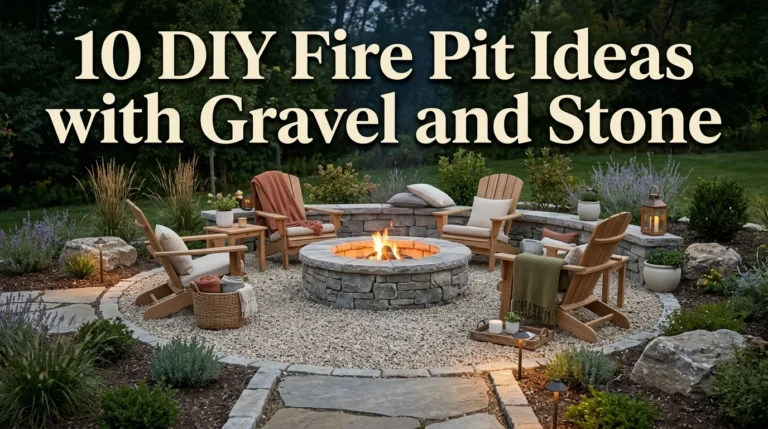
- 10 DIY Fire Pit Ideas with Gravel and Stone
- 10 DIY Garden Projects That Look Expensive