
What Is the Standard Width for an Individual Mudroom Locker (15″-18″)?
{“title”:”What Is the Standard Width for an Individual Mudroom Locker (15\”-18\”)?”}
When planning a home entry area, many people wonder about the standard width for an individual mudroom locker (15″-18″). Choosing the right dimensions is essential for keeping your family’s gear organized without overwhelming your hallway or entryway. Most professional designers and custom cabinet makers agree that 15 to 18 inches serves as the sweet spot for a single user’s storage space.
This range balances the need for hanging heavy winter coats against the limited square footage typical of modern homes. By understanding these proportions, you can ensure your mudroom design remains functional for years to come.
Understanding the standard width for an individual mudroom locker (15″-18″) helps you maximize your available floor space effectively. While you might be tempted to go wider for extra room, doing so often reduces the total number of lockers you can fit along a single wall.
Conversely, dropping below 15 inches makes it difficult to store bulky items like backpacks or thick jackets. A 15-inch width is typically considered the absolute minimum for a functional locker, while 18 inches provides a more comfortable, airy feel for adult-sized garments.
Why 15 Inches Is the Functional Minimum
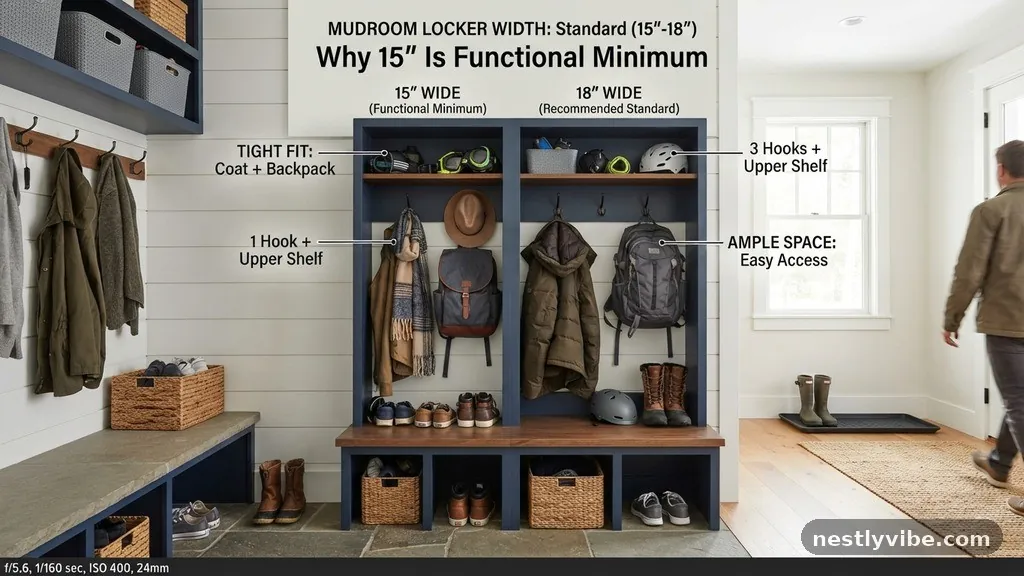
If you are working with a very narrow hallway, 15 inches is the standard width for an individual mudroom locker (15″-18″) that you should stick to. This dimension allows just enough room for a standard coat hanger to sit perpendicular to the back wall.
It also provides enough clearance for a person to reach in and grab a jacket without struggling against the side panels. While it may feel tight for heavy parkas, it is perfectly adequate for light jackets, umbrellas, and smaller bags.
The Advantages of 18-Inch Lockers
Scaling up to 18 inches offers a noticeable improvement in usability for larger households. This width allows you to fit wider items, such as equipment bags or sports gear, without them spilling over into the adjacent storage unit.
It also creates a more symmetrical visual appearance, which many homeowners prefer for a clean, custom look. If your space allows, opting for the higher end of the 15-18 inch range is almost always the better choice for long-term satisfaction.
Beyond the width, several other variables play a role in the overall design of your storage system. You must account for the thickness of the cabinet materials, which can add up if you are installing a long row of units.
If you use standard 3/4-inch plywood for your dividers, a 15-inch opening actually consumes slightly more than 15 inches of wall space once you include the frame. Always measure your total wall length carefully to ensure your final layout matches your initial plans.
Accounting for Material Thickness
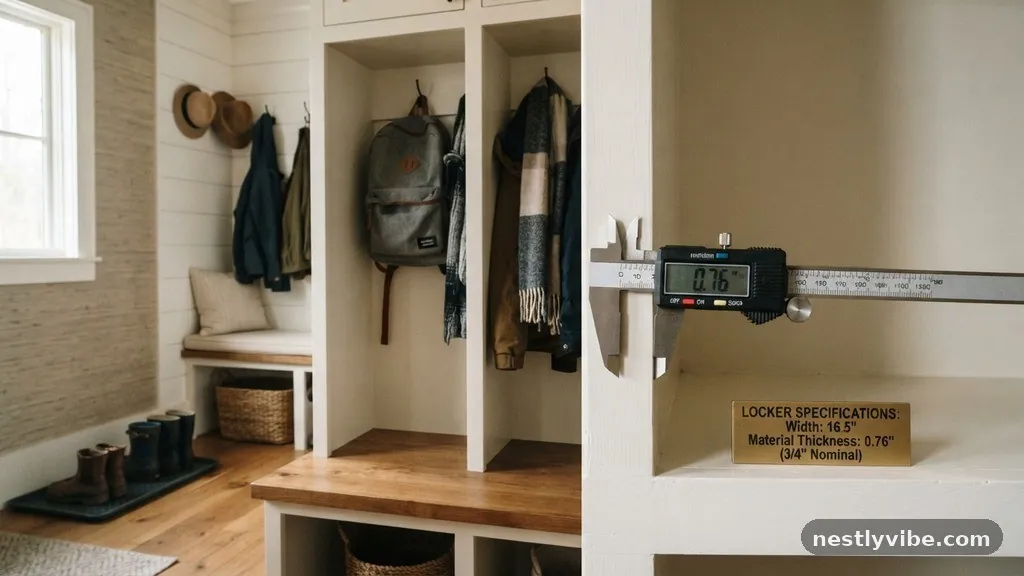
The structural integrity of your mudroom lockers depends on the materials you choose, such as high-density fiberboard or solid wood. These materials have different thicknesses that impact the “net” storage space available per unit.
If you plan for a specific number of lockers, subtract the cumulative thickness of all the vertical panels from your total wall length first. This simple calculation prevents the frustrating realization that your final locker is two inches too narrow to fit the design.
Depth Requirements for Effective Storage
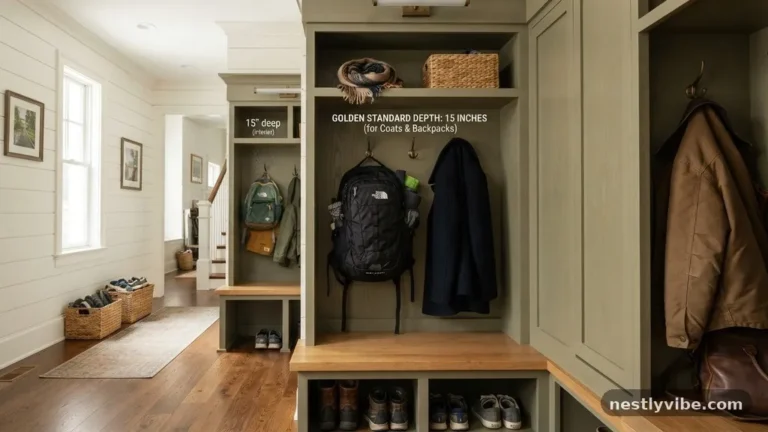
While width is critical, depth is equally important for keeping your mudroom organized. Most experts recommend a depth of at least 18 to 24 inches to ensure coats don’t hang over the edge of the bench.
If your lockers are too shallow, the door will not close properly when the unit is full. You can find more detailed technical standards on the Woodwork Institute website regarding cabinet construction and standard dimensions for residential cabinetry.
Comparing Locker Widths for Different Users
Not every person in your home needs the same amount of space. Children, for instance, can often get by with narrower units, while adults require more room for oversized coats.
You might choose to mix and match widths within the same wall to optimize your floor plan. A common strategy involves using 18-inch sections for adults and 15-inch sections for younger family members.
| User Type | Recommended Width | Best Use Case |
|---|---|---|
| Young Children | 12-15 inches | Small backpacks and light jackets |
| Teenagers | 15-18 inches | Sports equipment and school supplies |
| Adults | 18-24 inches | Heavy coats and work gear |
This tiered approach ensures that your mudroom remains efficient without wasting space where it isn’t needed. By tailoring the width to the specific needs of each user, you can keep the entire family organized. This level of customization is one of the primary benefits of building or installing custom lockers rather than relying on pre-fabricated units.
Optimizing the Bench and Floor Area
The bench is an integral part of any mudroom locker system. It provides a spot to put on shoes, which helps keep the rest of your home clean.
The bench width should generally match the locker width to maintain a consistent aesthetic. If you have 18-inch lockers, your bench sections should ideally be 18 inches wide as well.
Supporting the Bench Structure
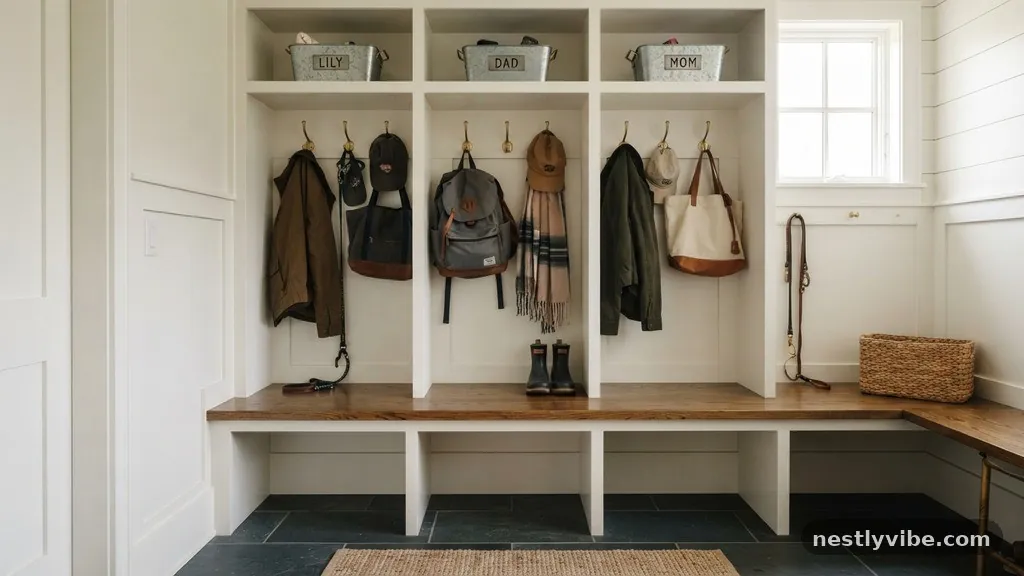
A sturdy bench needs proper support, especially if it is being used by adults. You should ensure there is a vertical support panel or a heavy-duty bracket under every transition point between lockers.
This prevents the bench from sagging over time under the weight of people sitting on it. Using a continuous piece of material for the bench top can also improve the strength of the unit.
Managing Floor Space Beneath the Bench
The area beneath your bench is prime real estate for shoe storage. If you choose a 15-inch width, you can typically fit two pairs of adult shoes side-by-side.
An 18-inch width might allow for three pairs, depending on the size of the footwear. Keeping this area open or adding a simple shelf helps keep the floor clear of clutter.
Hardware and Accessory Considerations
The hardware you choose can impact how much actual space you have inside each locker. Bulky hooks that protrude significantly into the space can make a 15-inch locker feel much smaller than it is.
Opting for low-profile hooks or double-pronged hooks can help you maximize the interior volume. You should also consider the placement of these hooks to ensure they don’t interfere with one another.
Maximizing Vertical Storage
Most mudroom lockers utilize the vertical space above the hooks for additional storage. Adding a shelf 12 to 15 inches above the main hanging area creates a perfect spot for hats, gloves, or baskets.
This keeps smaller items contained and off the floor, which is essential for maintaining an organized home. Make sure the shelf is deep enough to hold a basket but not so deep that it blocks access to the hooks below.
The Impact of Door Design
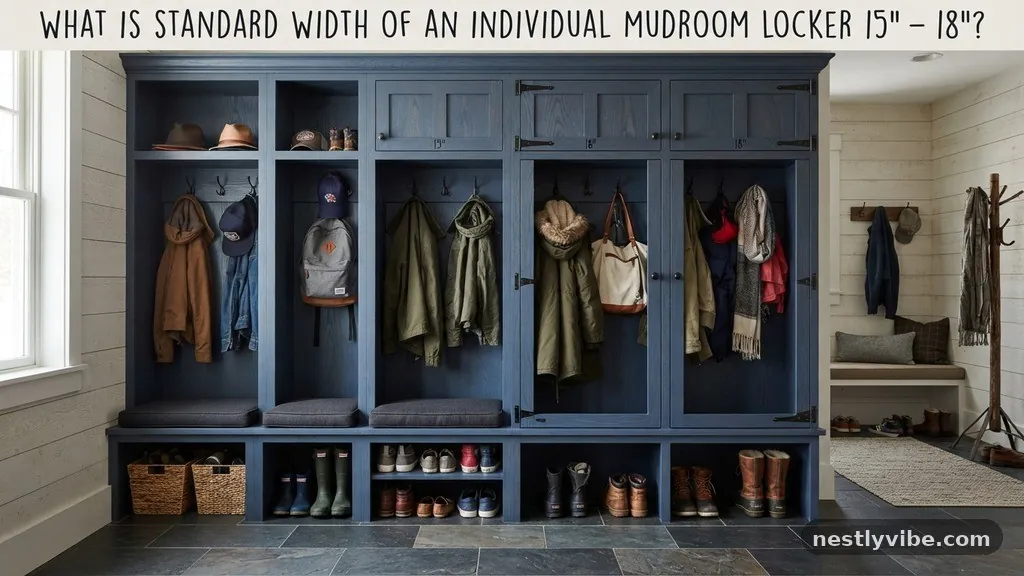
Deciding whether to include doors on your lockers is a major design choice. Doors hide the visual clutter of coats and bags, which makes your entryway look much tidier.
However, doors require swing space, which can be an issue in narrow hallways. If you lack the room for a door, open-front lockers are a popular and stylish alternative.
Common Mistakes When Planning Locker Widths
Many homeowners underestimate the amount of space needed for winter gear. A coat that looks small on a hanger takes up significant volume once it is on a hook.
If you design your lockers based on how they look empty, you will likely find them too crowded once winter arrives. Always design for the “worst-case scenario” of heavy, bulky items.
Ignoring the “Swing” of Adjacent Doors
If your mudroom is located near a doorway, ensure your locker doors don’t interfere with the room’s main entrance. A door that hits a locker panel every time it opens will eventually cause damage to both surfaces.
Take a moment to measure the swing of all nearby doors before finalizing your layout. It is often better to shrink a locker by an inch or two than to have a door that cannot fully open.
Overlooking the Need for Ventilation
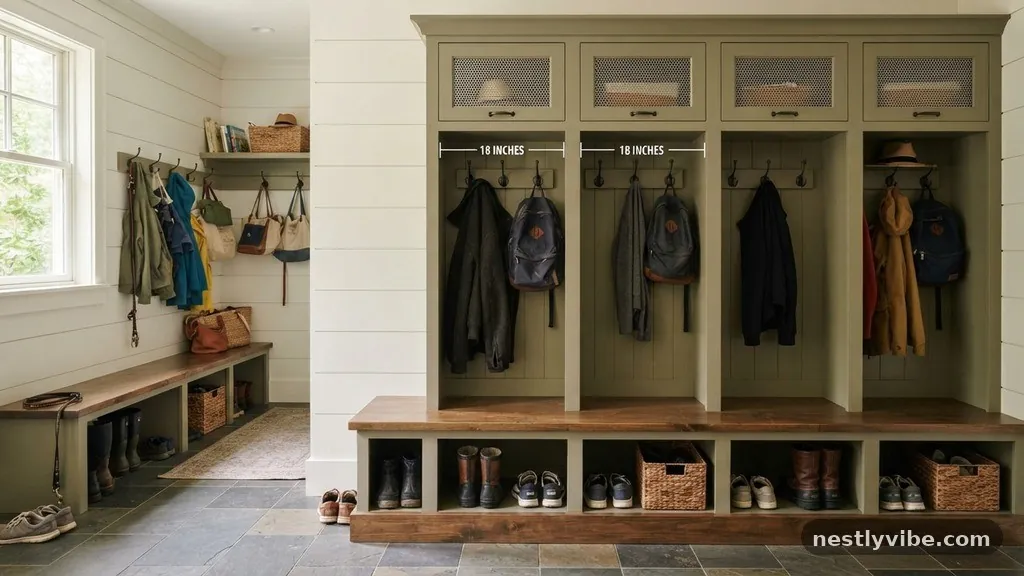
Mudrooms can become damp, especially with wet boots and coats. If you are using enclosed cabinets, consider adding ventilation holes or using decorative grilles on the doors.
This allows air to circulate, which helps clothes dry faster and prevents musty odors. A small amount of airflow can make a huge difference in the longevity of your gear.
Maintaining Your Mudroom Organization
Once your lockers are installed, maintaining the order is the next challenge. Assigning one locker per family member is the most effective way to keep things tidy.
Encourage everyone to hang their coats and place their shoes in their designated spot immediately upon entering the home. This habit prevents the “pile-up” that often occurs in busy entryways.
Seasonal Rotations
Your storage needs will change depending on the season. During the summer, your lockers might hold light jackets, hats, and sandals.
In the winter, they will be filled with heavy parkas, scarves, and boots. Periodically clearing out items that are out of season will free up space for the gear you are actually using.
The Role of Baskets and Bins
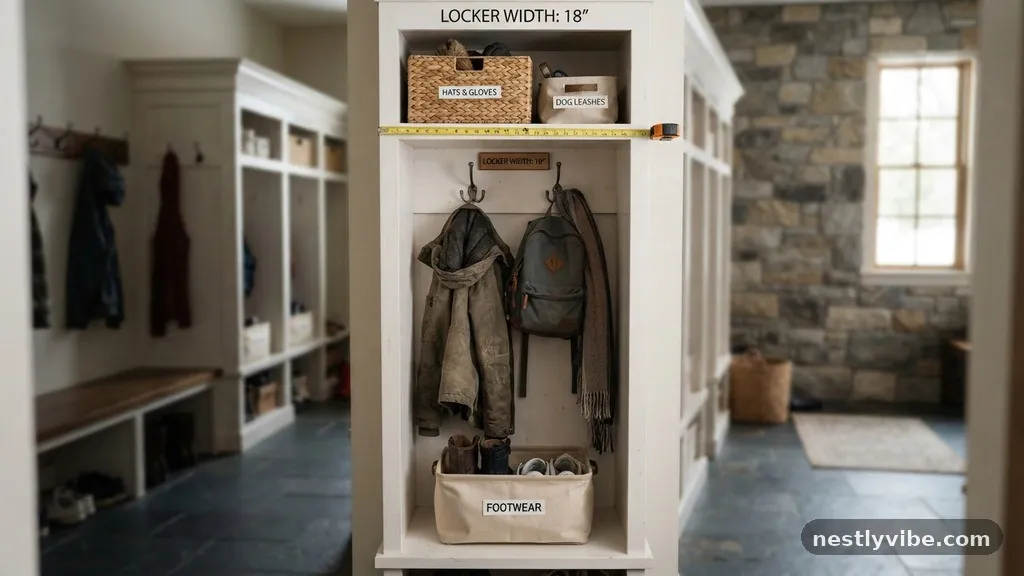
Using labeled bins on the upper shelves can help keep small items organized. This is particularly helpful for kids who might otherwise throw their accessories on the floor.
Bins also make it easier to pull items out and see what is inside without having to dig through a pile. Choose bins that fit the width of your lockers to ensure a uniform and clean look.
Selecting the Right Materials for Durability
Your mudroom will endure a lot of wear and tear, so material selection is crucial. Avoid soft woods that dent easily, as they will look worn within a few months.
Hardwoods like oak or maple are excellent choices for bench tops because they can withstand the weight and the constant contact with shoes. For the vertical panels, high-quality plywood or melamine-coated boards are durable and easy to clean.
Finishing Options for High-Traffic Areas
A durable finish is just as important as the base material. Use high-quality paints or sealants that are designed for high-traffic areas.
A semi-gloss or satin finish is usually best, as it is easier to wipe down than a flat or matte finish. If you are using wood, a clear polyurethane coat will protect the surface from scratches and moisture.
Hardware Durability
Don’t skimp on the hardware. You will be pulling on these hooks and handles every single day, so choose high-quality materials.
Stainless steel or solid brass hooks are durable and look great in almost any home. Test the hooks for strength before installing them to ensure they can hold the weight of a heavy winter coat.
Frequently Asked Questions
Can I make my lockers narrower than 15 inches?
While you can technically build a locker of any size, going below 15 inches makes it very difficult to store standard adult clothing. A width of 12 inches might work for small children, but it will quickly become useless as they grow older. If you have very limited space, consider using wall-mounted hooks instead of full-size lockers to save room.
How high should the bench be?
The standard height for a mudroom bench is typically between 16 and 18 inches from the floor. This is the same height as a standard chair, which makes it comfortable for most adults to sit on while putting on shoes. If you have very young children, you might consider a slightly lower bench, but keep in mind that it will become less comfortable as they grow.
Do I need doors on my mudroom lockers?
Doors are a matter of personal preference and style. They are excellent for hiding clutter and keeping the space looking neat, but they require more room for clearance. If you want a more open and accessible look, open-front lockers are a great option that can still look very organized if you use matching bins and hooks.
How much space should be between the bench and the hooks?
You should leave at least 30 to 36 inches of vertical space between the top of the bench and the hooks. This ensures that even long winter coats can hang freely without hitting the bench. If you have limited wall height, you might have to compromise, but try not to go below 24 inches if possible.
Should I use a back panel for my lockers?
A back panel is highly recommended to protect your wall from scuffs and moisture. It also provides a sturdy surface to mount your hooks, which is much better than screwing them directly into drywall. If you are going for a custom look, you can use beadboard or shiplap for the back panel to add visual interest.
Final Thoughts on Mudroom Design
Designing your entry area with the correct dimensions is the key to a functional and stress-free home. Knowing that the standard width for an individual mudroom locker (15″-18″) provides a solid foundation for your project. By sticking to these guidelines, you can create a space that accommodates your family’s needs while maintaining a clean, professional aesthetic.
Remember to account for material thickness, user needs, and seasonal changes when planning your layout. With careful preparation and the right dimensions, you will have a mudroom that serves your household for many years. Feel free to experiment with different finishes and organizational accessories to make the space truly your own, and enjoy the convenience of a well-organized entryway.