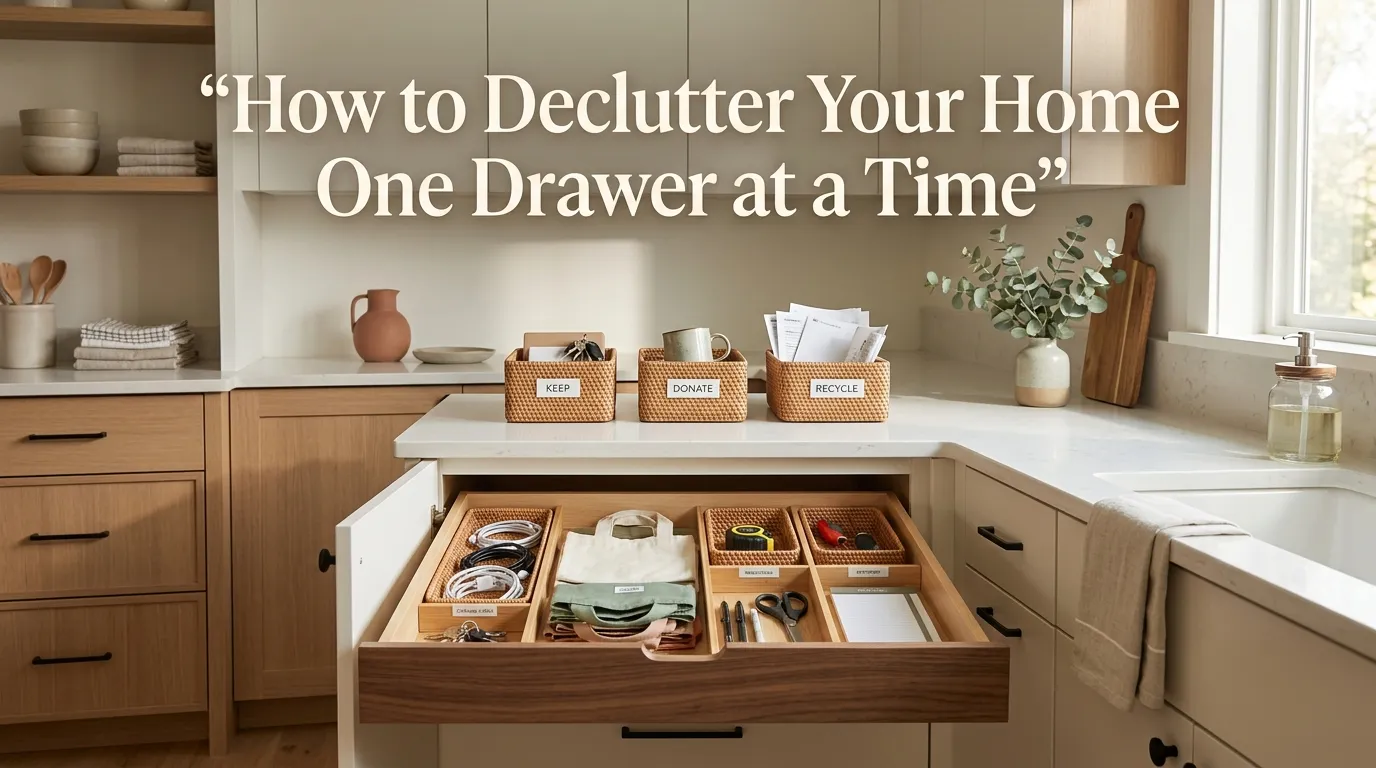
How to Declutter Your Home One Drawer at a Time
Decluttering an entire home can feel overwhelming when you look at everything at once.
Closets are full, kitchen drawers barely close, bathroom cabinets contain products you forgot you owned, and miscellaneous items seem to collect in every available corner.
The good news is that you don’t have to tackle your entire home in one exhausting weekend.
Sometimes the easiest way to create lasting change is to start smaller—much smaller.
One drawer at a time.
A single drawer is manageable. You can empty it, make decisions, clean it, and put everything back in a relatively short amount of time. That small accomplishment creates momentum, and before long, several small areas can become noticeably easier to use.
The key is not simply removing things. Effective decluttering means deciding what deserves the space you have and creating a system that makes everyday items easy to find.
In my experience, the best decluttering sessions are the ones that don’t leave you exhausted. You want a process you can repeat whenever you have 10, 20, or 30 minutes available.
The following ideas will help you work through your home gradually, beginning with the easiest drawers and moving toward spaces that usually require more thoughtful decisions.
Table of Contents
1. Start With Junk Drawers
Clear the miscellaneous items that accumulate quickly.
2. Organize Kitchen Drawers
Make cooking essentials easier to access.
3. Sort Bathroom Drawers
Remove expired and unnecessary products.
4. Refresh Bedroom Drawers
Create more usable clothing storage.
5. Simplify Desk Drawers
Reduce office clutter and duplicates.
6. Declutter Entry Drawers
Create an organized landing zone.
7. Sort Utility Drawers
Keep household tools easy to find.
8. Create Drawer Categories
Give every item a logical home.
9. Use Simple Organizers
Prevent clutter from returning.
10. Maintain One Drawer
Build a routine that keeps your progress going.
1. Start With Junk Drawers
Quick Benefits
- Easy starting point
- Creates quick progress
- Removes miscellaneous clutter
- Takes little time
- Builds decluttering momentum
Why It Works
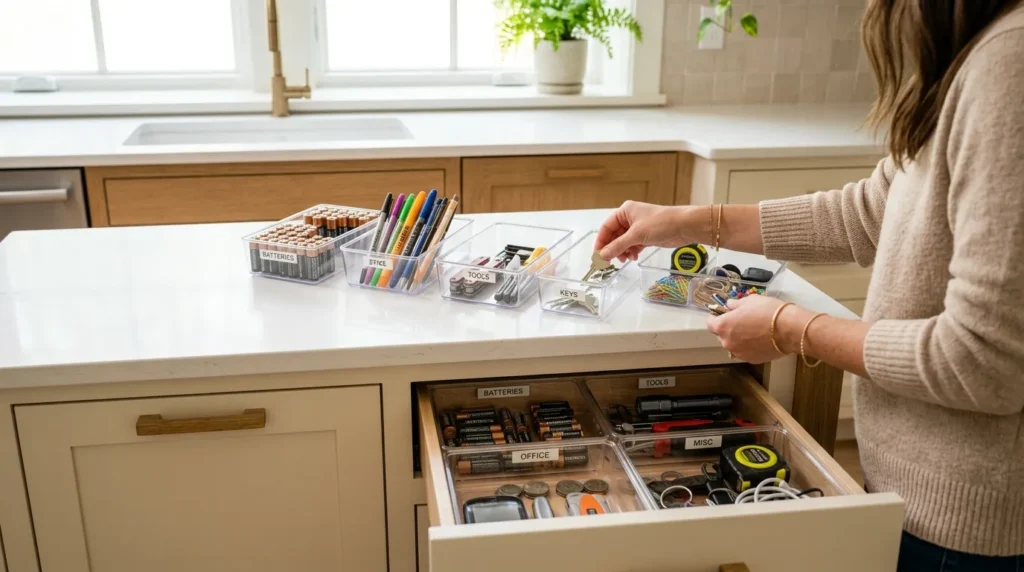
The classic junk drawer is often the perfect place to begin because it usually contains a mixture of objects that don’t have obvious homes.
Old batteries, random screws, takeout menus, rubber bands, pens, receipts, keys, and small household items can accumulate surprisingly quickly.
Because the space is relatively small, you can make visible progress without committing hours to the project.
How To Style It
Remove everything from the drawer.
Place similar objects together on a counter or table.
Throw away obvious trash and move items that belong elsewhere.
Then decide what genuinely deserves to remain.
Use a few simple compartments to separate categories such as writing supplies, household tools, and small accessories.
Don’t fill every section just because space is available.
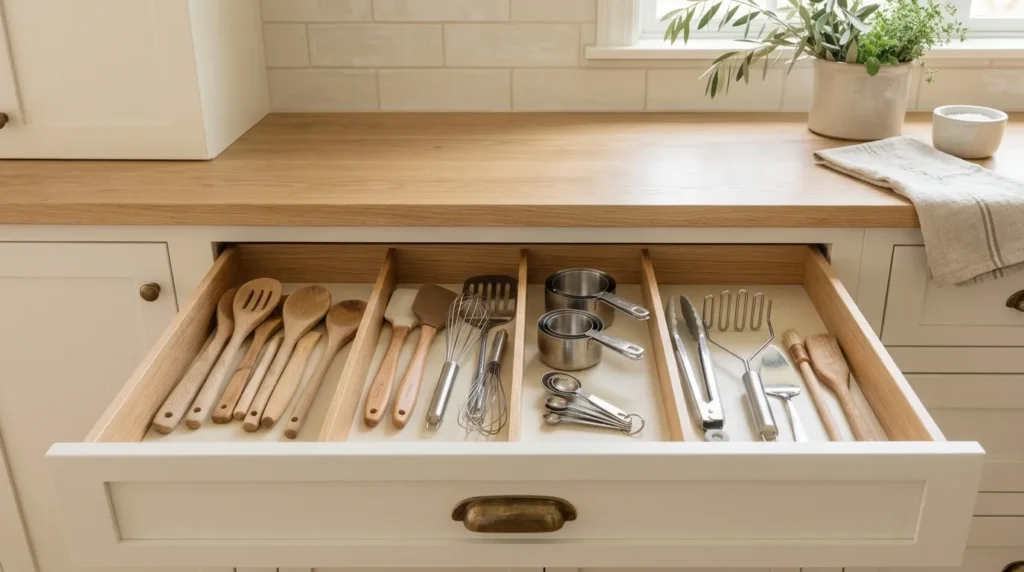
2. Organize Kitchen Drawers
Quick Benefits
- Improves cooking efficiency
- Makes utensils easier to find
- Removes duplicates
- Frees valuable storage
- Creates a cleaner kitchen
Why It Works
Kitchen drawers can become cluttered because many utensils look useful even when you rarely reach for them.
Duplicates are especially common.
You may have several spatulas, measuring spoons, peelers, bottle openers, and miscellaneous gadgets competing for the same space.
Decluttering allows the drawer to support the way you actually cook.
How To Style It
Empty one kitchen drawer at a time.
Group utensils by function.
Keep everyday tools in the easiest-to-reach drawer.
Move rarely used specialty items elsewhere if you genuinely need them.
Donate duplicates that are still useful and discard broken or unusable pieces appropriately.
Use a drawer divider to keep categories separated.
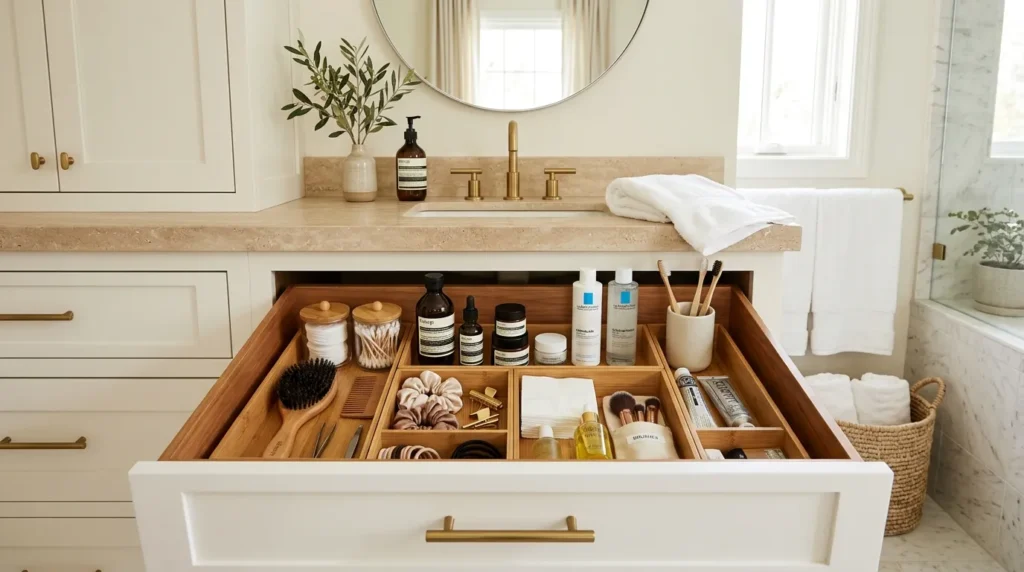
3. Sort Bathroom Drawers
Quick Benefits
- Removes expired products
- Makes essentials visible
- Reduces duplicates
- Improves daily routines
- Creates more storage space
Why It Works
Bathroom drawers can quietly accumulate products you no longer use.
Old cosmetics, dried-out products, sample-size toiletries, empty packaging, and duplicate items can take over valuable space.
A simple reset can make your morning and evening routines noticeably easier.
How To Style It
Empty one drawer completely.
Check products for expiration, damage, or changes in condition according to manufacturer guidance.
Group remaining products by function.
For example, keep everyday skincare together and hair accessories in another section.
Use small compartments for items such as cotton products, grooming tools, and accessories.
Avoid buying organizers until you know exactly what you need to store.
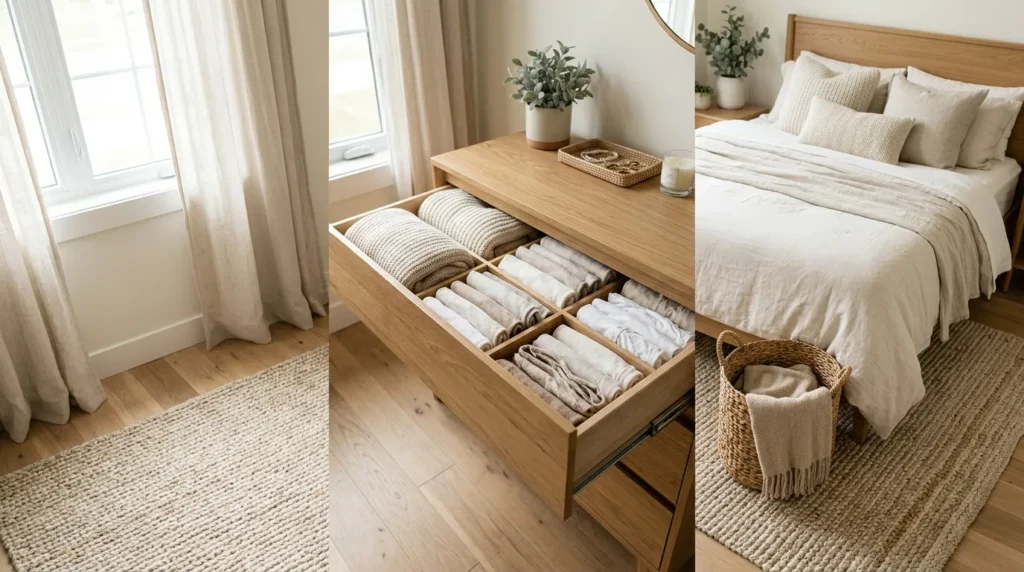
4. Refresh Bedroom Drawers
Quick Benefits
- Makes clothing easier to access
- Reduces overcrowding
- Helps identify unused items
- Improves folding systems
- Creates calmer storage
Why It Works
Bedroom drawers can become difficult to manage when clothing is repeatedly placed wherever there is room.
Over time, forgotten pieces settle at the bottom while everyday favorites become mixed together.
Decluttering creates an opportunity to rethink both what you own and how you store it.
How To Style It
Remove everything from one drawer.
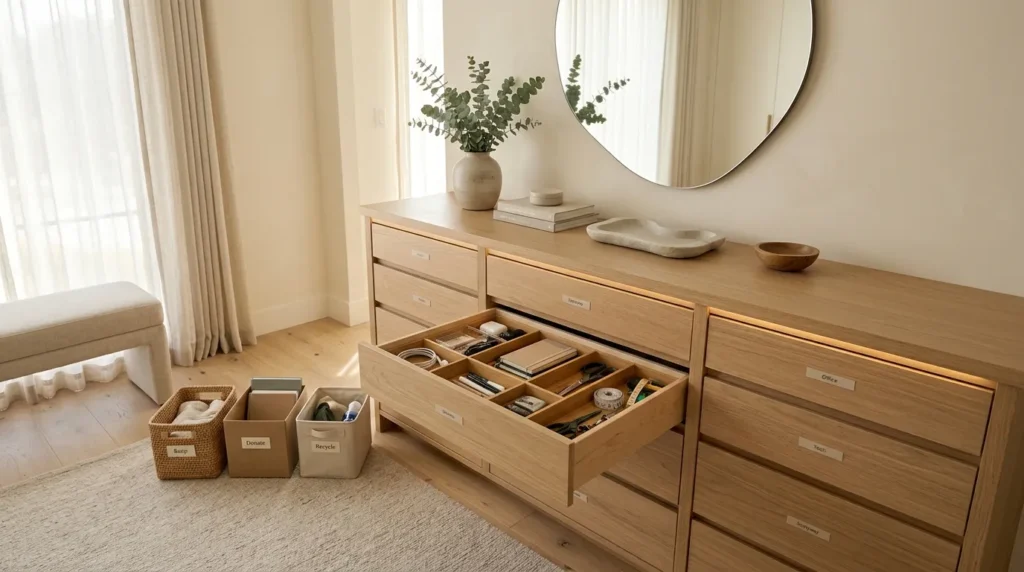
Sort clothing into categories such as keep, relocate, donate, repair, or discard.
Pay attention to items you repeatedly skip when getting dressed.
Fold or roll clothing according to the drawer’s dimensions.
Keep frequently worn pieces toward the front.
Don’t force a drawer closed when it’s too full.
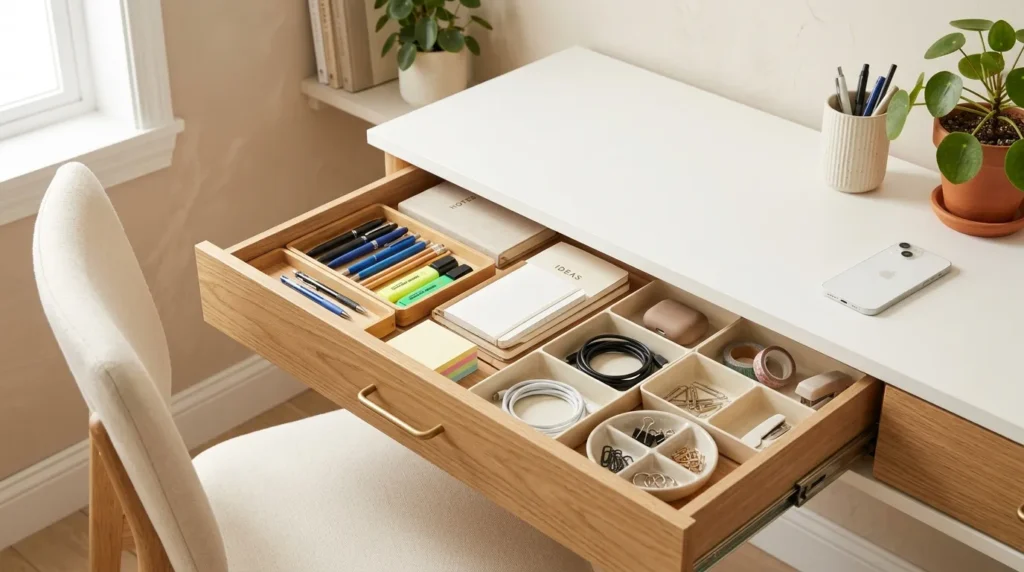
5. Simplify Desk Drawers
Quick Benefits
- Reduces paper clutter
- Improves productivity
- Makes supplies accessible
- Removes duplicates
- Creates a calmer workspace
Why It Works
A cluttered desk drawer can make even a tidy workspace feel disorganized.
Pens stop working, papers accumulate, cables become tangled, and small office supplies disappear beneath layers of miscellaneous objects.
A simple category system can prevent this.
How To Style It
Empty the drawer.
Test pens and markers.
Recycle unnecessary papers according to your local recycling guidelines.
Group office supplies together.
Keep only the items you regularly use.
Small compartments can separate clips, sticky notes, writing tools, and charging accessories.
Avoid turning the drawer into another miscellaneous storage area.
6. Declutter Entry Drawers
Quick Benefits
- Creates a cleaner entryway
- Keeps daily essentials accessible
- Reduces misplaced items
- Improves routines
- Controls small-item clutter
Why It Works
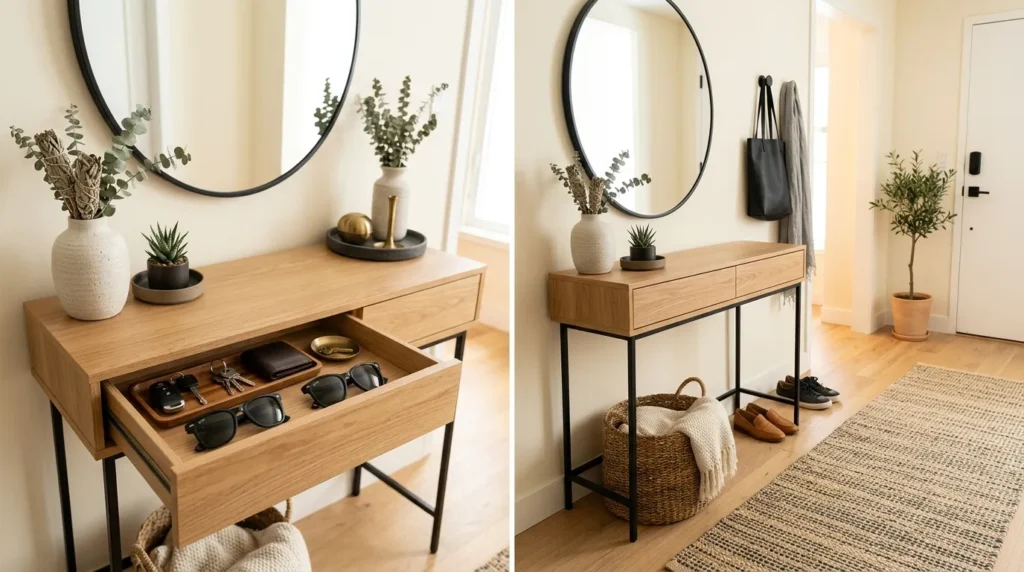
Entryway drawers often become drop zones.
Keys, sunglasses, receipts, mail, chargers, coins, and random objects can quickly collect there.
A clear system helps prevent the entryway from becoming the place where everything temporarily lives.
How To Style It
Decide what actually belongs near the entrance.
Create specific categories for everyday essentials.
Use one small compartment for keys and another for sunglasses or other frequently used items.
Remove receipts and objects that belong elsewhere.
If mail accumulates nearby, establish a separate paper-sorting system instead of letting it occupy the drawer.
7. Sort Utility Drawers
Quick Benefits
- Makes tools easier to locate
- Removes broken items
- Prevents duplicates
- Improves household organization
- Saves time
Why It Works
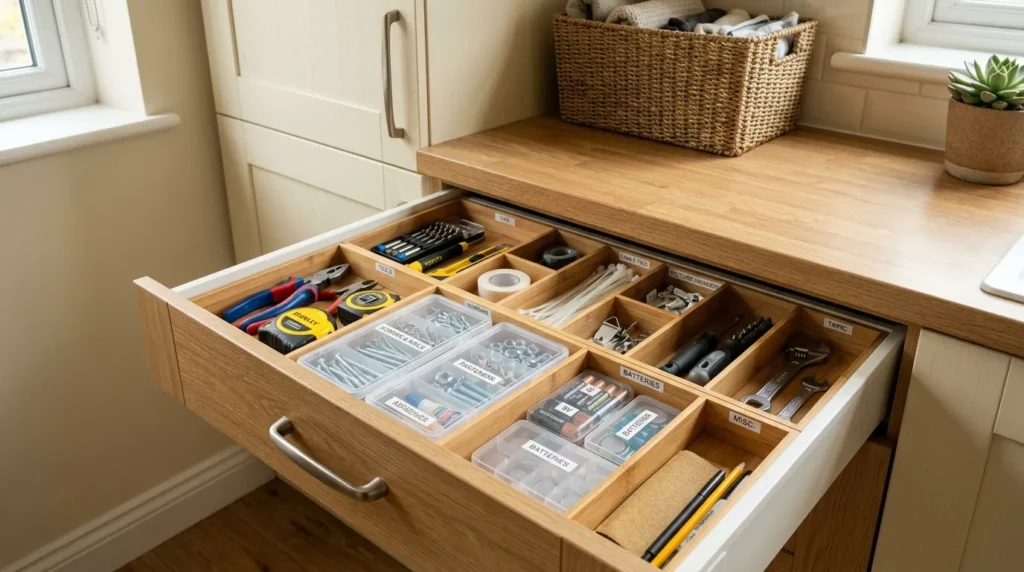
Utility drawers often contain things that are useful occasionally but difficult to locate when needed.
Screws, measuring tools, tape, cords, small hardware, and miscellaneous repair supplies can easily become mixed together.
Organization matters more here than appearance.
How To Style It
Sort tools and supplies by function.
Separate hardware from household tools.
Keep commonly used items accessible.
Use small containers for tiny pieces.
Label compartments if several categories look similar.
For safety, store sharp tools and hazardous materials according to manufacturer guidance and away from children or pets.
8. Create Drawer Categories
Quick Benefits
- Makes organization intuitive
- Reduces future clutter
- Speeds up cleanup
- Helps family members follow the system
- Uses space efficiently
Why It Works
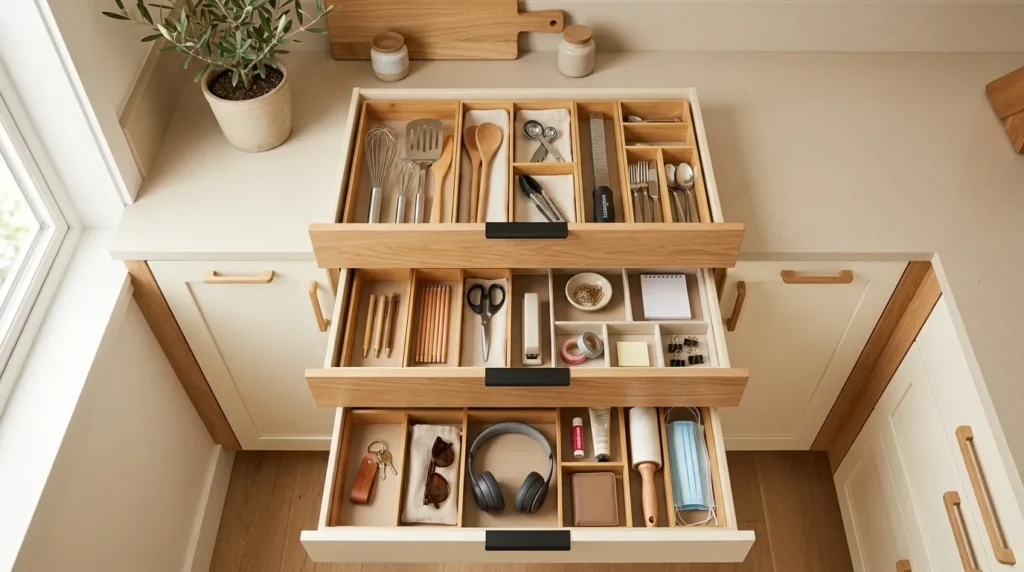
A drawer is easier to maintain when you know exactly what belongs there.
Instead of thinking about organization as making everything look neat, think about creating simple categories.
A good category should answer one question:
What belongs in this drawer?
How To Style It
Assign one primary purpose to each drawer.
For example:
- Cooking utensils
- Hair accessories
- Office supplies
- Socks
- Everyday accessories
- Charging cables
Avoid creating categories that are too specific.
The system should be simple enough that you can maintain it without thinking.
9. Use Simple Organizers
Quick Benefits
- Prevents items from shifting
- Separates categories
- Makes space easier to use
- Improves visibility
- Supports long-term organization
Why It Works
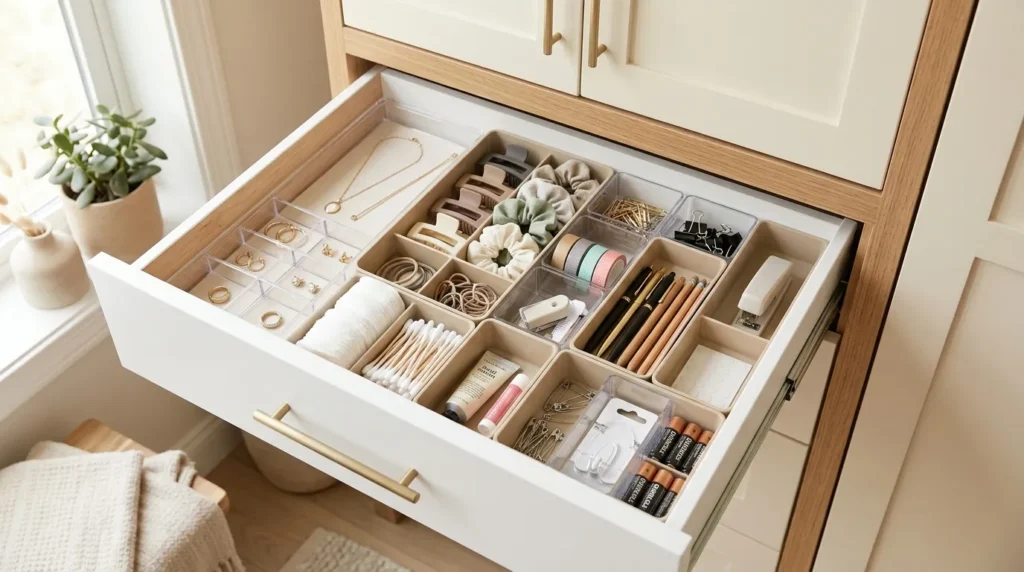
Organizers can help, but they should support the items you already own rather than becoming another source of clutter.
The best drawer organizer is the one that fits your actual needs.
You don’t need a complicated system for every drawer.
How To Style It
Declutter first.
Measure the drawer.
Then choose dividers, small bins, trays, or adjustable compartments based on what remains.
Leave some breathing room.
If every compartment is packed completely full, the drawer may still be difficult to use.
10. Maintain One Drawer
Quick Benefits
- Makes decluttering manageable
- Builds consistency
- Prevents large messes
- Requires little time
- Creates lasting habits
Why It Works
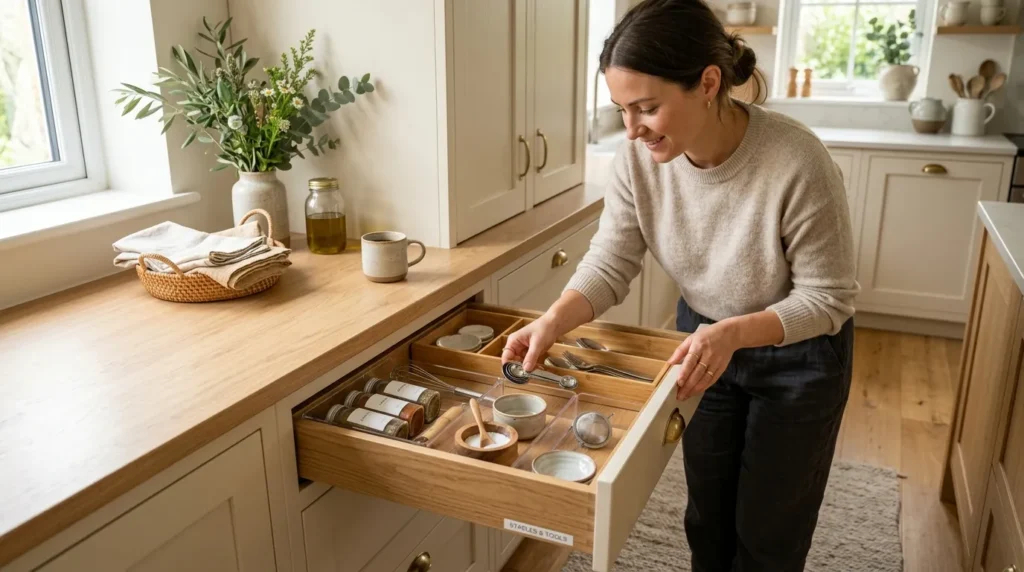
The biggest advantage of the one-drawer method is that it doesn’t require a massive organizing session.
Once you finish a drawer, you can maintain it with small habits.
Instead of waiting until the entire room becomes cluttered, reset one small area whenever necessary.
How To Style It
Choose one drawer each week or whenever you have free time.
Spend a few minutes removing items that don’t belong.
Return everything to its designated category.
If something repeatedly ends up in the wrong drawer, reconsider whether it needs a new home.
Small maintenance sessions can keep your progress from disappearing.
What To Do With Items You Remove
Decluttering doesn’t mean automatically throwing everything away.
Create separate groups for:
- Keep
- Donate
- Sell
- Recycle
- Repair
- Relocate
- Dispose
Items that are usable but unwanted may be donated or sold.
Broken items that cannot reasonably be repaired should be disposed of appropriately.
Electronics, batteries, medications, chemicals, and other special materials may require specific disposal methods, so follow local guidance rather than putting everything into ordinary trash.
How To Declutter Without Getting Overwhelmed
Don’t empty every drawer in your home at once.
That can create a larger mess than you started with.
Choose one drawer.
Finish it completely.
Put everything away.
Then stop if you’re tired.
You don’t need to declutter for several hours for the process to be effective.
A consistent 10-minute session can accomplish more over time than an ambitious organizing project you never want to repeat.
Questions To Ask Before Keeping Something
When you’re unsure about an item, ask:
Do I use this?
Would I buy it again today?
Does it work?
Do I already own another one?
Does it belong in this drawer?
Would someone else get more use from it?
These questions help shift the focus away from guilt and toward practical use.
Common Decluttering Mistakes
Organizing Before Decluttering
Don’t buy containers for things you don’t need.
Keeping Everything “Just In Case”
Be realistic about how often you’ll actually use something.
Emptying Too Many Drawers
Finish one area before starting another.
Creating Overly Complicated Systems
Simple organization is easier to maintain.
Filling Every Empty Space
Leave room for everyday use.
Ignoring Maintenance
A quick reset prevents clutter from rebuilding.
FAQ
What is the one-drawer decluttering method?
It means focusing on one drawer at a time rather than attempting to declutter an entire room or home simultaneously. You completely empty one drawer, sort its contents, clean it, and return only the items that deserve the space.
How long should it take to declutter one drawer?
A small drawer may take around 10 to 20 minutes, while a heavily cluttered drawer can take longer. There is no need to rush. The goal is to finish one manageable area rather than complete as many drawers as possible.
Should I buy organizers before decluttering?
Usually, it’s better to declutter first. Once you know what you’re keeping, measure the drawer and choose an organizer based on the remaining items and available space.
What should I do with things I don’t want?
Depending on the item’s condition, consider donating, selling, recycling, repairing, relocating, or disposing of it appropriately. Some materials require special disposal methods.
How do I stop drawers from becoming cluttered again?
Give each drawer a clear purpose and return items to their designated locations. A quick monthly or weekly reset can also prevent small amounts of clutter from becoming overwhelming.
What is the easiest drawer to declutter first?
A miscellaneous junk drawer is often a good starting point because it is small and usually contains obvious trash, duplicates, and items that belong elsewhere. However, choose whichever drawer feels easiest for you.
Can I declutter my entire home this way?
Absolutely. The method works particularly well for people who find whole-home decluttering overwhelming. Moving through the house one drawer, shelf, cabinet, or small area at a time creates steady progress without requiring a massive project.
Conclusion
Decluttering your home doesn’t have to begin with an enormous checklist.
Start with one drawer.
Empty it.
Sort everything.
Remove what you no longer need.
Clean the space.
Then return the items that genuinely belong there.
That’s it.
The simplicity is what makes the method sustainable.
Once one drawer is finished, you have a small, visible success. Repeat that process with another drawer whenever you have the time and energy.
Eventually, the kitchen becomes easier to use.
The bathroom becomes less crowded.
Bedroom storage becomes more functional.
The entryway becomes calmer.
And your home gradually starts feeling more manageable without one exhausting organizing marathon.
The goal isn’t to create a perfectly minimal home.
It’s to create a home where the things you own have useful places to live.
One drawer at a time, you can make that happen.
Related Articles
- 10 Ideas: How to Declutter Your Home in One Weekend
- 10 Ideas: How to Declutter Your Home Using the One-Year Rule
- How to Declutter Your Home Before Spring
- How to Organize a Small Bedroom with Built-In Storage
- 10 Ideas: How to Organize a Small Bedroom Without Buying Storage