10 Garden Decor Ideas Using Budget-Friendly Materials
Creating a beautiful garden doesn’t have to mean spending a fortune on expensive planters, custom structures, or designer outdoor accessories. Some of the most charming garden spaces are built from simple materials that can be reused, repurposed, or purchased affordably.
The trick is making inexpensive materials look intentional.
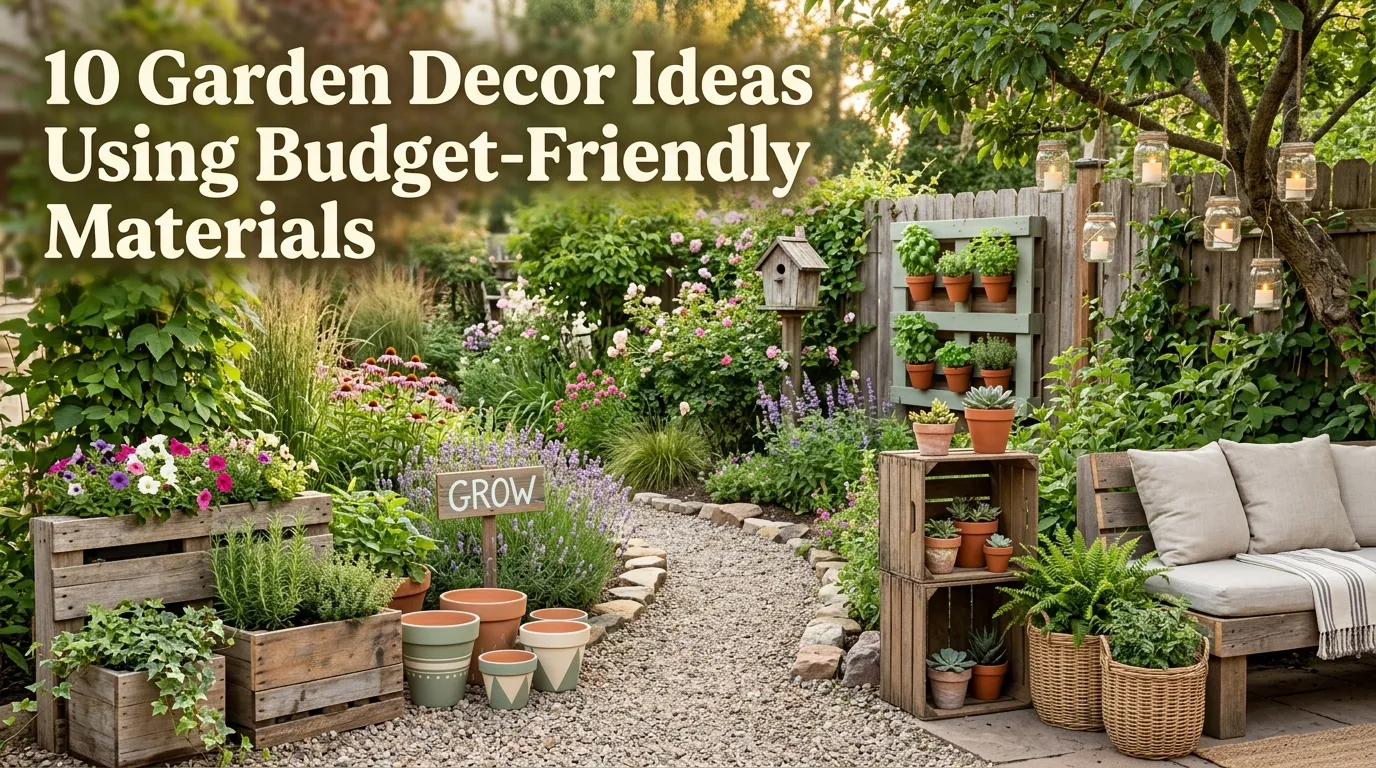
A basic wooden crate can become a rustic planter. A collection of simple terracotta pots can create a cohesive display. Gravel can define a garden path, while reclaimed wood can add warmth and character to an otherwise plain corner.
In my experience, the difference between a garden that looks random and one that feels thoughtfully designed often comes down to repetition. When you repeat similar colors, materials, shapes, or finishes, even budget-friendly pieces can look coordinated.
You also don’t need to decorate every corner.
Choose one or two areas that deserve attention, such as a patio edge, garden entrance, blank fence, or seating corner. Then build a small visual story around that space.
These ideas are designed for homeowners and renters who want a beautiful outdoor space without committing to a large landscaping budget. Many can be completed gradually, allowing you to use materials you already have before purchasing anything new.
The goal isn’t to make the garden look expensive.
It’s to make it feel cared for, comfortable, personal, and welcoming.
Table of Contents
1. Painted Terracotta Pots
Give inexpensive planters a coordinated decorative finish.
2. Reclaimed Wood Planters
Turn simple salvaged boards into rustic garden containers.
3. Gravel Garden Paths
Create attractive pathways with an affordable landscape material.
4. Upcycled Garden Trellises
Add vertical interest using simple reusable materials.
5. DIY Stepping Stones
Create a practical pathway with personalized details.
6. Repurposed Crate Displays
Turn wooden crates into flexible garden storage and planters.
7. Budget Solar Lighting
Add evening ambiance without complicated wiring.
8. Stone Garden Edging
Define planting beds with inexpensive natural materials.
9. Painted Garden Signs
Add personality with simple handmade signage.
10. Recycled Container Gardens
Give everyday containers a second life outdoors.
1. Painted Terracotta Pots
Quick Benefits
- Inexpensive to create
- Easy to customize
- Adds coordinated color
- Works in small gardens
- Suitable for patios and balconies
Why It Works
Terracotta pots are classic for a reason.
They’re simple, versatile, and relatively easy to personalize.
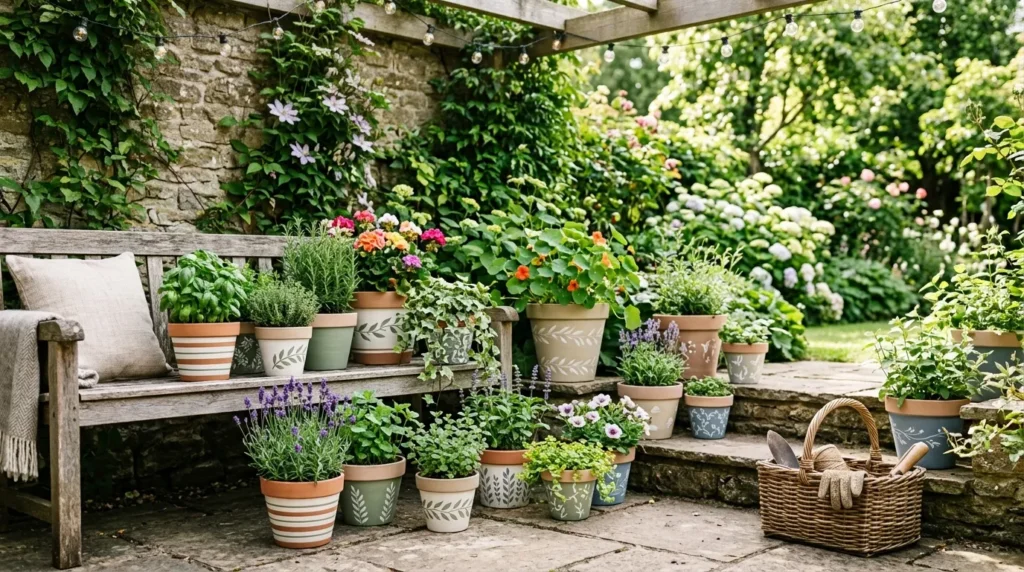
Painting a group of pots in related shades can turn inexpensive containers into a cohesive garden display.
Instead of buying several decorative planters, you can use affordable pots and create your own finish.
This approach is especially effective when you want to introduce color without changing the plants themselves.
How To Style It
Choose two or three coordinating shades.
Warm white, sage green, soft beige, muted blue, and terracotta tones can work beautifully outdoors.
Use the same color on multiple pots to create repetition.
For a modern appearance, try simple solid finishes.
For a more relaxed garden, consider subtle stripes or hand-painted botanical details.
Use appropriate exterior paint and prepare the pot surface according to the product directions.
2. Reclaimed Wood Planters
Quick Benefits
- Adds natural texture
- Uses affordable materials
- Creates rustic character
- Can be customized
- Works with many garden styles
Why It Works
Wood instantly adds warmth to an outdoor space.
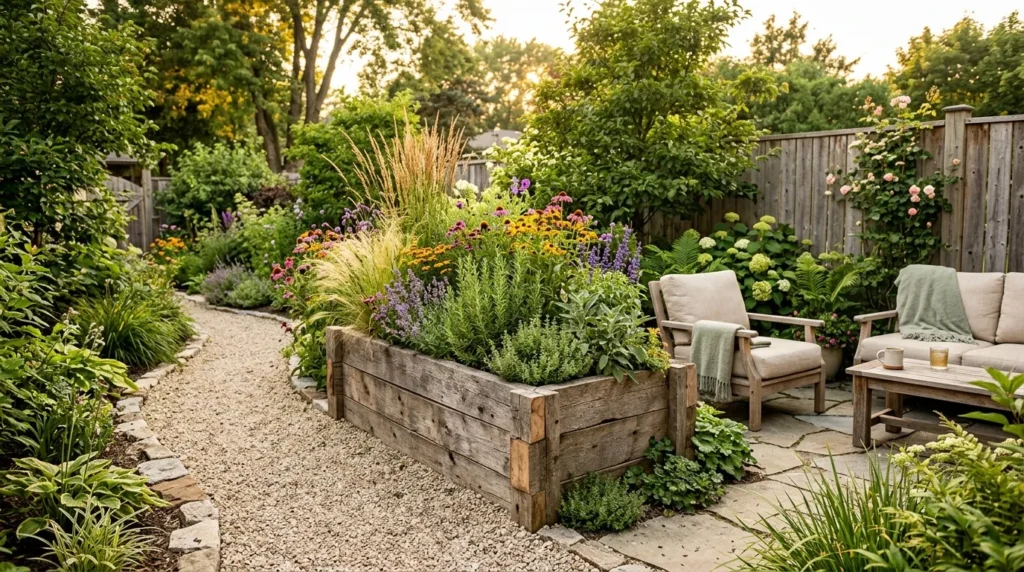
Reclaimed boards, leftover lumber, or suitable salvaged wood can become simple planter boxes with a handmade appearance.
The imperfections are often part of the appeal.
Instead of trying to make the material look brand new, embrace its natural character.
How To Style It
Build rectangular planter boxes for herbs, flowers, or ornamental grasses.
Leave the wood natural if it is suitable for outdoor use, or apply an appropriate exterior finish.
Place planters along fences, patios, or garden entrances.
Keep the design simple.
A few large wooden planters often look more intentional than many small containers scattered around the yard.
3. Gravel Garden Paths
Quick Benefits
- Relatively affordable
- Easy to install in suitable areas
- Defines garden zones
- Improves movement
- Adds texture
Why It Works
Gravel is one of the easiest materials for creating a casual garden pathway.
It provides a visual transition between lawn, planting beds, patios, and other outdoor areas.
It also has a softer appearance than large concrete surfaces.
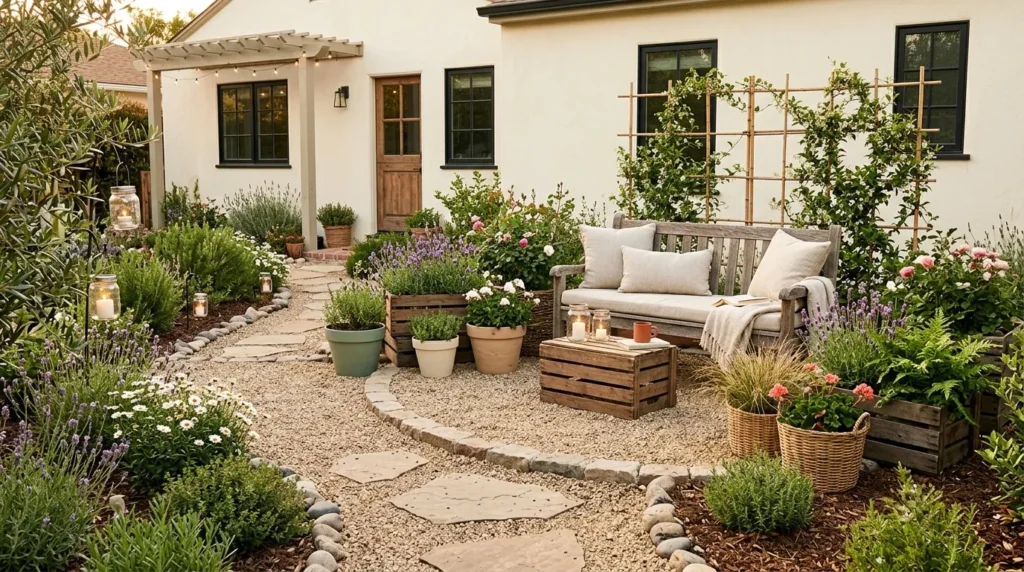
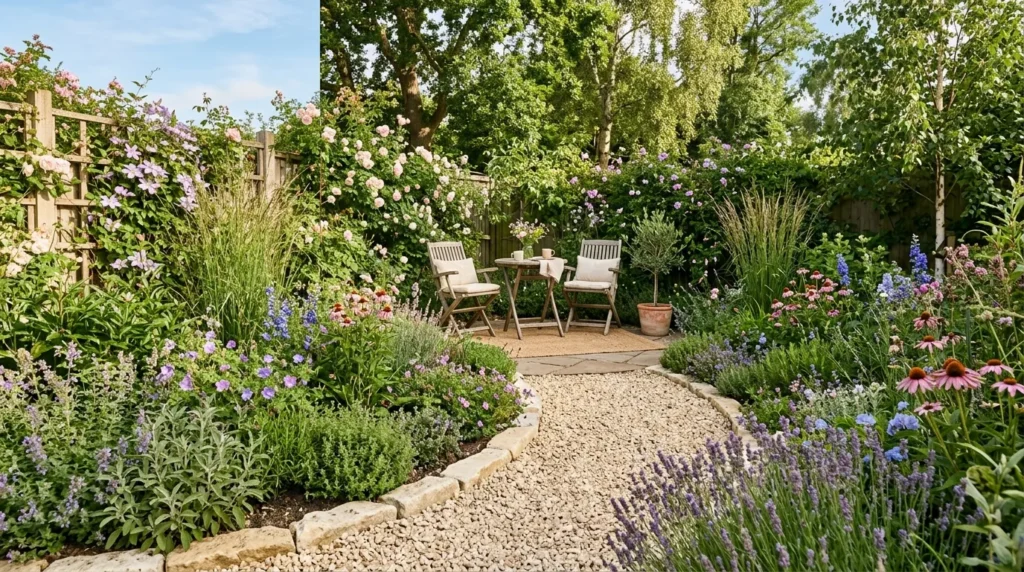
The key is giving the gravel a defined edge so the path looks intentional rather than unfinished.
How To Style It
Mark the path before purchasing materials.
Use landscape edging, stone, brick, or another suitable border to contain the gravel.
Choose a gravel color that complements your home’s exterior and existing hardscape.
Surround the path with low plants, ornamental grasses, or flowering perennials.
Keep the pathway comfortable and appropriately stable for the type of foot traffic it will receive.
4. Upcycled Garden Trellises
Quick Benefits
- Uses vertical space
- Supports climbing plants
- Adds garden structure
- Can be inexpensive
- Creates privacy
Why It Works
Vertical gardening is a smart solution when ground space is limited.
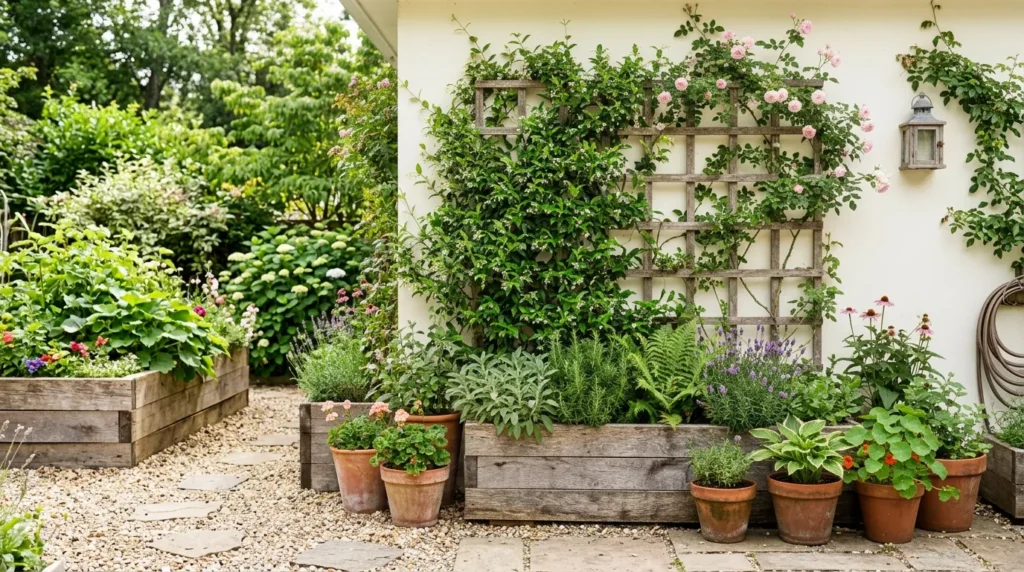
A simple trellis gives climbing plants somewhere to grow while adding height to the garden.
Instead of purchasing a decorative trellis, you can sometimes create one from suitable leftover wood, wire, lattice, or other weather-appropriate materials.
How To Style It
Place a trellis against a fence or wall.
Choose climbing plants appropriate for your growing conditions.
Paint or stain the structure to coordinate with the garden.
For a cohesive appearance, repeat the trellis material elsewhere, perhaps through planters or garden edging.
Always make sure the structure is securely installed and suitable for the plant’s eventual size and weight.
5. DIY Stepping Stones
Quick Benefits
- Creates visual interest
- Helps define movement
- Can be personalized
- Works in garden beds
- Adds handmade character
Why It Works
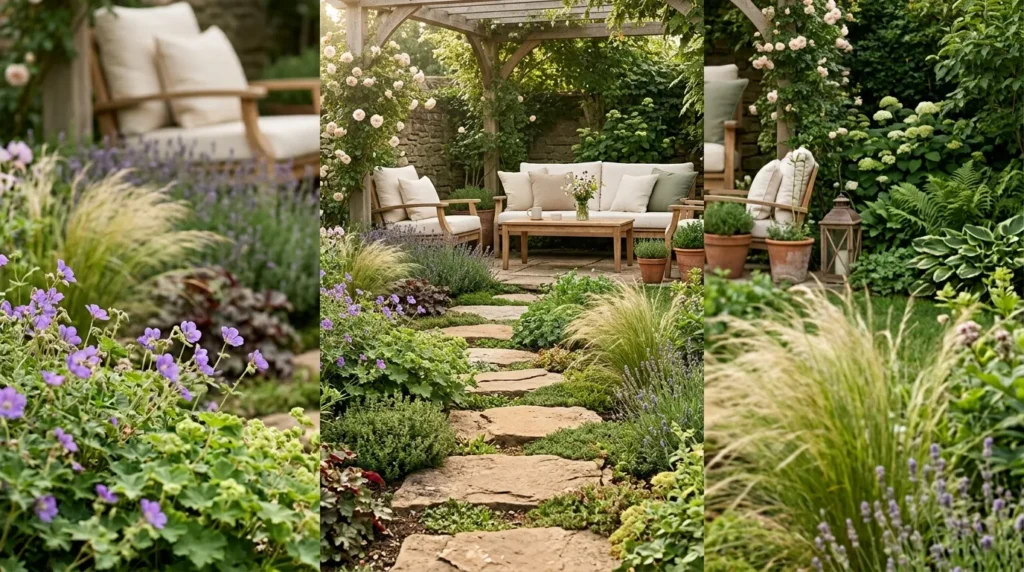
Stepping stones provide a practical way to move through planting areas while also becoming part of the garden design.
Simple stones can look beautiful when arranged with consistent spacing and surrounded by greenery.
They can also introduce personality when you choose distinctive shapes, textures, or finishes.
How To Style It
Use commercially made stepping stones or appropriate materials you already have.
Lay them along a natural walking route.
Avoid placing them too far apart for comfortable walking.
Surround each stone with low-growing plants or gravel.
For a more contemporary appearance, choose simple geometric shapes.
For cottage-style gardens, irregular natural stone can feel more organic.
6. Repurposed Crate Displays
Quick Benefits
- Inexpensive
- Flexible
- Adds rustic texture
- Provides vertical storage
- Works for containers and decor
Why It Works
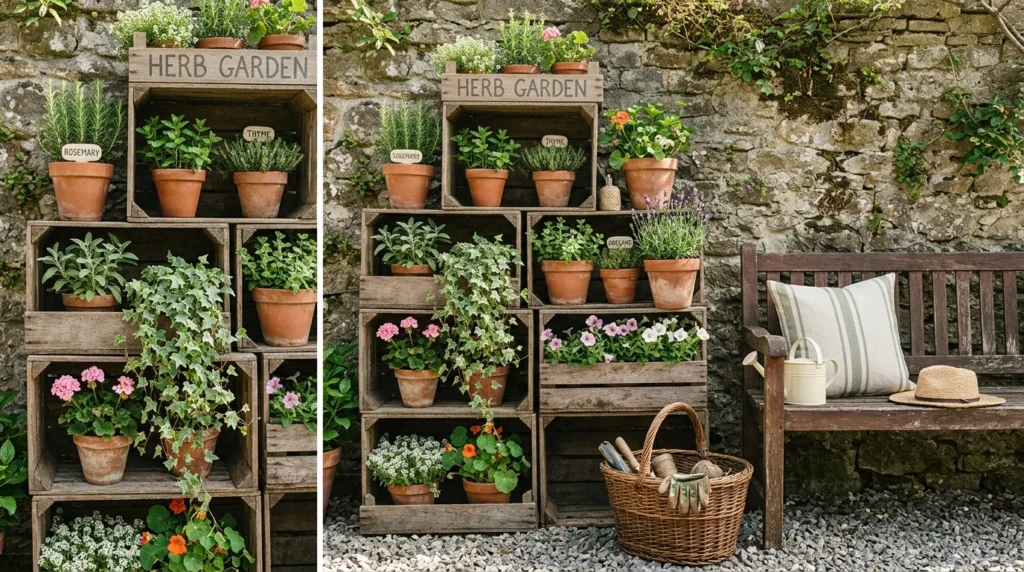
Wooden crates can become surprisingly useful garden decor.
They can hold pots, gardening tools, small accessories, or seasonal displays.
Stacking crates vertically can also create height without purchasing a large shelving unit.
The key is making sure the material is appropriate for outdoor use and protected from moisture when necessary.
How To Style It
Stack two or three crates securely to create a simple plant display.
Place larger pots on lower levels and smaller plants higher up.
Use similar plant colors to make the arrangement cohesive.
Avoid overfilling every opening.
Leaving some empty space makes the display feel more intentional.
7. Budget Solar Lighting
Quick Benefits
- Adds evening atmosphere
- Requires minimal wiring
- Highlights pathways
- Improves visibility
- Works in many garden styles
Why It Works
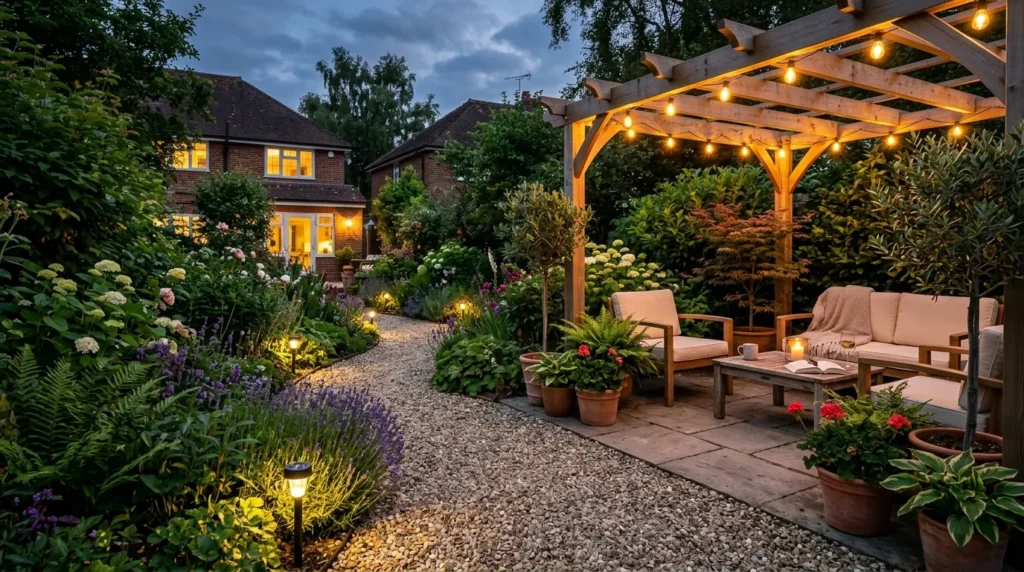
Lighting can make a modest garden feel dramatically more finished.
Affordable solar lights can illuminate pathways, planting beds, or seating areas without requiring complicated electrical installation.
They’re especially useful for creating a soft evening glow.
How To Style It
Place pathway lights at regular intervals.
Use a few accent lights to highlight attractive trees, planters, or architectural features.
Avoid placing too many fixtures close together.
The goal is gentle illumination rather than a brightly lit yard.
Choose fixtures with a finish that complements your other outdoor materials.
8. Stone Garden Edging
Quick Benefits
- Defines planting beds
- Creates visual structure
- Reduces spreading materials
- Adds natural texture
- Makes the garden look finished
Why It Works
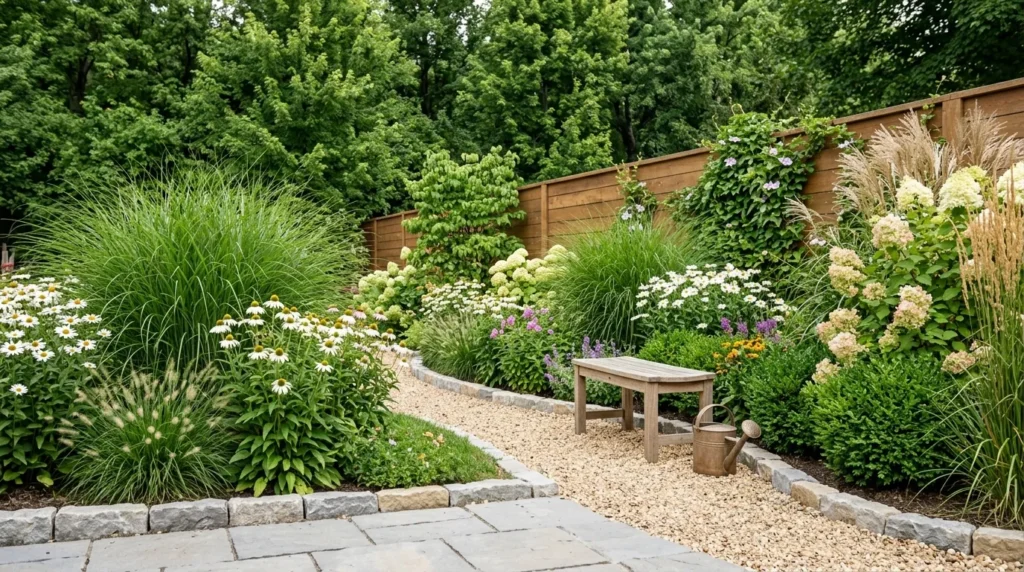
A defined garden edge can make an enormous difference.
Even inexpensive planting beds can look polished when the transition between lawn and garden is clearly established.
Stone is particularly useful because its natural texture works with plants and other outdoor materials.
How To Style It
Use stones of similar size for a clean appearance.
For a more natural garden, choose irregular pieces and arrange them organically.
Keep the edging consistent throughout the yard when possible.
This repetition creates cohesion.
Don’t make the border unnecessarily elaborate.
Simple edging often provides the strongest visual improvement.
9. Painted Garden Signs
Quick Benefits
- Adds personality
- Easy DIY project
- Uses inexpensive materials
- Works in themed gardens
- Makes garden areas identifiable
Why It Works
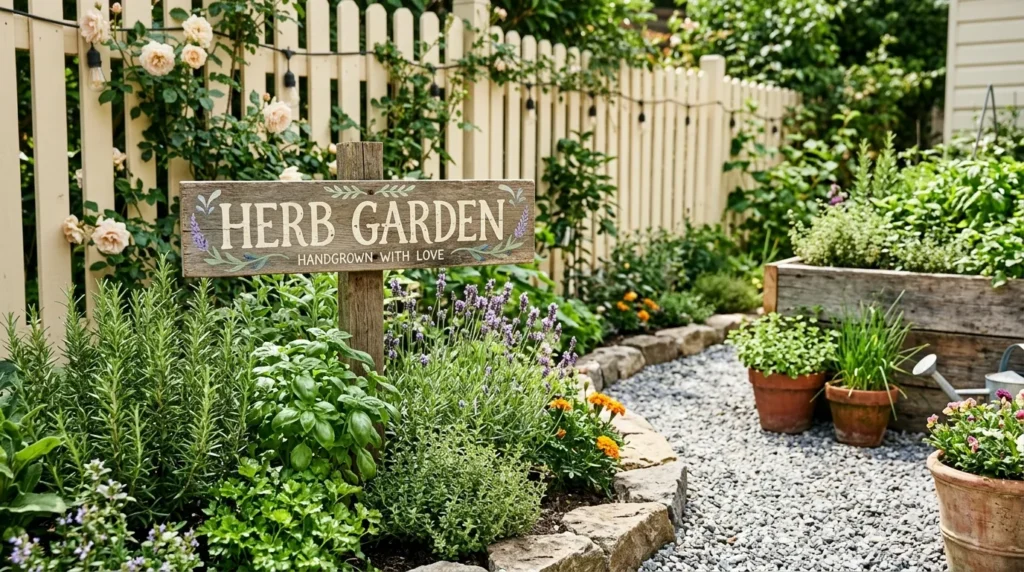
Garden signs can introduce a small amount of personality without requiring major landscaping changes.
They’re especially charming in herb gardens, cottage gardens, vegetable beds, and family-friendly outdoor spaces.
A simple handmade sign can feel more personal than mass-produced decor.
How To Style It
Use reclaimed wood, suitable outdoor boards, or weather-resistant materials.
Paint the sign in a color that relates to your garden palette.
Keep lettering simple and readable.
Instead of filling the garden with signs, choose one or two meaningful locations.
A small herb sign near a kitchen garden can be both decorative and practical.
10. Recycled Container Gardens
Quick Benefits
- Reduces waste
- Saves money
- Creates unique planters
- Works in small spaces
- Encourages creativity
Why It Works
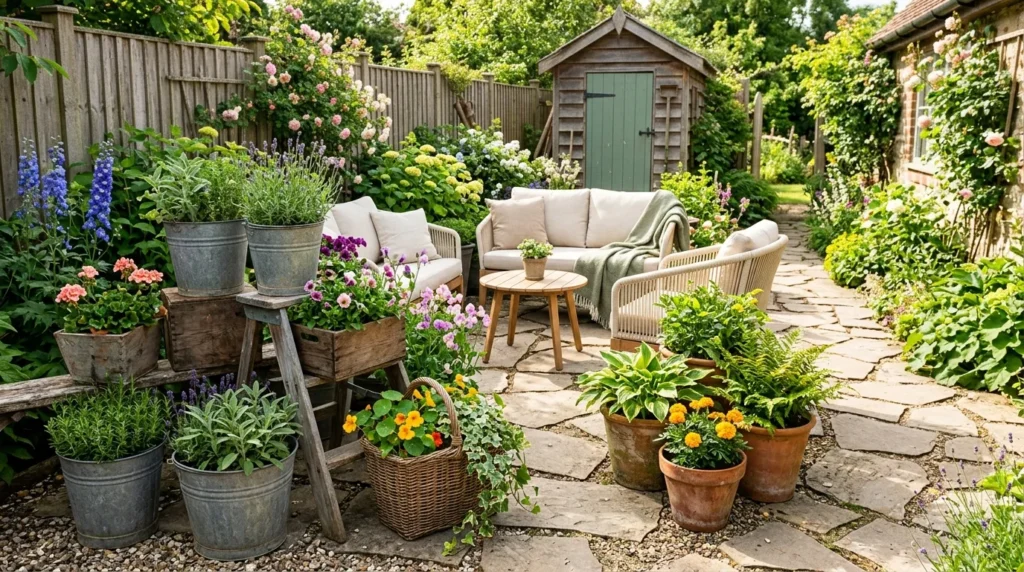
Many everyday containers can become useful garden planters when they are appropriately prepared.
Old buckets, baskets, wooden containers, metal vessels, or other suitable items can create a collected garden appearance.
The important consideration is whether the material is safe and appropriate for the intended plant and outdoor conditions.
How To Style It
Choose several containers with a common visual element.
For example, use containers in similar neutral colors or group different materials around one seating area.
Add appropriate drainage where needed.
Place taller containers toward the back and shorter ones toward the front.
Grouping plants in odd numbers can create a naturally balanced arrangement.
How To Make Budget Garden Decor Look Expensive
The secret is consistency.
Choose a limited color palette.
Repeat one material throughout the space.
Keep plant containers grouped rather than scattered.
Define pathways and garden edges.
Use larger decorative elements instead of dozens of tiny accessories.
For example, three matching planters can have more impact than ten unrelated pots.
Lighting also makes a difference.
Even simple garden decor can feel polished when it is softly illuminated in the evening.
Best Budget Materials For Garden Projects
Affordable materials that can work well in appropriate outdoor applications include:
- Gravel
- Natural stone
- Reclaimed wood
- Terracotta
- Metal containers
- Exterior paint
- Wooden crates
- Landscape edging
- Pavers
- Outdoor fabric
- Solar lighting
- Woven materials
Always select materials based on weather exposure, safety, durability, and intended use.
How To Decorate A Small Garden On A Budget
Small gardens benefit from vertical thinking.
Use trellises, wall planters, hanging containers, narrow shelves, and climbing plants.
Choose one main decorative focal point.
A small seating area surrounded by greenery can be more effective than dozens of decorative pieces.
Use containers that can move when necessary.
This makes the garden easier to change as seasons and needs evolve.
Common Budget Garden Decorating Mistakes
Buying Too Many Small Accessories
Small pieces can quickly create visual clutter.
Ignoring Scale
Tiny decorations can disappear in a large backyard.
Using Too Many Materials
Choose a few materials and repeat them.
Forgetting Maintenance
Decor should complement the garden rather than create additional work.
Choosing Materials Without Checking Durability
Outdoor conditions can be harsh, so select materials appropriate for your climate.
Skipping Edges
Defined borders can make inexpensive landscaping look much more intentional.
FAQ
How can I decorate my garden cheaply?
Start with materials you already have. Repurpose suitable containers, use reclaimed wood, create simple gravel paths, paint inexpensive pots, and add affordable lighting. Focus on one area at a time rather than trying to decorate the entire garden simultaneously.
What is the cheapest way to make a garden look nice?
Improving the garden’s structure can have a bigger impact than buying lots of decor. Define planting beds, add a simple path, group containers, prune overgrown plants, and create a cohesive color palette. These changes can make the entire space feel more intentional.
What materials are good for DIY garden decor?
Reclaimed wood, terracotta, gravel, natural stone, suitable metal containers, exterior paint, crates, and weather-resistant materials can all work well. Choose materials based on durability, safety, drainage requirements, and your local weather conditions.
How can I make cheap planters look expensive?
Group planters in coordinated colors and arrange them at different heights. Choose simple shapes and repeat the same finish throughout the garden. Healthy, well-maintained plants also make inexpensive containers look considerably more polished.
How do I decorate a garden without buying new things?
Look around your home for suitable containers, baskets, wood, old furniture, jars, stones, and other materials that can be safely repurposed. Rearranging existing plants and furniture can also create a completely different appearance.
How do I make a small garden look bigger?
Keep the design simple, use vertical planting, create a clear pathway, and avoid filling every available surface. Light-colored hardscaping and repeated materials can also create a more cohesive and open appearance.
What garden decor lasts the longest?
Durability depends heavily on your climate and the material’s exposure. Natural stone, properly treated outdoor wood, quality metal, and purpose-made exterior materials can last well when selected and maintained appropriately.
Conclusion
A beautiful garden doesn’t have to come with a large price tag.
The biggest difference often comes from how you organize and repeat inexpensive materials.
Painted terracotta pots can create a coordinated container display. Reclaimed wood adds warmth. Gravel can define a simple pathway, while stone edging gives planting beds a finished appearance.
Vertical trellises and recycled containers can also help you make better use of limited space.
If you’re working with a tight budget, don’t try to decorate everything at once.
Choose one area that feels unfinished.
It might be the entrance, patio edge, fence line, or a neglected corner.
Start by defining the space, choosing a small palette, and adding one or two meaningful elements.
Then repeat materials and colors elsewhere.
This is what helps budget-friendly gardens feel intentional rather than pieced together.
And remember that plants are part of the decoration too.
Healthy greenery, well-maintained containers, and thoughtfully arranged planting can make even simple materials look beautiful.
With a little creativity and careful planning, you can create an outdoor space that feels personal, welcoming, and polished without spending a fortune.
Related Articles
- 10 Garden Decor Ideas That Transform Any Backyard
- 10 DIY Garden Projects That Look Expensive
- 10 Backyard Landscape Design Ideas for Outdoor Entertaining
- 10 DIY Fire Pit Ideas with Gravel and Stone
- 10 Backyard Landscape Design Ideas with Beautiful Garden Paths