
Mounting Double-Prong vs Single Cast Iron Hooks: Best Height for Kids
Choosing between mounting double-prong vs single cast iron hooks for a child’s room requires balancing aesthetics, weight capacity, and accessibility. You want a setup that encourages independence without risking wall damage or safety hazards. The ideal height for kids generally falls between 36 and 48 inches from the floor, depending on the child’s age and stature.
By selecting the right hardware and positioning it correctly, you can effectively manage heavy backpacks, jackets, and accessories. This article explores the mechanical differences between hook types and provides specific installation guidelines to help you optimize your storage space for younger users.
The Optimal Height for Children
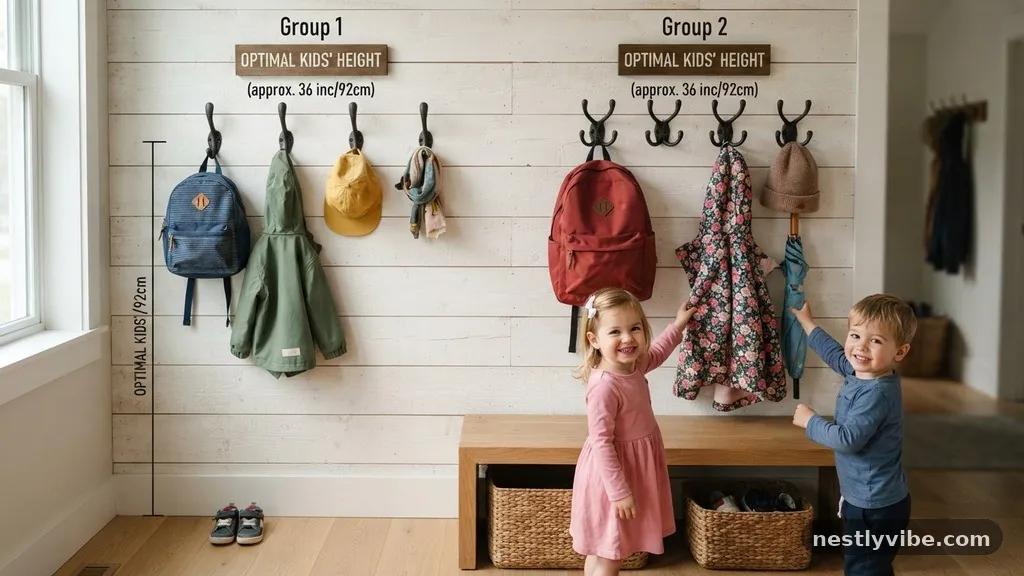
To determine the best installation height, you should measure your child’s reach. A good rule of thumb is to place the hooks at your child’s eye level or slightly below.
For toddlers aged 2 to 4, a height of 36 inches is usually sufficient for independent use. Preschoolers and early elementary students typically manage best when the hook is installed at 42 inches from the floor.
If you plan to keep these hooks for several years, consider a compromise at 40 inches. This height allows a younger child to reach their items while remaining functional as they grow taller.
Always account for the length of the items being hung. A long winter coat might drag on the floor if the hook is mounted too low.
Comparing Single and Double-Prong Hooks
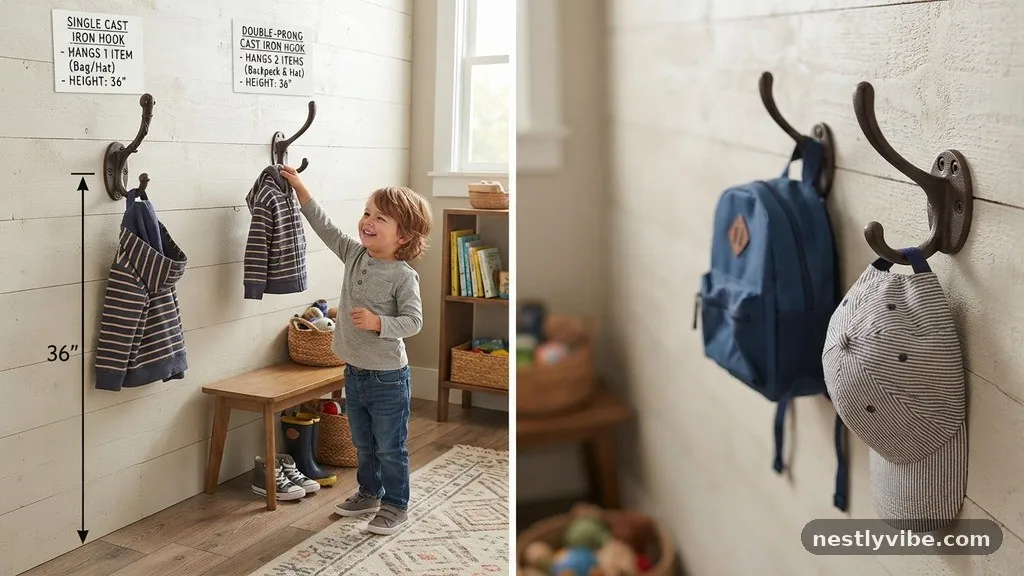
Single cast iron hooks offer a clean, minimalist aesthetic. They are ideal for tight spaces where you only need to hang one item, such as a single backpack or a lightweight sweater.
Because they have a single point of contact, they are often easier for younger children to navigate. There is no confusion about which prong to use, which helps prevent clutter.
Double-prong hooks, conversely, provide extra utility in the same amount of wall space. They allow a child to hang a coat on one side and a hat or gym bag on the other.
This efficiency is particularly helpful in small entryways or bedrooms with limited wall space. However, they can sometimes lead to overcrowding if the child isn’t taught how to balance the items properly.
Structural Integrity and Weight Capacity
Cast iron is an incredibly durable material, but its weight capacity depends heavily on how you secure it to the wall. You must use appropriate anchors if you are not drilling directly into a wall stud.
For heavy backpacks filled with school books, standard plastic drywall anchors will eventually fail. Use toggle bolts or heavy-duty screw-in anchors to ensure the hardware remains stable over time.
When comparing mounting double-prong vs single cast iron hooks, note that double-prong versions often exert more leverage on the wall. The wider base of a double hook can distribute weight better, but if a child yanks on a heavy bag, the torque is significant.
Always check the manufacturer’s weight rating before installation. If you are uncertain about the wall composition, visit the International Association of Certified Home Inspectors for professional guidance on selecting the right wall fasteners.
Safety Considerations for Kids
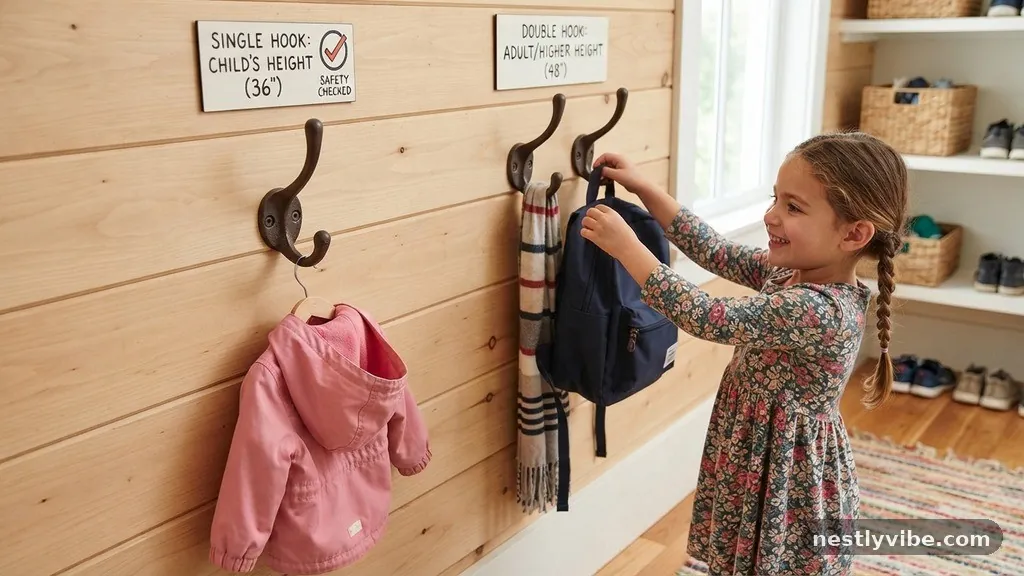
Safety is paramount when installing metal hardware in a child’s environment. Cast iron can have sharp edges or pointed tips that pose a risk if a child runs into them.
Look for designs with rounded, ball-ended tips rather than sharp, unfinished points. This minor detail prevents scratches and snagged clothing.
Furthermore, consider the projection of the hook from the wall. A hook that sticks out too far creates a larger protrusion for a child to bump into.
Single hooks with a low profile are often safer in narrow hallways or high-traffic areas. Always test the security of the mount by pulling on it firmly to ensure it won’t wobble or detach under pressure.
Space Management and Layout
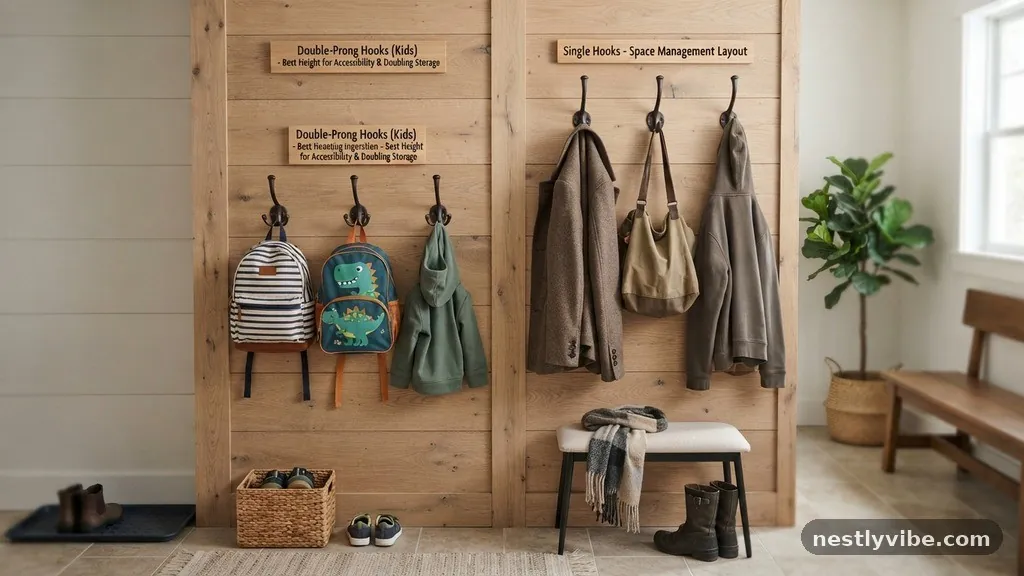
When dealing with limited wall space, the layout of your hooks is just as important as the height. If you are installing multiple hooks, aim for a spacing of at least 6 to 8 inches between each unit.
This prevents coats and backpacks from overlapping and becoming a tangled mess. A staggered arrangement can also be effective if you have multiple children sharing the same wall.
Consider a double row configuration if your children have a large collection of gear. Place the bottom row for the younger child and the top row for the older child, or use the top row for seasonal items.
This vertical layering maximizes your storage capacity while keeping the floor clear of clutter. Ensure the rows are spaced vertically by at least 12 inches to avoid overlap.
Installation Tools and Techniques
Successful installation requires a level, a drill, a screwdriver, and the correct mounting hardware. Start by marking your desired height with a pencil.
Use a bubble level to ensure your horizontal line is perfectly straight, especially if you are mounting a series of hooks. Even a slight tilt will become noticeable once the coats are hanging.
If you are mounting into wood studs, you can drive the screws directly into the wall for maximum strength. If you are working with drywall, use a stud finder to locate the framing behind the surface.
If no studs are available, install your anchors according to the manufacturer’s instructions. A tight, flush fit against the wall is essential for both aesthetic appeal and hardware longevity.
Maintenance and Long-Term Care
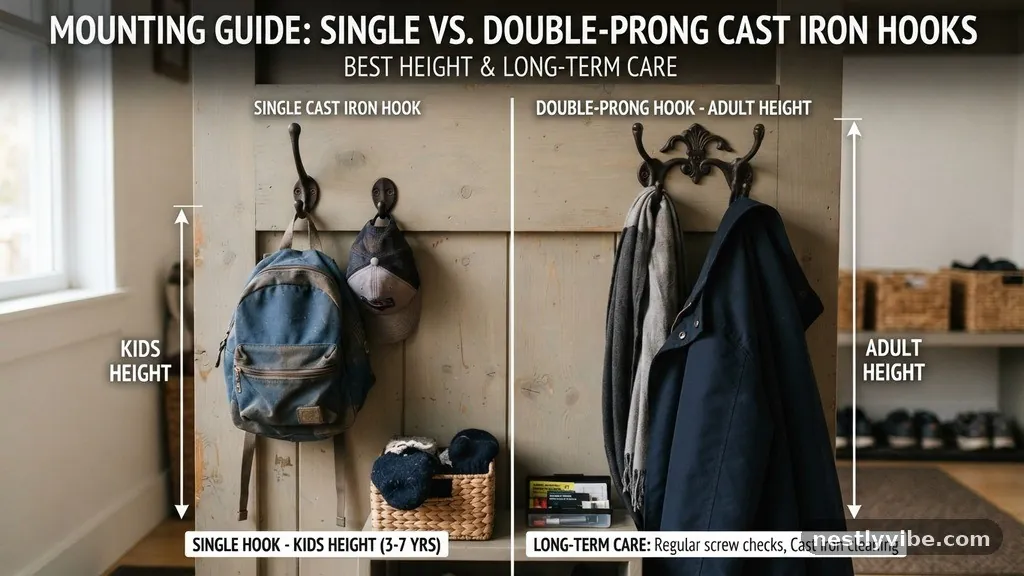
Cast iron is prone to rust if exposed to moisture, so avoid placing these hooks in damp areas like bathrooms or near exterior doors that lack proper weather stripping. Periodically check the mounting screws to ensure they haven’t loosened over time. Heavy use from backpacks can cause the screws to back out slightly, leading to wobbly hooks.
Cleaning cast iron is simple. Wipe them down with a slightly damp cloth and dry them immediately to prevent surface oxidation.
If you notice any chips in the finish, a small dab of black enamel paint can prevent rust from spreading. Keeping the hooks clean ensures they remain a permanent part of your home organization strategy.
Comparison Table: Hook Selection
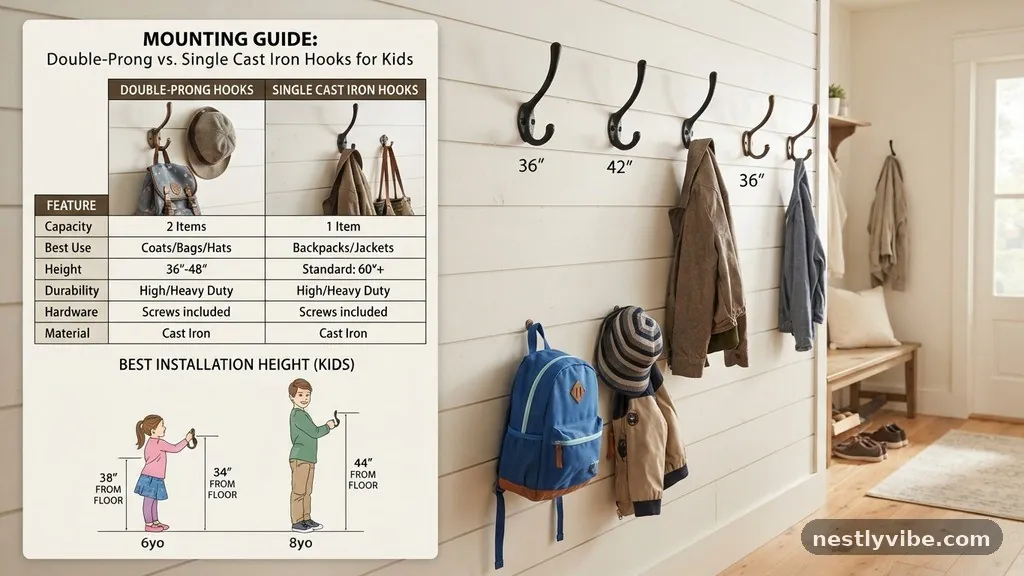
This table summarizes the primary differences to help you decide which hardware is best for your specific needs regarding mounting double-prong vs single cast iron hooks.
| Feature | Single Cast Iron Hook | Double-Prong Cast Iron Hook |
|---|---|---|
| Storage Capacity | Low (1 item) | High (2+ items) |
| Complexity | Very Simple | Moderate |
| Wall Space Needed | Minimal | Moderate |
| Best Use Case | Tight spaces, simple tasks | Shared areas, heavy organization |
Common Mistakes to Avoid
One common mistake is mounting hooks too high, thinking it will accommodate the child as they grow. This often results in the child being unable to reach their own belongings, which defeats the purpose of teaching organizational habits.
Another frequent error is using inadequate hardware for the wall type. Screws that are too short will pull out of the drywall the first time a heavy backpack is hung.
Avoid installing too many hooks too close together. While you might want to maximize storage, a wall crowded with coats will look chaotic and make it difficult for children to retrieve their items.
Less is often more; start with a few well-placed hooks and add more only if the storage needs truly increase. Always prioritize the child’s ability to use the hook independently.
Frequently Asked Questions
What is the minimum height for a toddler’s coat hook?
For toddlers, a height of 36 inches from the floor is usually the ideal starting point. This allows them to reach their own items without needing assistance, which is vital for building independence.
Can I mount cast iron hooks directly into drywall?
You should never mount heavy cast iron hooks directly into drywall without anchors. The material is too heavy, and the leverage from a bag will pull the screws out. Always use toggle bolts or high-quality wall anchors.
How do I stop my child’s backpack from slipping off the hook?
If your hooks are too smooth or shallow, consider choosing a design with a more pronounced upward curve or a ball end. This physical barrier helps keep straps securely in place.
Is there a difference in weight capacity between single and double hooks?
Generally, the weight capacity is determined by the mounting hardware and the wall strength rather than the hook design. However, double-prong hooks provide better balance for items, which can make them feel more secure.
How many hooks should I install for one child?
Two to three hooks are usually sufficient for a single child’s daily essentials. This allows space for a coat, a backpack, and perhaps an umbrella or a hat.
Conclusion
Selecting the right hardware for your home involves more than just picking a design that looks good. When considering mounting double-prong vs single cast iron hooks, prioritize the height and weight capacity to ensure the system is safe and functional for your children. By mounting these at the appropriate eye level and using robust fasteners, you create a space that fosters independence and keeps your home organized.
Whether you opt for the simplicity of a single hook or the versatility of a double-prong design, your choice should reflect the daily habits of your family. Take the time to measure properly and secure your installation, and you will have a durable, long-lasting storage solution that grows alongside your child. We hope this information helps you set up a practical and stylish environment.