
Mudroom Bench Depth: 16-Inch vs 18-Inch Seating Clearances
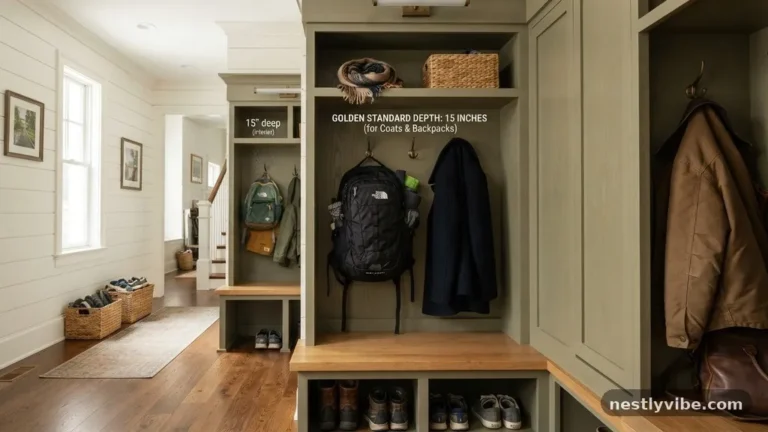
Choosing the right Mudroom Bench Depth: 16-Inch vs 18-Inch Seating Clearances is a foundational decision when designing an entryway. These two extra inches significantly alter the flow of your space and the comfort of anyone sitting down to remove their boots. While it might seem like a minor detail, the difference dictates whether a hallway feels cramped or functional.
This article provides the technical clarity needed to make the right choice for your home layout. By examining human ergonomics and spatial constraints, you will understand how to balance comfort with the limited square footage often found in a busy household entrance.
The Standard Verdict on Bench Depth
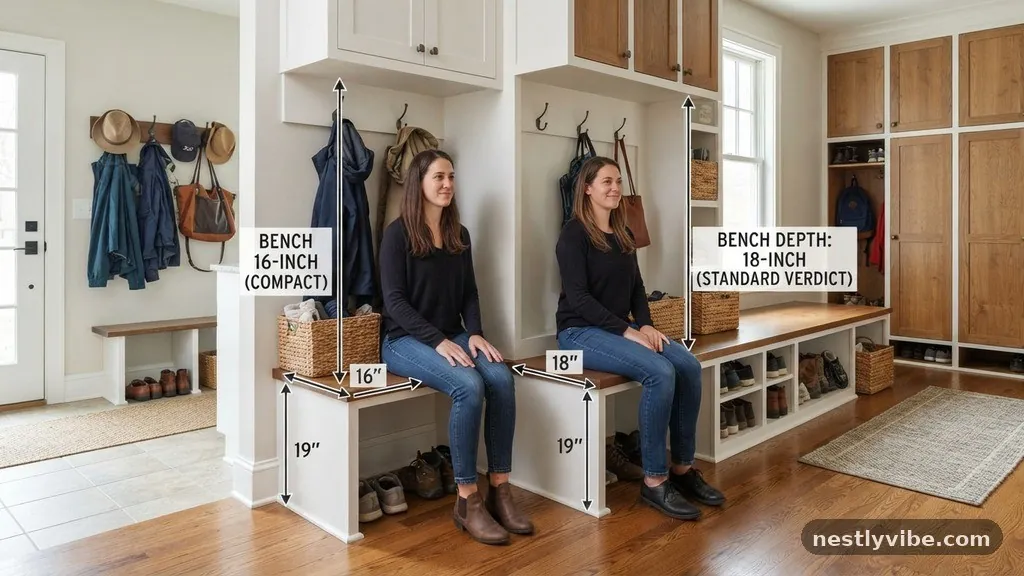
For most residential mudroom applications, a depth of 16 inches is considered the gold standard for balancing comfort and space efficiency. If you have the luxury of an expansive entryway, 18 inches offers a slightly more lounge-like feel. However, 16 inches provides enough surface area for an adult to sit comfortably while leaving enough floor space for passage.
Choosing the 16-inch depth is often the safer bet in homes where the bench sits adjacent to a doorway or a narrow walkway. You gain two inches of clearance, which makes a world of difference when two people are trying to move through the area simultaneously.
Ergonomics of Seating Clearances
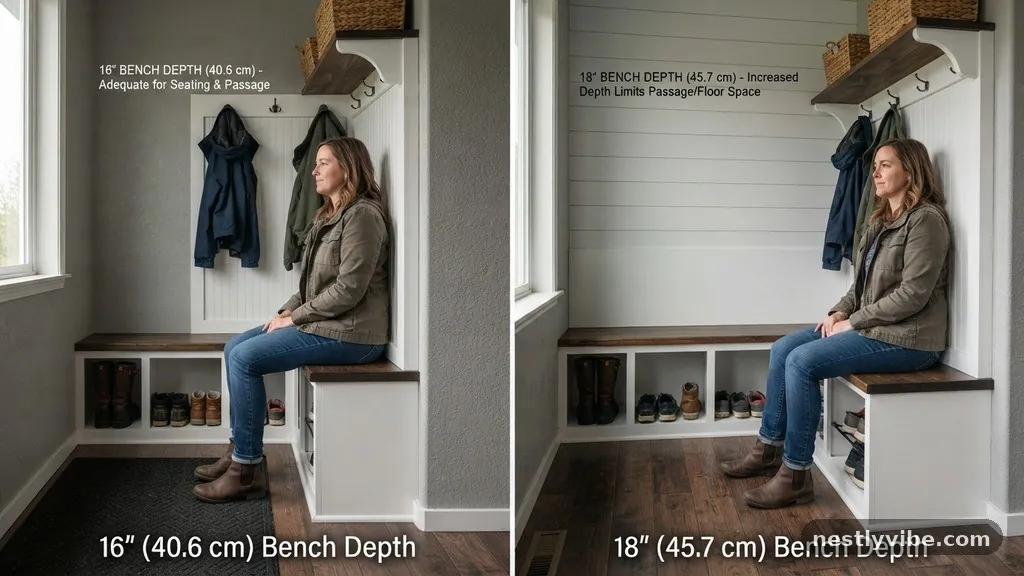
Human ergonomics play a major role in determining why these specific measurements matter. The average adult thigh length requires a certain amount of support to remain comfortable while putting on or taking off footwear. A 16-inch deep bench provides sufficient support for the majority of users without forcing their knees to extend too far into the walking path.
When you increase the depth to 18 inches, you are essentially creating a piece of furniture that mimics a standard dining chair or a deeper sofa seat. This can be problematic if your mudroom is a high-traffic zone where people frequently pass by someone who is seated.
Spatial Impact in Narrow Entryways
The physical footprint of a mudroom bench often determines the functionality of the entire room. In a tight hallway, every inch of floor space is precious for accommodating doors that swing open or inward. If your bench is positioned directly across from a coat closet or a front door, an 18-inch depth might block the natural path of travel.
A 16-inch depth helps preserve the “aisle” width, ensuring that the room does not feel cluttered or difficult to navigate. You should measure your total available width before committing to the deeper option to ensure you maintain at least 36 inches of clear floor space.
Storage Considerations for Cubbies
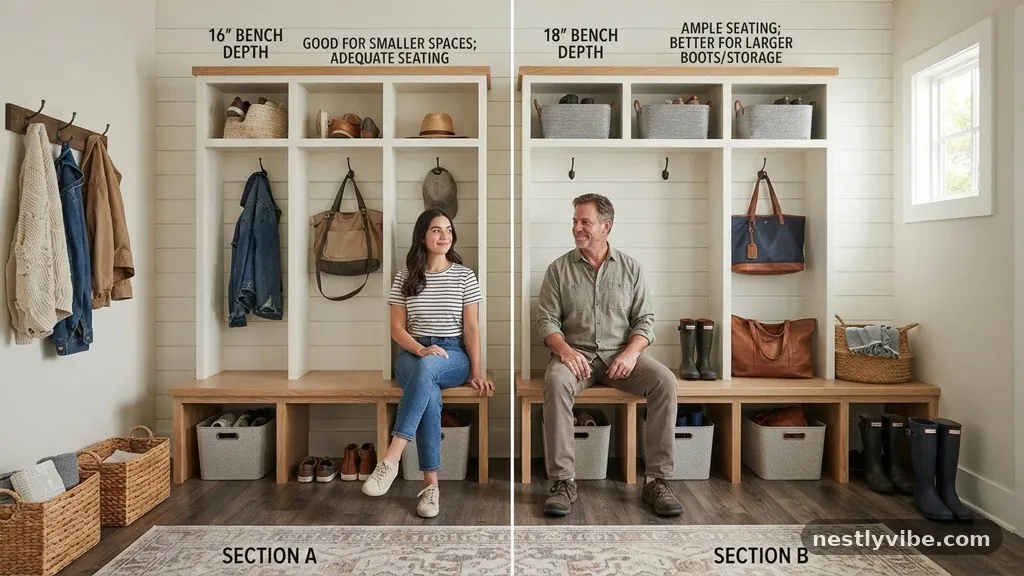
Beneath the bench, the depth of your seating directly impacts the storage capacity of your built-in units. If you plan to include bench cubbies for shoes or baskets, deeper benches allow for larger items to be tucked away completely. An 18-inch depth is excellent for accommodating bulky winter boots or large bins that might otherwise protrude from a 16-inch unit.
However, deeper cubbies can sometimes lead to “lost” items at the back of the storage area. If you choose the 18-inch depth, ensure your storage organizers are deep enough to utilize that extra space effectively.
Comparing Bench Depth Specifications
To visualize the impact of these choices, it is helpful to look at how these dimensions affect the overall utility of your mudroom furniture. The following table highlights the primary differences between the two most common depth configurations found in custom cabinetry.
| Feature | 16-Inch Bench Depth | 18-Inch Bench Depth |
|---|---|---|
| Floor Space Impact | Minimal; preserves walking paths | Moderate; requires wider clearance |
| Seating Comfort | Adequate for quick tasks | Superior for long-term sitting |
| Storage Capacity | Standard for sneakers/flats | Better for large winter boots |
| Ideal Application | Narrow hallways or apartments | Spacious mudrooms or foyers |
Accounting for Bulky Outerwear
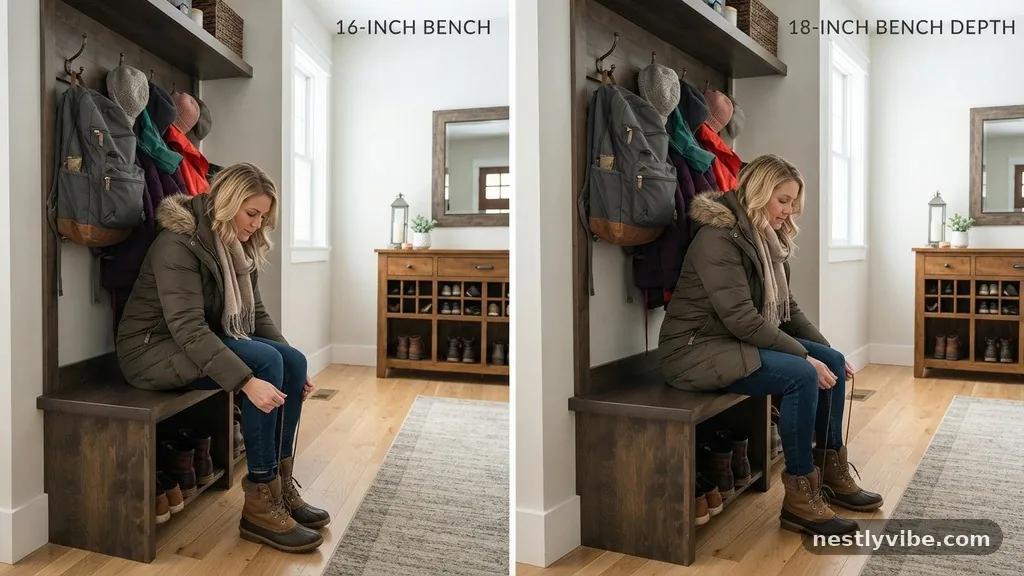
The items stored in your mudroom, particularly coats and jackets, influence how you perceive depth. If you have a wall-mounted unit with hooks, your coats will hang down and potentially overlap with the bench seat. An 18-inch bench might be pushed further into the room by the thickness of hanging parkas.
If you opt for 16 inches, you may find that the coats hang more freely without bunching up against the seat edge. This creates a cleaner look and prevents the bench from becoming a “landing zone” for dropped items falling off the coat hooks.
Materials and Construction Limitations
When building a custom mudroom bench, the materials you use can influence your depth decision. Solid wood or heavy-duty plywood construction requires structural support that might take up internal space. If you are aiming for a floating bench design, 16 inches is often easier to support with heavy-duty brackets than 18 inches.
The added weight and leverage of an 18-inch deep seat require more robust mounting hardware to ensure safety for all family members. Consult the ADA standards for accessible design if you are creating seating intended for universal use, as these guidelines provide specific requirements for clearance and support.
Traffic Flow and Door Swings
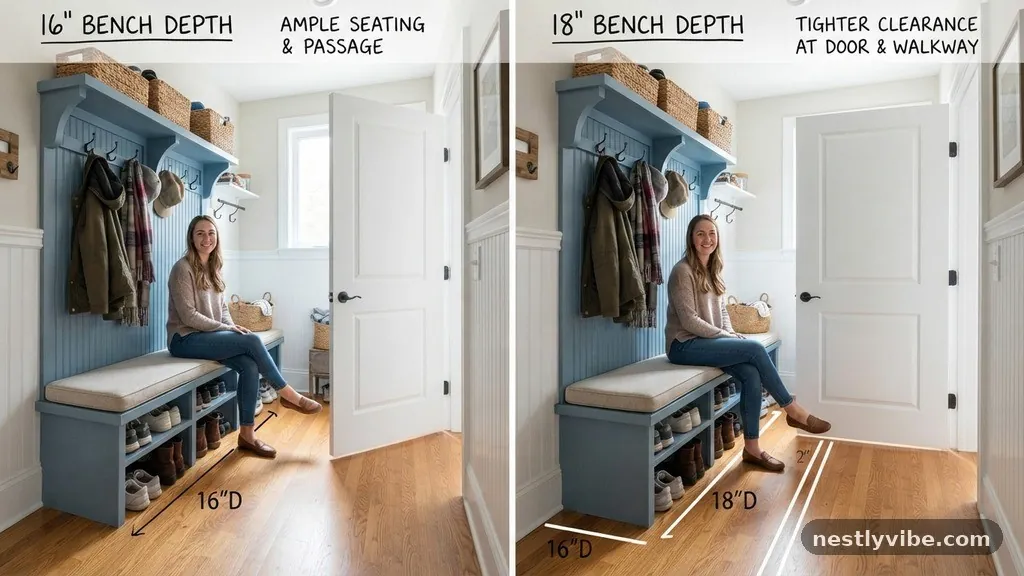
One of the most common mistakes in mudroom design is ignoring the swing of nearby doors. If you have a laundry room or garage door opening into the mudroom, the bench must not interfere with the arc of the door. A 16-inch bench is often the difference between a door that clears the furniture and one that hits it repeatedly.
If your space is tight, consider how the bench depth interacts with the door casing. You might need to sacrifice depth to ensure the door can open fully without damaging the cabinetry.
Design Flexibility and Customization
Customizing your bench allows you to adapt to the specific needs of your family. If you have young children, a 16-inch depth is often more appropriate as it aligns better with shorter leg lengths. For a family of tall adults, 18 inches might feel more natural and supportive over time.
You should also consider whether you intend to add a seat cushion. A cushion often adds a half-inch of thickness, which can make a 16-inch bench feel like 16.5 inches, effectively bridging the gap between the two standard sizes.
Key Factors for Choosing the Right Size
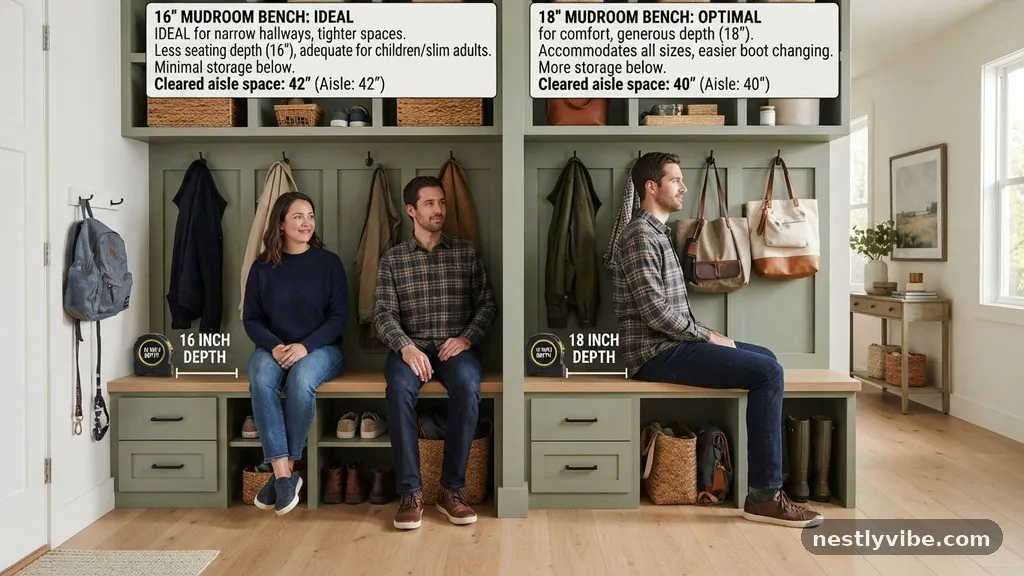
Deciding between these two depths requires balancing several competing needs within the home. Review this checklist to determine which direction is best for your specific floor plan:
- Traffic volume: High-traffic areas benefit from the extra floor clearance provided by 16-inch depths.
- User demographics: Taller family members often prefer the extra seat depth of 18-inch benches.
- Shoe storage: If you wear large work boots or snow boots, 18-inch cubbies provide essential extra room.
- Room geometry: Always prioritize maintaining at least 36 inches of clear walkway around the bench.
- Hardware constraints: Ensure your wall studs can support the depth of the bench you select for floating designs.
Frequently Asked Questions
Is 16 inches deep enough for a comfortable bench?
Yes, 16 inches is the industry standard for most mudroom benches. It provides enough surface area for an adult to sit comfortably while putting on shoes without occupying excessive floor space in a hallway.
Can I use an 18-inch bench in a small mudroom?
You can, but you must ensure it does not obstruct the flow of traffic or interfere with door swings. If your hallway is less than 4 feet wide, the 16-inch option is usually the better choice to keep the space feeling open.
How does bench depth affect my storage cubbies?
Deeper benches allow for larger storage bins or wider boots to fit completely inside the cubby. A 16-inch bench is perfect for standard sneakers, while 18 inches is better if you have large winter gear that needs to be concealed.
Should I consider the height of the bench when choosing depth?
Absolutely, as height and depth work together to create comfort. A standard bench height is usually 18 inches, and pairing that with a 16-inch or 18-inch depth creates a balanced seat that feels proportional for most users.
Does a seat cushion change the effective depth?
A seat cushion adds thickness to the front edge of the bench, which can make the seat feel slightly deeper. If you plan to add a thick cushion, keep this in mind when measuring your available walking path to ensure you don’t accidentally create a tripping hazard.
Final Considerations for Your Project
Selecting the correct Mudroom Bench Depth: 16-Inch vs 18-Inch Seating Clearances ultimately comes down to the specific constraints of your home. While 18 inches offers a more substantial, furniture-like experience, 16 inches is often the wiser choice for maintaining functional traffic flow in busy entryways. Carefully measure your available floor space, account for the swing of all nearby doors, and consider the size of the items you intend to store in your cubbies.
By weighing these factors against your family’s daily habits, you can build a mudroom that is both visually appealing and highly practical. Take the time to mark the dimensions on your floor with painter’s tape before finalizing your construction, as this simple step often reveals the best solution for your space.