10 DIY Wall Art Ideas That Anyone Can Create
Blank walls can make a room feel unfinished, but filling them doesn’t have to mean spending hundreds of dollars on oversized artwork or designer prints.
Some of the most interesting wall decor can be made with simple materials, basic tools, and a little creativity.
DIY wall art is especially useful when you want your home to feel personal. Instead of choosing something simply because it matches a furniture set, you can create pieces around the colors, textures, and mood already present in your room.
In my experience, the best DIY artwork doesn’t necessarily look perfectly handmade. It looks intentional.
A textured canvas, abstract painted panel, oversized fabric piece, or simple botanical arrangement can add personality without making the room feel cluttered. The key is choosing a design that works with the scale of the wall and the surrounding furniture.
You also don’t need advanced artistic skills.
Many of these projects rely on simple shapes, layering, texture, repetition, or natural materials rather than detailed painting. That makes them approachable for beginners while still giving experienced DIYers plenty of room to experiment.
Whether you’re decorating a bedroom, living room, entryway, hallway, or home office, these ideas can help turn an empty wall into a meaningful focal point.
The best part is that you can adjust the colors and dimensions to fit your own home.
Table of Contents
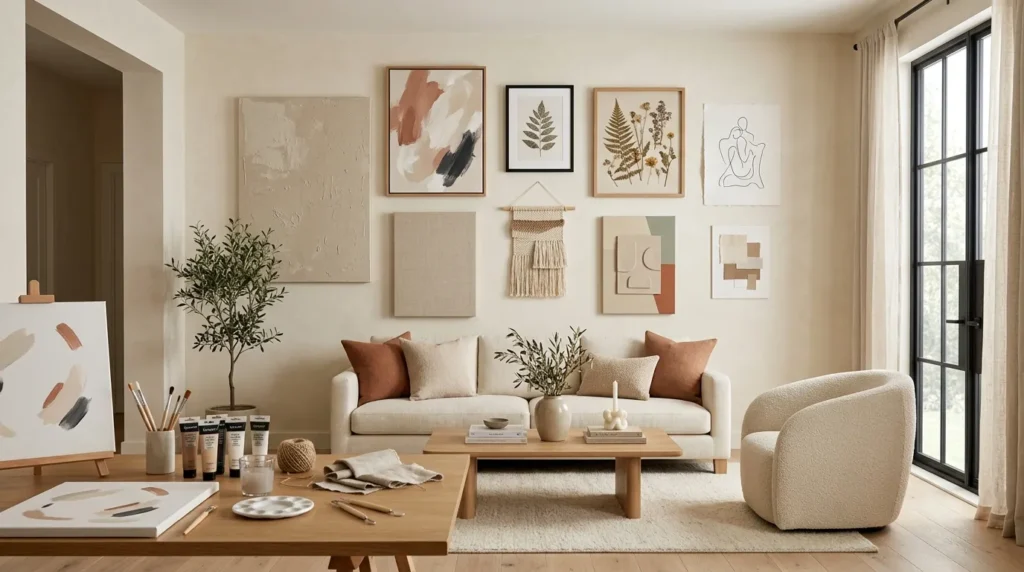
1. Textured Canvas Art
Create dimensional artwork with simple layered materials.
2. Abstract Painted Panels
Use uncomplicated shapes to create modern artwork.
3. Framed Fabric Art
Turn beautiful textiles into oversized wall decor.
4. Botanical Pressed Art
Bring natural beauty indoors with preserved foliage.
5. Plaster Texture Art
Create sculptural artwork with dimensional finishes.
6. Wooden Slat Artwork
Add warmth and architectural texture to blank walls.
7. Oversized Paper Art
Create affordable large-scale artwork with paper.
8. Minimal Line Drawings
Use simple artwork for a clean modern look.
9. Woven Wall Hangings
Add softness with natural fibers and texture.
10. Layered Gallery Art
Combine handmade pieces into a collected display.
1. Textured Canvas Art
Quick Benefits
- Beginner-friendly
- Adds dimension
- Customizable colors
- Works with modern decor
- Creates an expensive-looking focal point
Why It Works
Texture can make even a simple canvas feel much more substantial.
Instead of relying on detailed painting, textured artwork uses raised surfaces, brush marks, plaster-like finishes, or layered materials to create visual interest.
This is particularly effective in neutral interiors because texture prevents beige, cream, and white walls from looking flat.
A large textured canvas can also provide the scale needed to balance a sofa, bed, console, or dining table.
How To Style It
Start with a stretched canvas in the size appropriate for your wall.
Use a suitable modeling medium, texture paste, or another compatible art material to create organic shapes.
Try broad arches, sweeping curves, imperfect lines, or abstract ridges.
Keep the palette restrained with shades such as ivory, cream, taupe, beige, or soft gray.
Hang one oversized piece above a major furniture item rather than filling the wall with numerous small canvases.
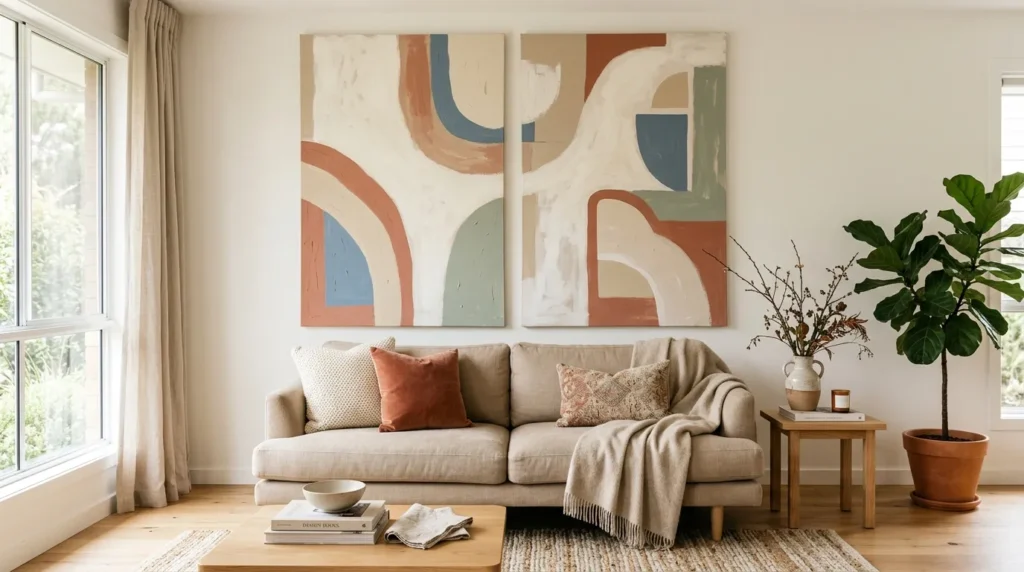
2. Abstract Painted Panels
Quick Benefits
- Easy to customize
- Requires basic supplies
- Works with modern interiors
- Adds personalized color
- Can be created in large sizes
Why It Works
Abstract artwork gives you freedom.
You don’t need to paint a recognizable scene or have professional artistic skills.
Simple blocks, curves, lines, and overlapping shapes can create a sophisticated composition.
The trick is choosing colors that already appear elsewhere in the room.
How To Style It
Choose three to five colors from your existing decor.
Use a large canvas or several smaller panels.
Paint broad organic shapes rather than trying to create perfect geometric forms.
For a contemporary appearance, leave some areas of the background visible.
Hang the finished artwork above a sofa, dresser, or console where its proportions complement the furniture.
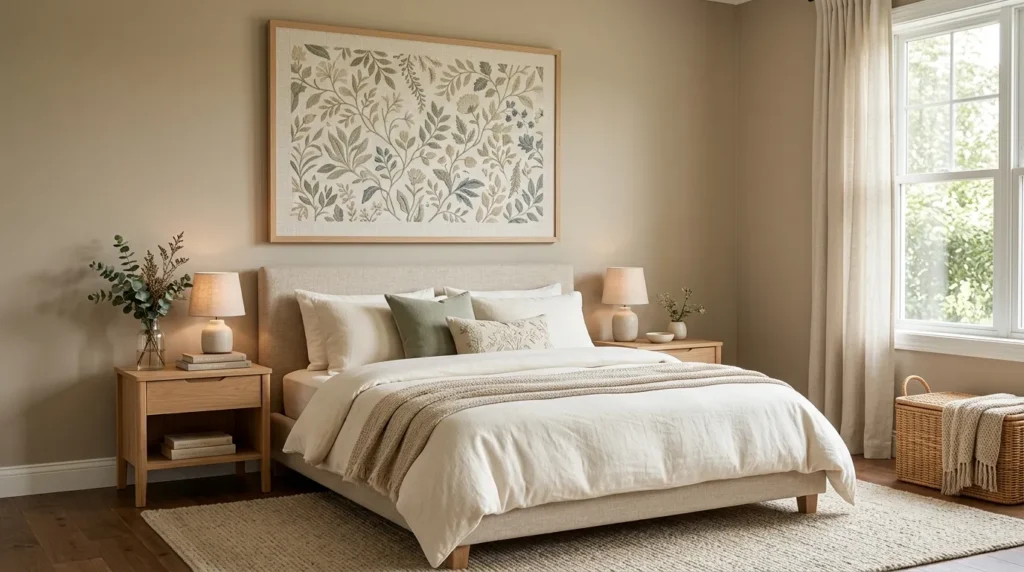
3. Framed Fabric Art
Quick Benefits
- Adds softness
- Requires little painting skill
- Uses beautiful textiles
- Works in bedrooms
- Creates large-scale decor affordably
Why It Works
Fabric can introduce color and pattern while also adding a softer visual quality than traditional framed artwork.
A beautiful linen, textile, woven cloth, or patterned fabric can become artwork when displayed intentionally.
This is especially useful for large walls where small framed prints would feel undersized.
How To Style It
Choose a fabric with a pattern or texture that complements the room.
Stretch it over a canvas frame or mount it securely within a large frame.
Neutral linen works beautifully for minimalist bedrooms.
For a more colorful room, select a textile with muted botanical or geometric patterns.
Keep surrounding wall decor simple so the textile remains the focal point.
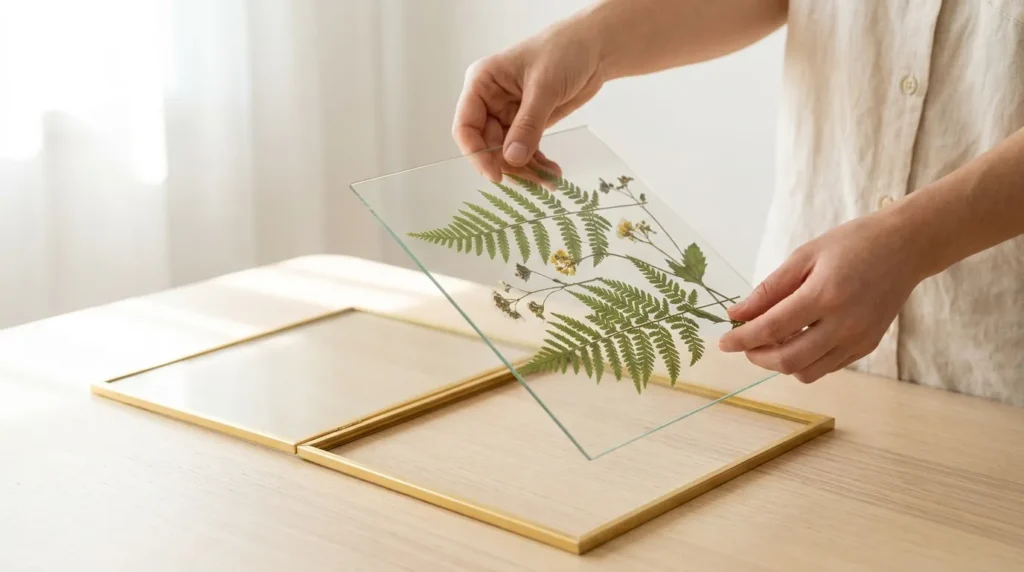
4. Botanical Pressed Art
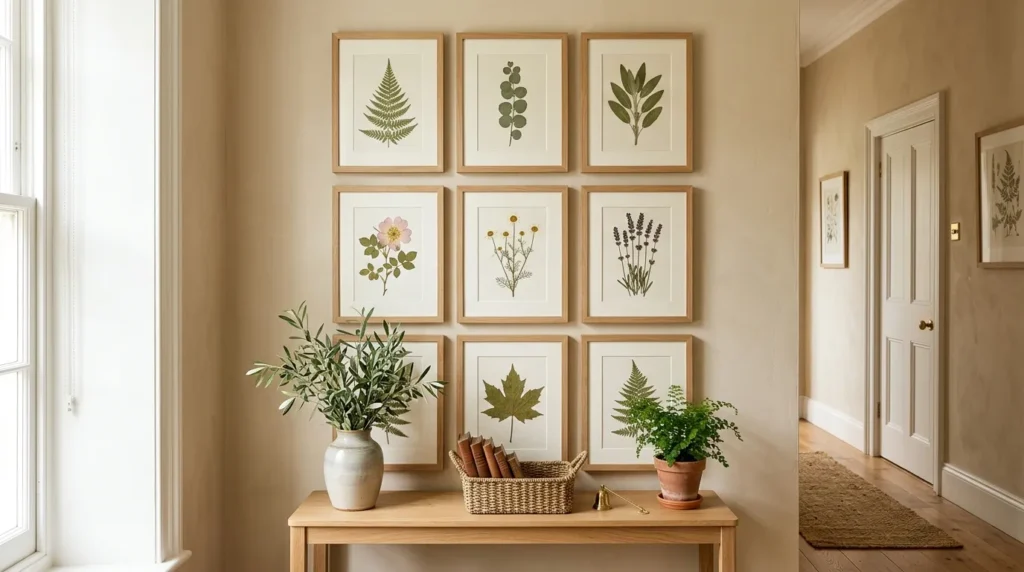
Quick Benefits
- Brings natural elements indoors
- Works with many decor styles
- Creates a timeless appearance
- Can be inexpensive
- Looks beautiful in bedrooms and hallways
Why It Works
Botanical artwork creates an immediate connection with nature.
Pressed leaves, flowers, grasses, and botanical illustrations can add delicate visual interest without overwhelming a room.
The organic shapes work particularly well with neutral interiors and natural wood furniture.
How To Style It
Use properly dried and preserved botanical materials.
Place individual specimens between glass or arrange several in a grid.
Choose simple frames in natural wood, black, white, or muted brass.
For a cohesive display, repeat the same frame style.
A series of three or four botanical pieces can create a balanced arrangement above a console or bed.
5. Plaster Texture Art
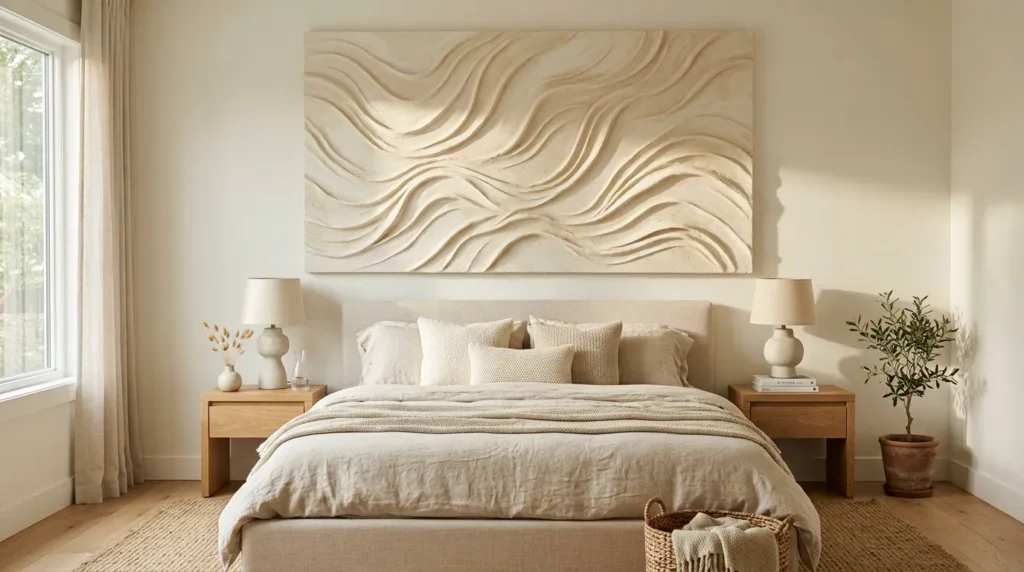
Quick Benefits
- Creates sculptural depth
- Looks sophisticated
- Works with neutral interiors
- Highly customizable
- Makes a strong focal point
Why It Works
Sculptural wall art can give a room the appearance of custom design without requiring complex painting.
Plaster-style finishes create shadows and highlights that change throughout the day as natural light moves across the surface.
This makes the artwork feel more dimensional.
How To Style It
Use a suitable art board or canvas and an appropriate texture medium.
Create broad raised forms using a palette knife or similar tool.
Try soft waves, arches, layered ridges, or abstract landscapes.
Keep the colors close to the wall and furniture palette for a sophisticated monochromatic effect.
Make sure the finished piece is securely mounted, particularly when using heavier materials.
6. Wooden Slat Artwork
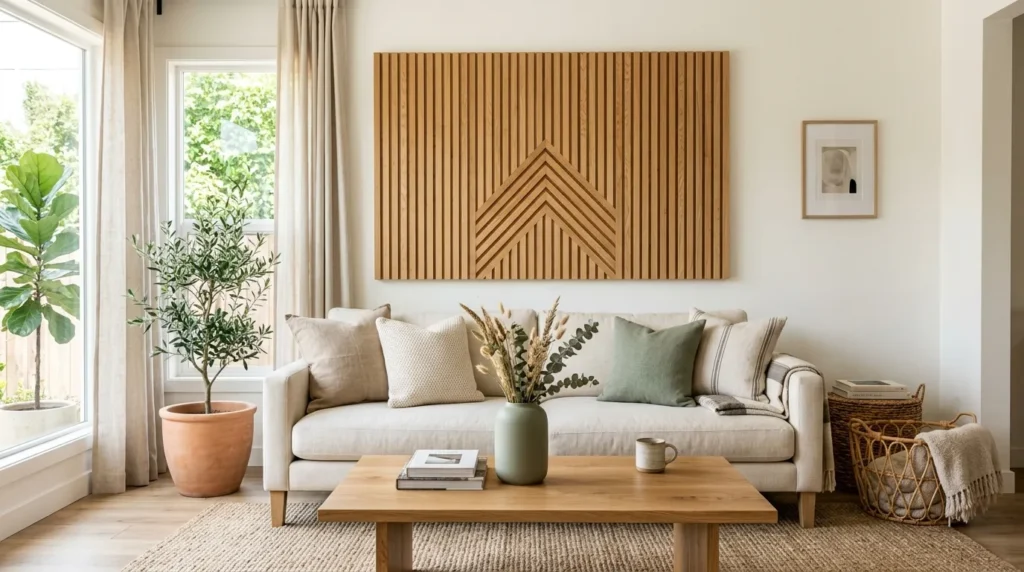
Quick Benefits
- Adds natural warmth
- Creates architectural texture
- Works with modern interiors
- Can be customized
- Provides visual dimension
Why It Works
Wood brings a different type of texture to wall decor.
Instead of painting a picture, you create an arrangement of lines, spacing, and natural grain.
The result can look more like an architectural feature than traditional artwork.
How To Style It
Use appropriately prepared wood strips or boards.
Arrange them vertically, horizontally, or in a simple geometric pattern.
Natural oak works well with warm neutral interiors.
For a modern look, consider a simple stained or painted finish.
Mount the piece above a sofa, bed, console, or dining area.
Keep the surrounding decor relatively simple.
7. Oversized Paper Art
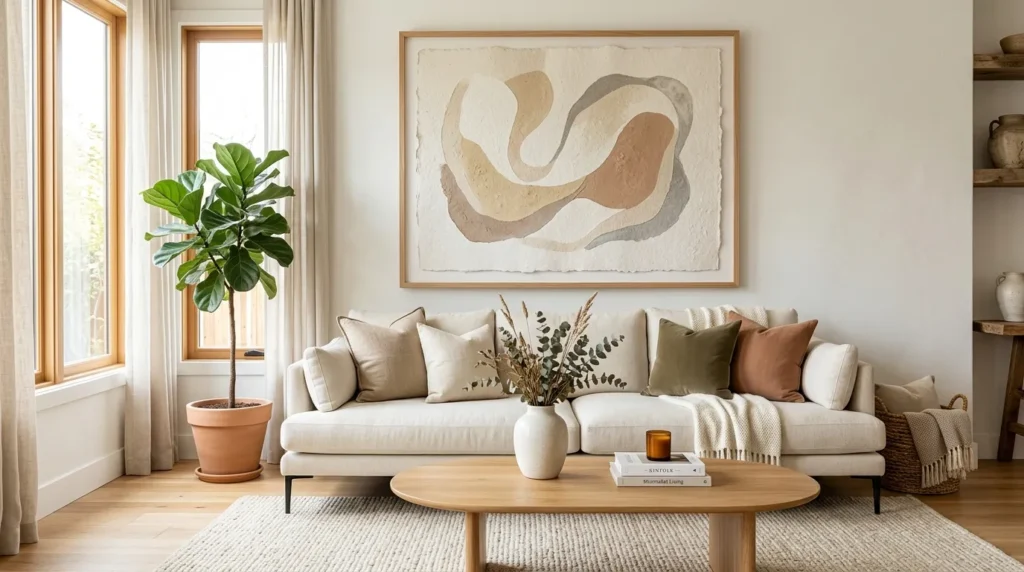
Quick Benefits
- Very affordable
- Lightweight
- Easy to customize
- Ideal for renters
- Works for large walls
Why It Works
Large-scale artwork can become expensive quickly.
Paper offers a simple alternative.
Oversized folded, layered, painted, or cut-paper designs can fill a substantial wall without requiring costly materials.
The lightweight construction can also make installation easier in suitable situations.
How To Style It
Choose heavyweight paper or suitable art material.
Create oversized abstract shapes, botanical silhouettes, arches, or geometric compositions.
Mount the artwork inside a large frame or use an appropriate hanging method.
Stick with a limited palette.
For a sophisticated look, neutral monochromatic paper art can work beautifully.
8. Minimal Line Drawings
Quick Benefits
- Simple appearance
- Easy for beginners
- Works in small spaces
- Creates visual calm
- Pairs with modern furniture
Why It Works
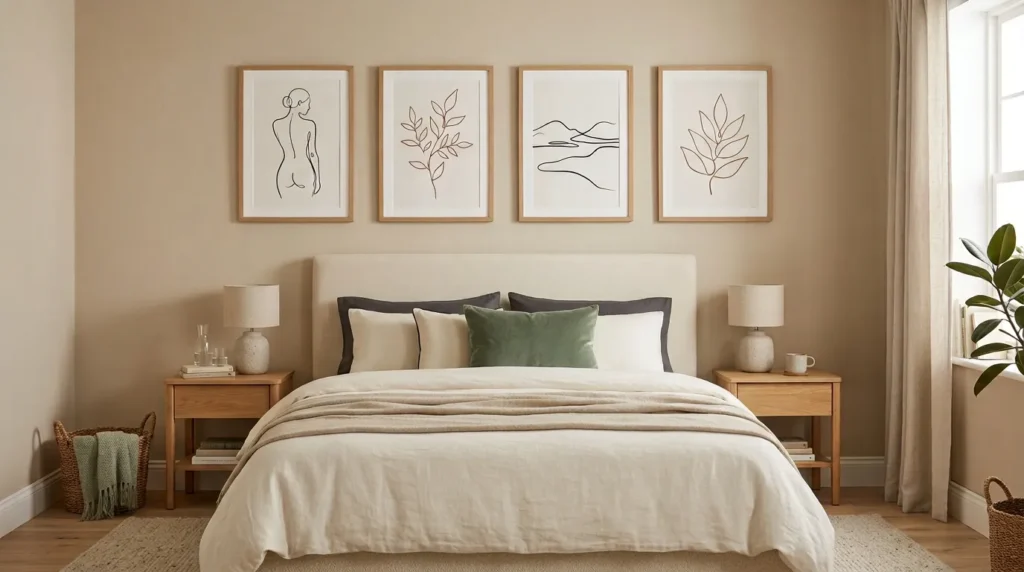
Minimal line drawings prove that artwork doesn’t have to be complicated to make an impact.
A single continuous line, abstract face, botanical shape, or architectural sketch can add personality while keeping the wall visually quiet.
This makes the style particularly useful in bedrooms and minimalist living spaces.
How To Style It
Use black, charcoal, warm gray, or muted brown lines against an ivory background.
Frame the artwork with a simple natural wood or black frame.
For a larger wall, create a small series using related drawings.
Keep the spacing consistent.
Avoid combining too many unrelated styles in the same arrangement.
9. Woven Wall Hangings
Quick Benefits
- Adds softness
- Introduces natural texture
- Creates warmth
- Works beautifully in bedrooms
- Complements bohemian and modern styles
Why It Works
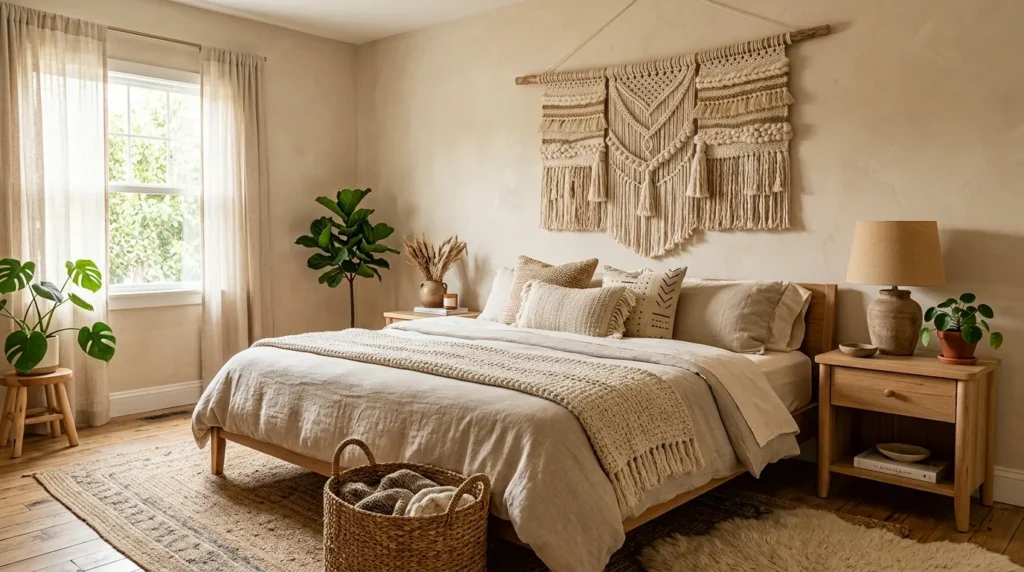
Woven wall art adds movement and tactile interest that framed artwork can’t always provide.
Natural fibers such as cotton, linen, jute, and wool can create a relaxed atmosphere.
The soft texture is particularly attractive against smooth painted walls.
How To Style It
Choose a woven piece with a size appropriate for the wall.
Neutral cream, oatmeal, beige, and natural tones create a calming appearance.
For a more colorful room, choose muted terracotta, sage, dusty blue, or warm rust accents.
Hang the piece above a bed, reading chair, console, or dresser.
10. Layered Gallery Art
Quick Benefits
- Creates a collected appearance
- Uses multiple DIY pieces
- Highly customizable
- Works with different room styles
- Makes a larger wall feel finished
Why It Works
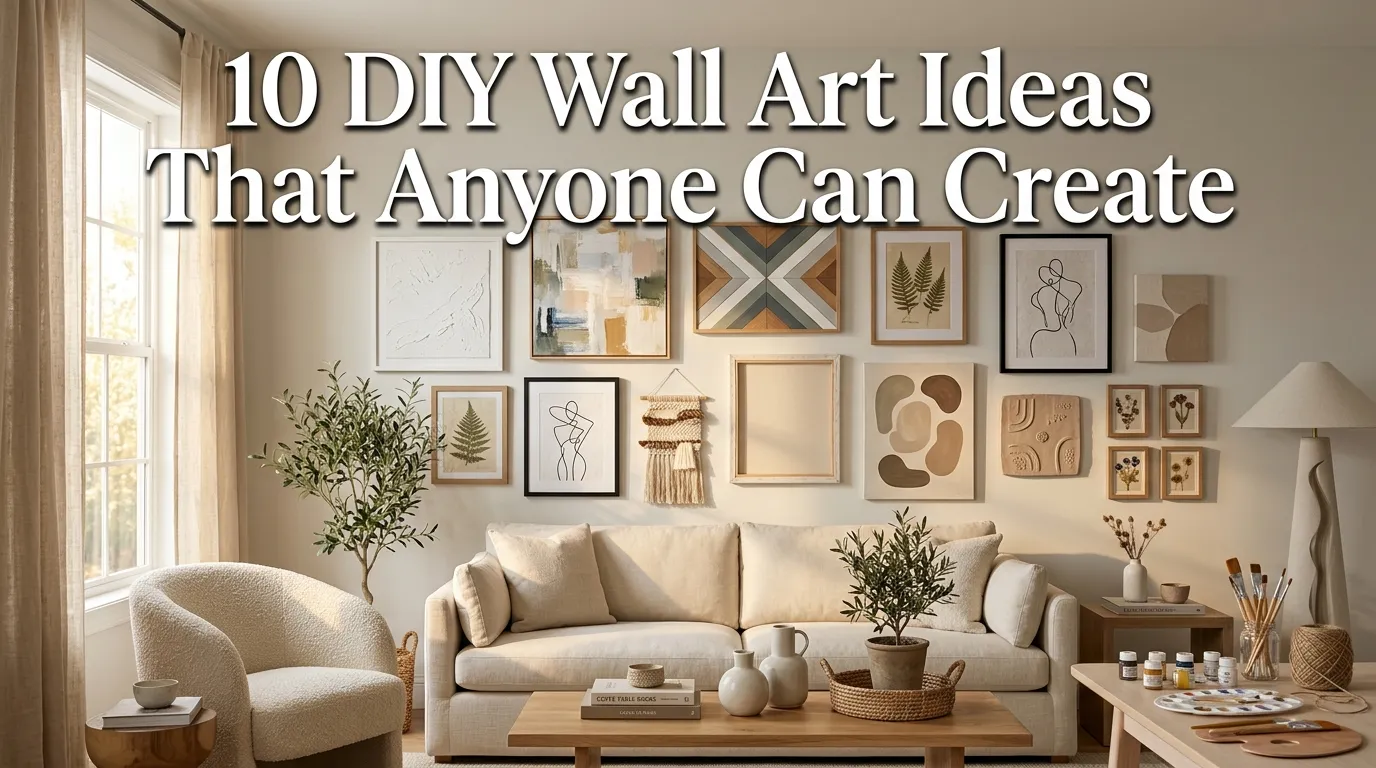
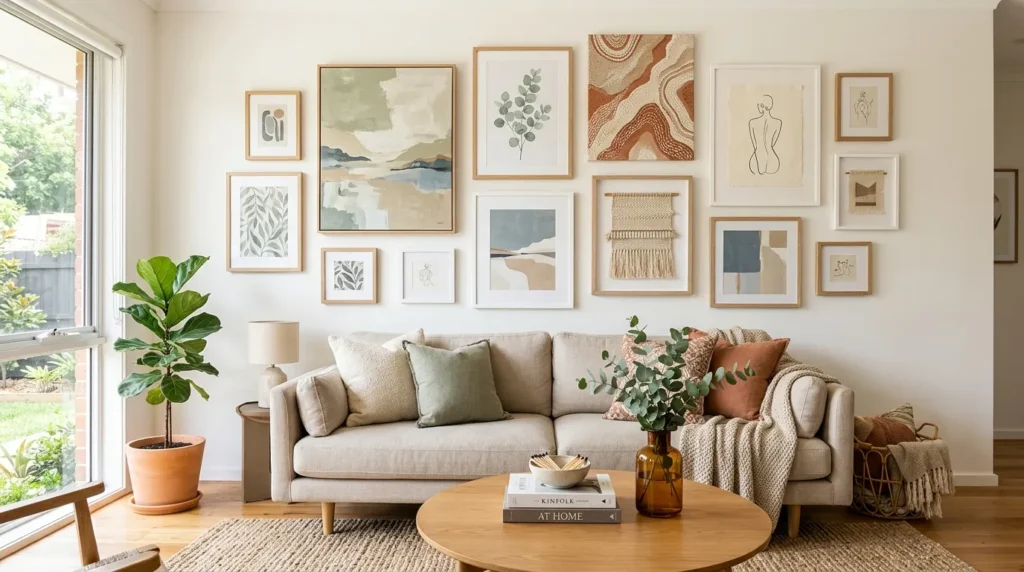
A gallery wall gives you the freedom to combine several smaller projects.
Instead of searching for one perfect piece, you can create a collection that reflects your style.
The secret is creating enough connection between the pieces so the arrangement feels intentional.
How To Style It
Choose a consistent color palette first.
Combine textured canvas, line drawings, botanical prints, small paintings, and photographs.
Use similar frame finishes or repeat one frame color throughout.
Lay the arrangement on the floor before mounting it.
Keep spacing relatively consistent and make sure the overall grouping relates to the furniture beneath it.
How To Choose DIY Wall Art For Your Room
Start with the wall itself.
Look at its size, shape, lighting, and relationship to nearby furniture.
A large blank wall usually needs artwork with substantial visual weight.
A narrow wall may work better with a vertical piece or small series.
Also consider the room’s existing colors.
If your furniture is already colorful, neutral artwork can provide balance.
If the room is mostly beige and cream, textured or subtly colorful artwork can add depth.
How To Make DIY Art Look More Expensive
The materials don’t have to be expensive.
The presentation matters.
Use large enough artwork for the wall.
Choose a restrained color palette.
Keep frames consistent.
Use quality-looking hardware.
Avoid overcrowding.
Most importantly, give the artwork enough breathing room.
A simple piece displayed at the right scale often looks more sophisticated than an elaborate piece that is too small.
Best DIY Wall Art Materials
Depending on the project, consider:
- Stretched canvas
- Texture paste
- Modeling medium
- Acrylic paint
- Heavyweight paper
- Linen
- Cotton fabric
- Natural wood
- Dried botanicals
- Woven fibers
- Simple frames
- Wooden dowels
- Art boards
Always select materials appropriate for the intended location and follow product instructions.
Common DIY Wall Art Mistakes
Choosing Artwork That’s Too Small
Scale is one of the biggest factors in making wall decor look intentional.
Using Too Many Colors
A limited palette usually creates better cohesion.
Hanging Everything Too High
Relate artwork to nearby furniture and eye level.
Mixing Too Many Styles
Choose a visual direction before creating a gallery.
Ignoring Negative Space
Empty space helps artwork breathe.
Overdecorating One Wall
A strong focal point doesn’t need dozens of competing pieces.
FAQ
What is the easiest DIY wall art for beginners?
Textured canvas, abstract painted shapes, minimal line drawings, and framed fabric are among the easiest options. They don’t require advanced artistic skills and can be customized to match your existing color palette.
How do I make DIY wall art look expensive?
Focus on scale, composition, framing, and a restrained color palette. Large artwork with simple shapes can look more sophisticated than numerous small pieces. Natural textures and consistent frames can also create a polished appearance.
What can I use instead of expensive artwork?
Fabric, paper, wood, dried botanicals, texture paste, and simple painted canvases can all become attractive wall decor. Repurposing suitable materials you already own can reduce the cost even further.
How large should wall art be above a sofa?
As a general design guideline, artwork or a grouped arrangement often looks best when it relates proportionally to the furniture beneath it. Avoid choosing a piece so small that it visually disappears above the sofa.
What DIY wall art works best for a bedroom?
Soft neutral textured canvases, botanical prints, woven wall hangings, minimalist drawings, and linen artwork work particularly well. Choose calming colors and tactile materials to support a relaxed bedroom atmosphere.
How do I arrange DIY artwork on a large wall?
Start by deciding on one large focal piece or a cohesive gallery arrangement. Lay everything on the floor first, experiment with spacing, and relate the overall grouping to nearby furniture. Consistent spacing and repeated colors or frame finishes help create cohesion.
Can renters make DIY wall art?
Absolutely. Lightweight fabric art, paper artwork, small framed pieces, and removable hanging solutions can work well for renters. Always check your lease and use hanging methods appropriate for the wall surface.
Conclusion
Creating beautiful wall decor doesn’t require professional painting skills or a huge decorating budget.
The most successful DIY artwork starts with a simple idea and thoughtful presentation.
A textured canvas can add depth.
Abstract panels can introduce color.
Fabric can become oversized artwork.
Pressed botanicals bring nature indoors.
Wood adds warmth, while woven pieces create softness.
If you’re staring at a blank wall, don’t feel pressured to fill it immediately.
Start by considering the room’s scale, colors, furniture, and natural light.
Then choose one technique that fits the atmosphere you’re trying to create.
For a calm bedroom, try a neutral textured canvas or botanical series.
For a modern living room, experiment with oversized abstract panels.
For a warm, natural interior, wood or woven artwork may be the better choice.
And remember that imperfections can be part of the charm.
DIY artwork doesn’t need to look factory-made.
It should look intentional, personal, and appropriate for your home.
Start with one wall, create something you genuinely like, and let that piece guide the rest of your decorating.
Related Articles
- 10 DIY Wall Art Ideas Using Natural Textures
- 10 DIY Wall Art Ideas with Textured Canvas
- 10 Bedroom Wall Decor Ideas with Oversized Art
- 10 Bedroom Wall Decor Ideas with Stylish Shelving
- 10 Modern Bedroom Ideas with Cozy Minimalist Style