
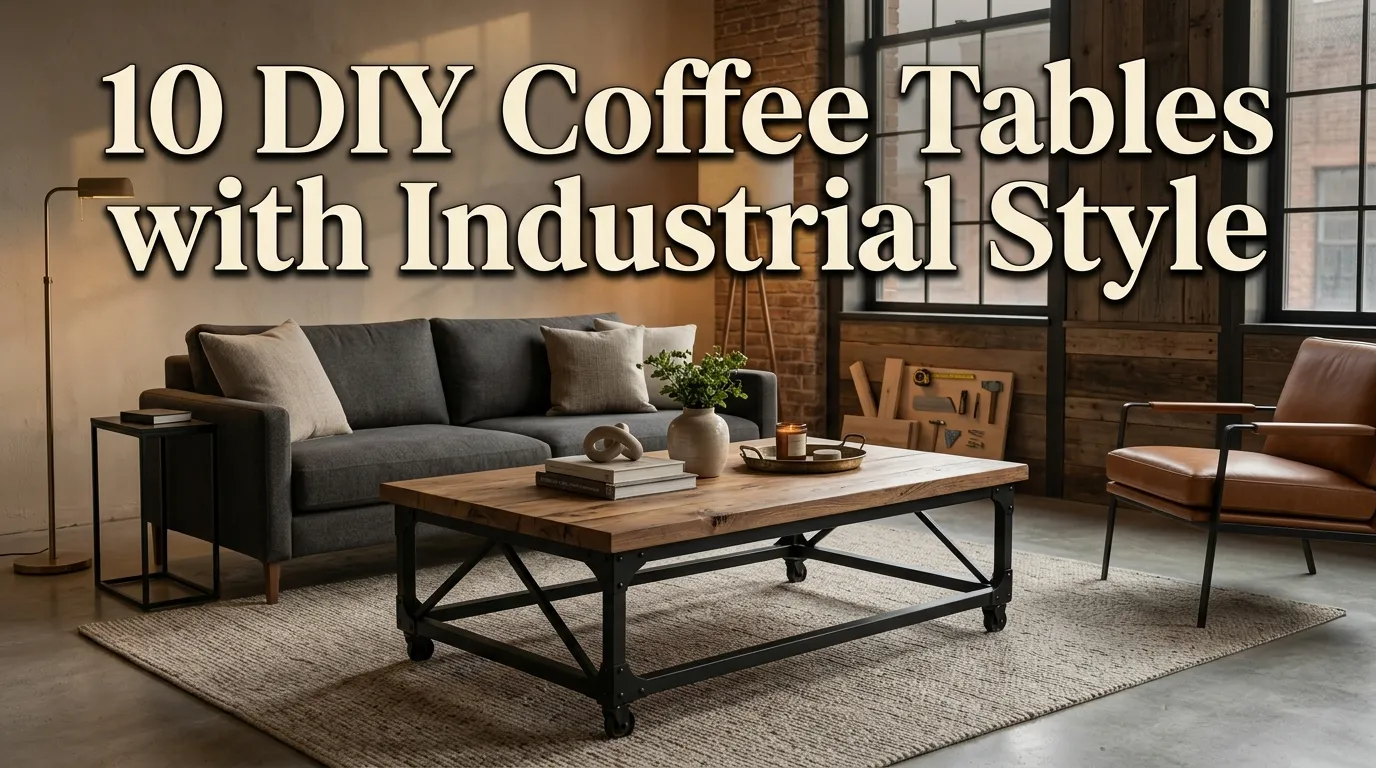
10 DIY Coffee Tables with Industrial Style
A coffee table can completely change the feel of a living room. It sits at the center of the seating area, ties the furniture together, and gives you a practical surface for books, drinks, candles, and everyday essentials.
But you don’t necessarily need to buy an expensive designer table to get that polished look.
An industrial-style coffee table is one of the best DIY furniture projects for creating a substantial focal point without requiring complicated construction. The style naturally combines practical materials such as wood and metal, making small imperfections feel intentional rather than problematic.
The most successful industrial coffee tables usually balance hard and soft elements. A dark metal base paired with warm reclaimed wood can feel striking, while lighter oak and a simple black frame can create a more modern interpretation.
In my experience, the biggest difference between a DIY table that looks homemade and one that feels custom is the attention paid to proportions and finishing.
The tabletop needs to work with the sofa height. The base needs enough visual weight without making the room feel heavy. And the finish should complement the other materials already present.
These ten ideas range from simple beginner-friendly builds to more substantial statement pieces. You can adapt the dimensions, wood species, finishes, and base styles to suit your living room.
Before building any furniture, use appropriate tools and hardware, follow manufacturer instructions, and make sure the finished piece is stable and safe for everyday use.
Table of Contents
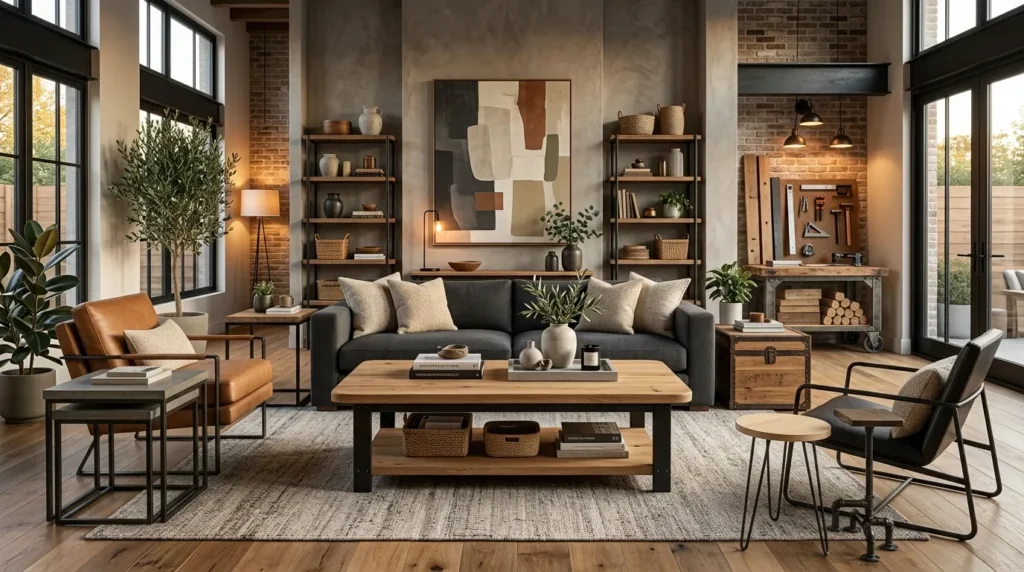
1. Reclaimed Wood Top
Use aged wood to create authentic industrial character.
2. Black Metal Frame
Pair a simple metal base with warm wood.
3. Pipe Leg Table
Use exposed pipe for a distinctive workshop-inspired look.
4. Concrete Top
Create a substantial contemporary industrial surface.
5. Wood Crate Table
Turn simple crates into functional furniture.
6. Hairpin Leg Design
Combine slim metal legs with a wooden top.
7. Steel And Oak
Balance dark metal with warm natural wood.
8. Industrial Storage Table
Add practical storage beneath the tabletop.
9. Casters And Wheels
Give the table a movable workshop-inspired character.
10. Mixed Material Table
Combine several textures for a custom finish.
1. Reclaimed Wood Top
Quick Benefits
- Adds natural character
- Creates authentic texture
- Works with modern furniture
- Can be customized
- Hides minor imperfections
Why It Works
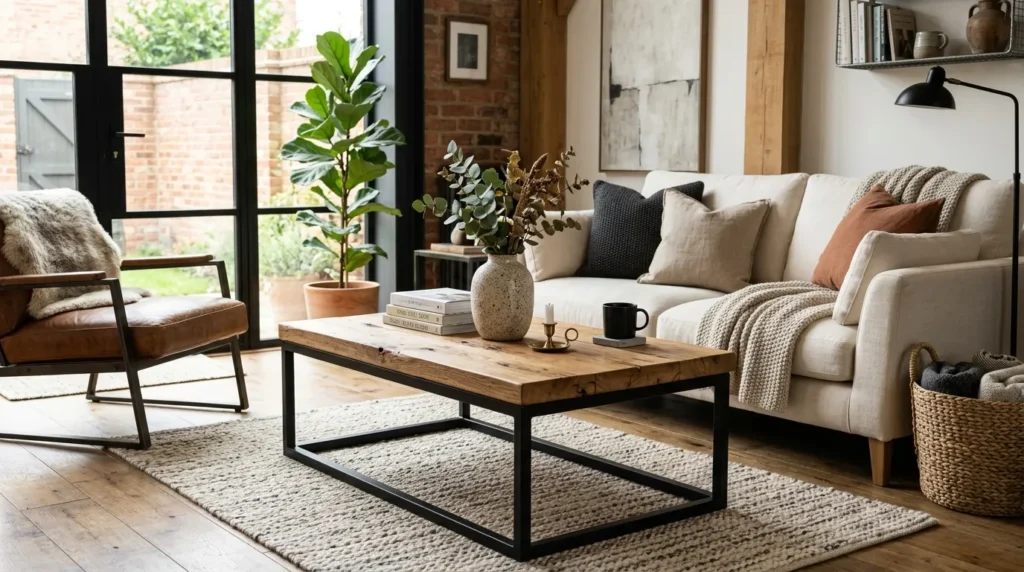
Reclaimed wood is naturally suited to industrial design because its knots, grain variations, and signs of age add personality.
Instead of trying to make the material look perfectly uniform, the design allows those characteristics to become part of the finished table.
The warmth of wood also prevents industrial furniture from feeling too cold or mechanical.
How To Style It
Use properly prepared reclaimed wood or new lumber with a distressed finish.
Sand the surface thoroughly and choose a finish appropriate for the intended use.
Pair the top with a simple black steel frame.
In a neutral living room, add cream upholstery, woven baskets, and warm textiles around the table to balance the harder materials.
2. Black Metal Frame
Quick Benefits
- Creates strong contrast
- Looks modern
- Provides structural character
- Works with many wood tones
- Has a custom appearance
Why It Works
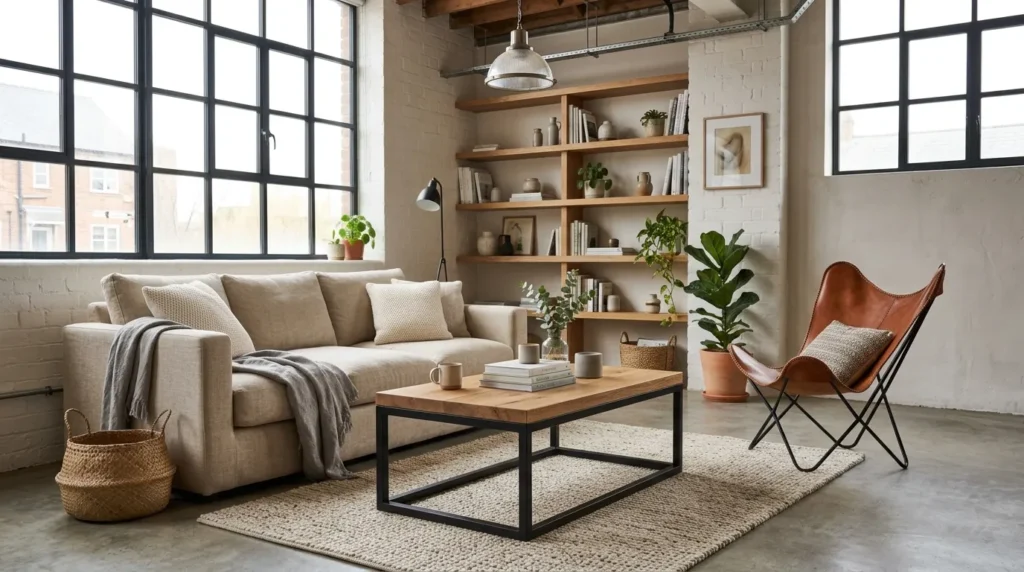
Black metal provides a strong visual outline around a wooden tabletop.
The contrast makes both materials stand out.
A simple rectangular steel frame can look surprisingly sophisticated because it doesn’t compete with the grain and texture of the wood.
How To Style It
Choose a tabletop in oak, walnut, pine, or reclaimed wood.
Keep the metal base relatively simple.
For a modern industrial look, use clean straight lines.
For a more rustic appearance, combine the frame with distressed or heavily grained wood.
Add a textured rug underneath to soften the overall composition.
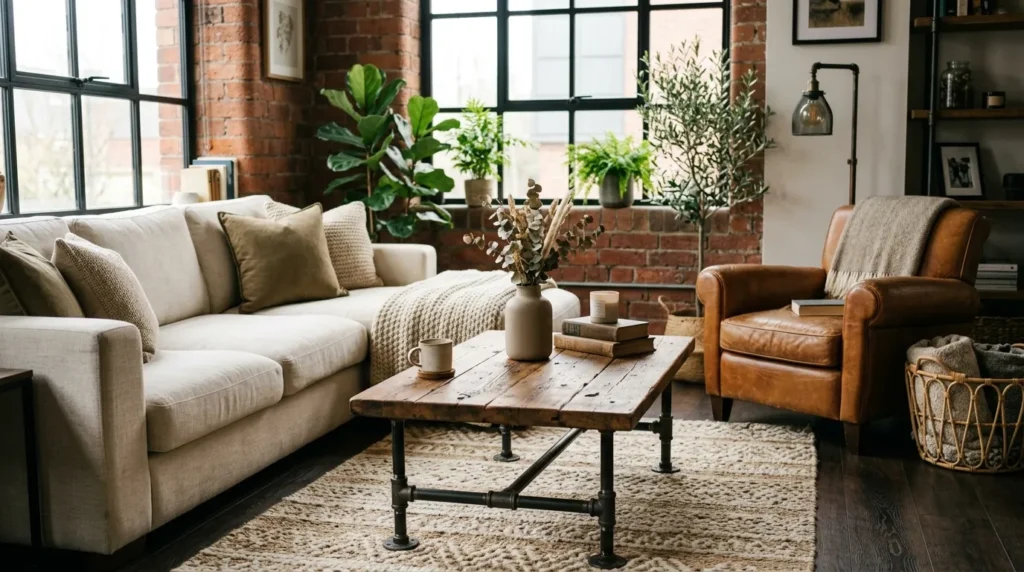
3. Pipe Leg Table
Quick Benefits
- Distinctive industrial character
- Relatively simple design
- Adds visible hardware
- Works with reclaimed wood
- Creates a workshop-inspired look
Why It Works
Exposed pipe is one of the recognizable elements of industrial furniture.
Instead of hiding the structural components, this approach makes them part of the design.
Dark or aged metal pipe paired with wood creates an attractive contrast between warm and cool materials.
How To Style It
Use appropriately rated pipe and fittings designed for your intended application.
Build a sturdy base beneath a properly supported wooden top.
Keep the tabletop finish relatively simple so the pipe remains visually interesting.
This style works especially well in loft-inspired, modern farmhouse, and contemporary living rooms.
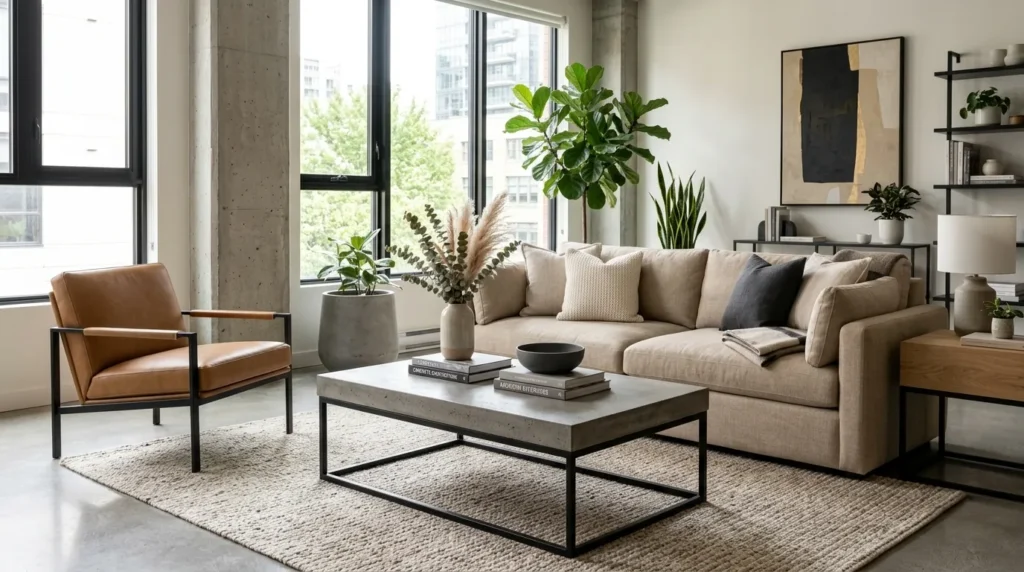
4. Concrete Top
Quick Benefits
- Creates a bold focal point
- Offers substantial visual weight
- Works with modern interiors
- Adds industrial texture
- Provides a unique finish
Why It Works
Concrete brings an architectural quality to furniture.
Its natural variations, subtle texture, and cool gray coloring make it a natural partner for black metal and warm wood.
However, concrete can be heavy, so construction and support require careful planning.
How To Style It
Use a properly designed mold and suitable concrete product for a furniture application.
Allow adequate curing time and follow the manufacturer’s instructions for sealing.
Pair the top with a sturdy metal base.
Balance the table with soft upholstery, a textured rug, and warm wood accessories elsewhere in the room.
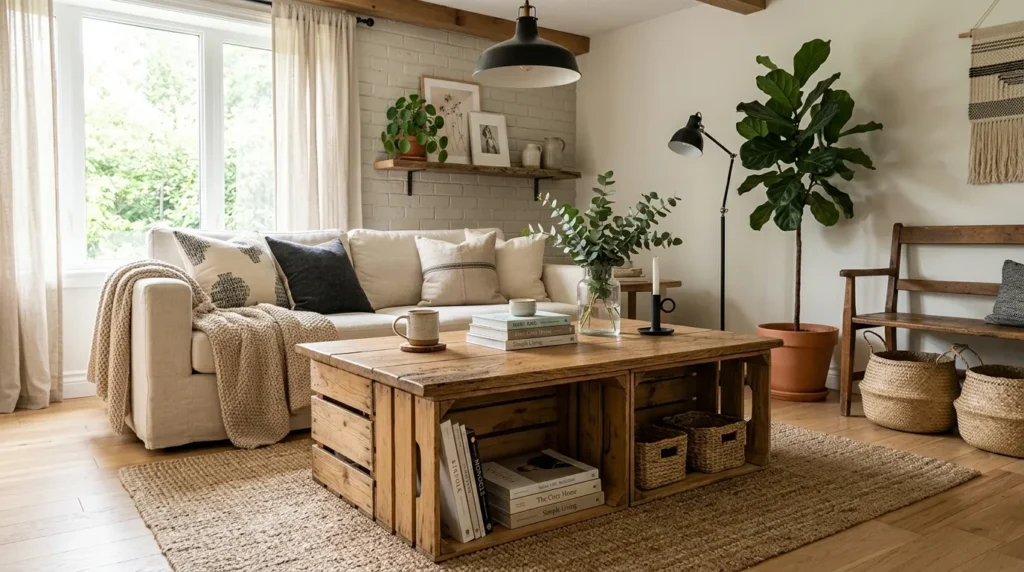
5. Wood Crate Table
Quick Benefits
- Budget-friendly concept
- Adds storage
- Easy to customize
- Creates rustic character
- Useful for smaller spaces
Why It Works
Wood crates can provide both structure and storage.
When arranged thoughtfully, they create an intentionally rustic-industrial appearance rather than simply looking like repurposed containers.
The open compartments are useful for books, baskets, blankets, and small accessories.
How To Style It
Use sturdy crates that are suitable for furniture construction.
Secure components appropriately rather than relying on loose stacking.
Add a properly supported tabletop across the structure.
Sand rough edges and finish the wood for a more polished appearance.
Use baskets inside the openings if you want to reduce visual clutter.
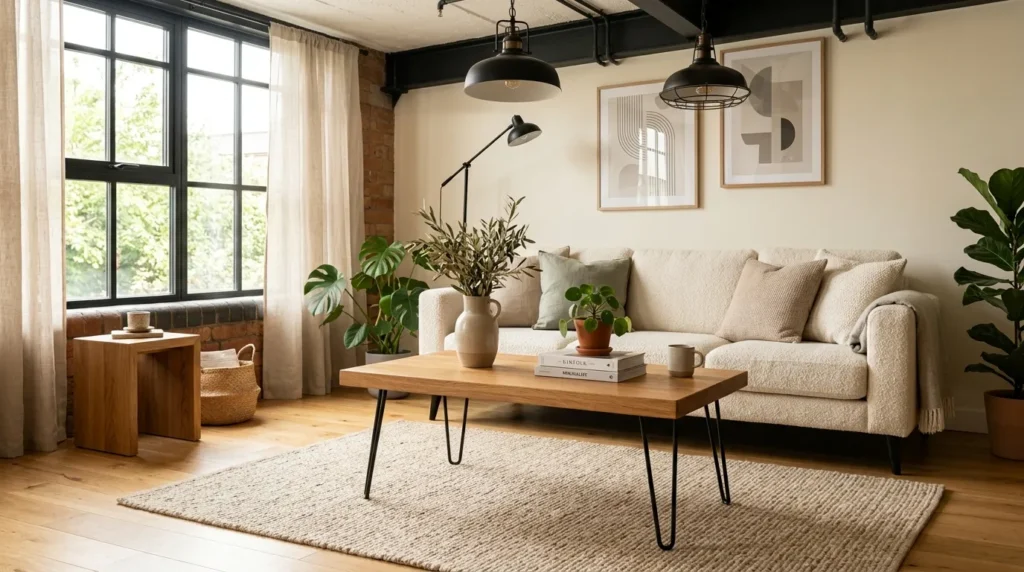
6. Hairpin Leg Design
Quick Benefits
- Minimal silhouette
- Easy to customize
- Works in small rooms
- Creates visual openness
- Combines well with wood
Why It Works
Hairpin legs provide a lighter alternative to heavy industrial bases.
Their thin metal profile allows more of the floor and rug to remain visible, which can help a small living room feel less crowded.
How To Style It
Choose a wood slab or assembled tabletop with appropriate thickness and support.
Pair it with black or dark metal hairpin legs.
Keep the tabletop finish natural for a Scandinavian-industrial appearance.
For more traditional industrial character, choose darker wood and heavier styling around the table.
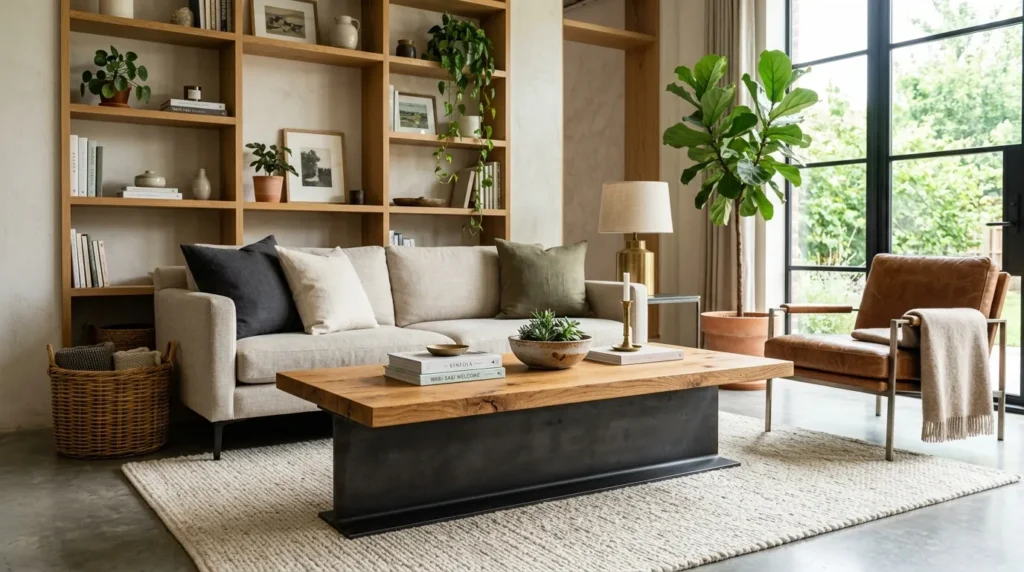
7. Steel And Oak
Quick Benefits
- Balanced materials
- Warm and modern
- Durable-looking design
- Works with neutral rooms
- Feels custom-made
Why It Works
Oak and steel create a particularly attractive contrast.
The warm grain of oak softens the harder appearance of metal, while steel gives the wood a more contemporary edge.
This combination can transition easily between industrial, modern farmhouse, and contemporary interiors.
How To Style It
Choose a warm oak tabletop and a simple dark steel base.
Repeat the oak elsewhere through flooring, shelving, or small accessories.
Use black accents sparingly so the table feels connected to the rest of the room.
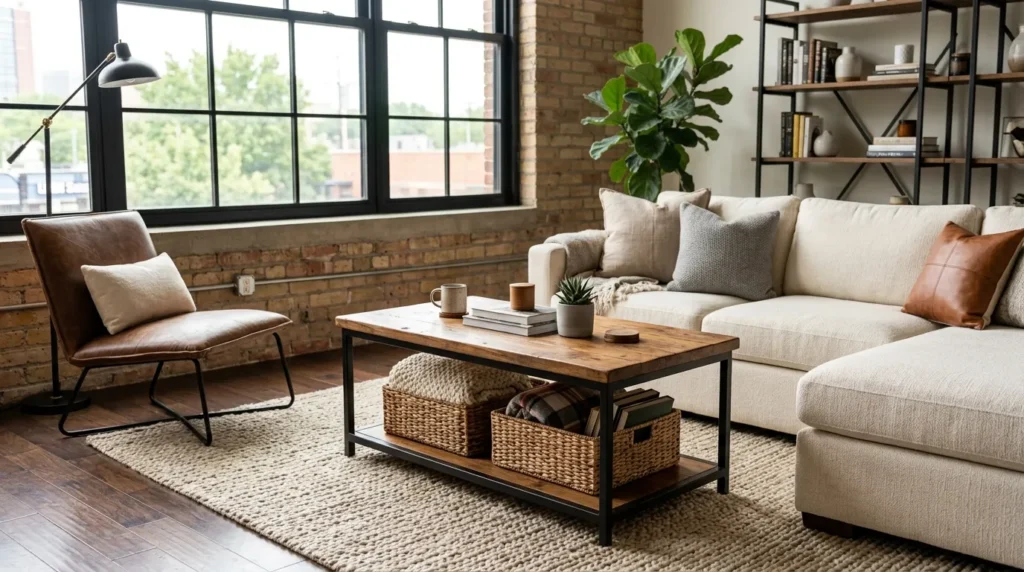
8. Industrial Storage Table
Quick Benefits
- Adds hidden or open storage
- Improves organization
- Maximizes furniture functionality
- Works well in family rooms
- Creates visual interest
Why It Works
A coffee table can do more than hold a tray.
Adding drawers, shelves, baskets, or compartments can make it useful for everyday living.
This is especially helpful in smaller homes where every piece of furniture needs to work harder.
How To Style It
Design the storage around what you actually need.
Use open shelving for books and baskets.
Use drawers for remotes, chargers, and smaller objects.
Choose a tabletop that provides enough surface area for everyday use without overwhelming the seating arrangement.
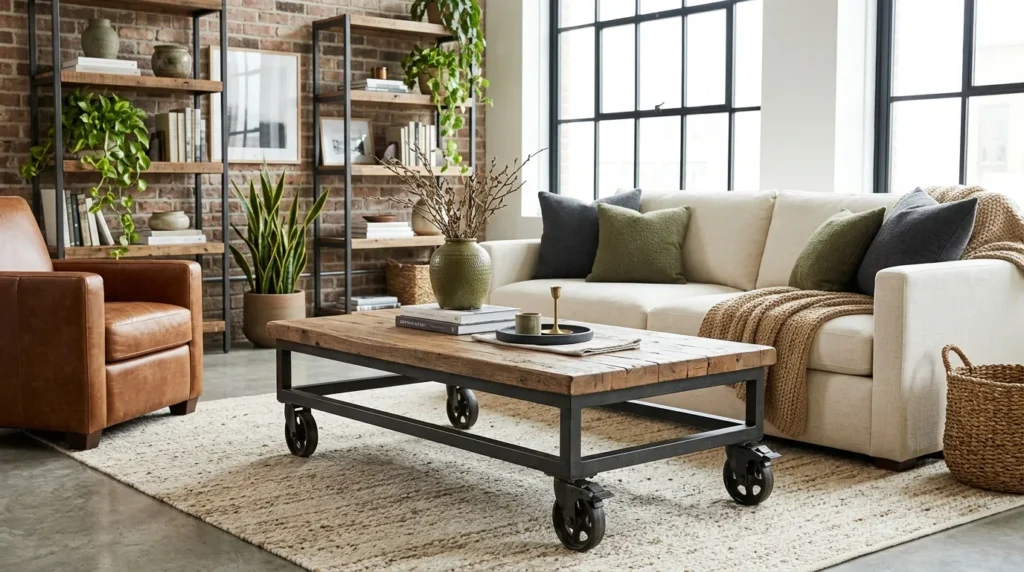
9. Casters And Wheels
Quick Benefits
- Easy to move
- Adds industrial character
- Useful for flexible layouts
- Creates workshop-inspired style
- Works with heavy designs
Why It Works
Casters make the industrial concept feel functional rather than purely decorative.
A movable coffee table can be useful when rearranging furniture, cleaning, or creating additional space for entertaining.
How To Style It
Choose sturdy casters appropriate for the finished table’s weight.
Locking casters are especially useful for stability.
Pair the wheels with reclaimed wood and a dark metal frame for an authentic industrial appearance.
Keep the surrounding decor softer so the table doesn’t make the room feel overly mechanical.
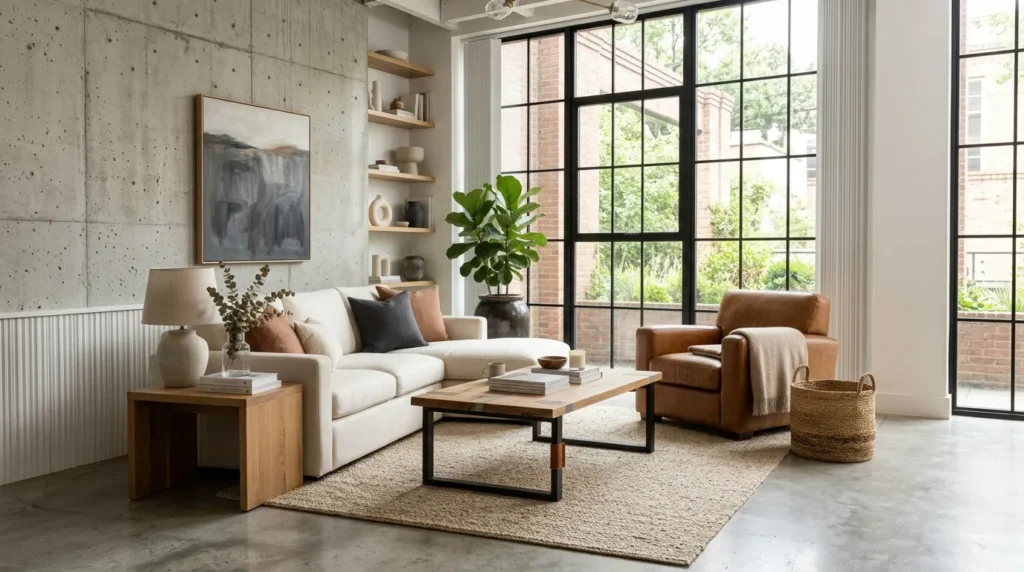
10. Mixed Material Table
Quick Benefits
- Highly customizable
- Creates visual depth
- Combines multiple textures
- Looks designer-inspired
- Works with many decor styles
Why It Works
The strongest industrial designs often combine more than one material.
Wood, metal, concrete, leather, glass, and woven materials can work together when the palette remains controlled.
The goal isn’t to use every material available.
It’s to create a deliberate contrast.
How To Style It
Start with two dominant materials.
For example, choose oak and black steel.
Then introduce a third material through small details, such as a leather handle or concrete accent.
Keep the overall color palette neutral.
This allows texture to become the main source of visual interest.
How To Make A DIY Coffee Table Look Designer Made
Good proportions matter more than complicated construction.
Before building, measure your sofa.
A coffee table generally works best when its height relates comfortably to the seating surface.
Also consider the walking space around it.
You want enough room to move between the table and surrounding furniture.
The tabletop should be large enough to serve the room but not so large that it blocks circulation.
Once the dimensions are right, focus on finishing.
Sand wood thoroughly.
Smooth sharp edges.
Choose a consistent stain or finish.
Make sure the base is square and stable.
Those details can make a simple design feel considerably more polished.
Best Wood Choices For Industrial Coffee Tables
Depending on availability and budget, consider:
- Oak
- Pine
- Walnut
- Maple
- Ash
- Reclaimed lumber
Oak is especially versatile because its natural grain works well with black metal.
Pine can be budget-friendly and easy to customize.
Walnut creates a richer, more sophisticated appearance.
Reclaimed wood provides the most naturally aged character.
How To Style An Industrial Coffee Table
Industrial doesn’t mean empty.
A simple tray can organize smaller objects.
Add a few coffee-table books, a ceramic bowl, a candle, or a small plant.
Use natural textures to soften the composition.
A woven basket beneath the table can provide storage.
A textured rug underneath can also help balance the harder materials.
The goal is to create a useful surface that still looks visually intentional.
Common DIY Coffee Table Mistakes
Making It Too Heavy
Large metal and concrete designs can visually overwhelm a small room.
Ignoring Stability
Furniture needs appropriate structural support.
Choosing The Wrong Height
Always measure the surrounding seating.
Leaving Wood Rough
Proper sanding and finishing make a major difference.
Adding Too Many Materials
Two or three complementary materials are often enough.
Forgetting Circulation
Leave comfortable walking space around the table.
FAQ
What is the easiest DIY industrial coffee table?
A simple wooden tabletop with hairpin legs is one of the most approachable designs. It requires fewer components than more complex storage or concrete tables while still creating a recognizable industrial appearance.
What wood looks best with black metal?
Oak, walnut, reclaimed wood, and medium-toned pine can all work beautifully with black metal. Oak provides a particularly balanced combination because its warm natural grain contrasts nicely with the darker frame.
Can I make an industrial coffee table without welding?
Yes. Many designs can use pre-made metal legs, hairpin legs, pipe fittings, or ready-made frames. These options can eliminate the need for welding while still providing an industrial appearance.
Are concrete coffee tables practical?
They can be, but concrete is substantially heavier than many other tabletop materials. Proper support, sealing, and careful construction are important. Consider the weight of the finished table before choosing this material.
How tall should a DIY coffee table be?
The ideal height depends on the surrounding seating. A coffee table is generally most comfortable when its height is close to the seat height or slightly lower, allowing people to reach the surface easily.
How do I make an industrial coffee table look less cold?
Add warm wood, natural textiles, woven baskets, soft upholstery, plants, and warm lighting around it. A wood-and-metal combination is often more welcoming than an all-metal design.
What should I put on an industrial coffee table?
Try a simple tray, books, ceramic bowl, candle, small plant, or decorative object. Keep the arrangement functional and leave enough open surface for drinks and everyday use.
Conclusion
A DIY industrial coffee table can be one of the most rewarding furniture projects for a living room because it combines practical function with strong visual character.
You don’t need complicated woodworking skills to create something impressive.
Start with a simple wooden top and a ready-made metal base if you want an approachable project.
Choose reclaimed wood and pipe fittings for a more rustic look.
Try oak and black steel for a polished modern interpretation.
Or experiment with concrete if you want something more architectural.
Whatever design you choose, focus on the fundamentals first.
Measure your sofa.
Plan the walking space.
Choose materials that complement the rest of your room.
Sand and finish the wood carefully.
Make sure every structural connection is secure.
Then style the finished table with a few useful objects rather than covering the entire surface.
The beauty of industrial furniture is that it doesn’t need to be perfectly pristine.
Natural grain, subtle imperfections, metal texture, and visible construction details can all contribute to its appeal.
Build something that fits your room, serves your everyday needs, and feels like it belongs there.
Related Articles
- 10 DIY Coffee Tables That Look Designer Made
- 10 DIY Coffee Tables That Upgrade Your Living Room
- 10 Modern Living Room Ideas with Designer Finishes
- 10 Modern Living Room Ideas with Cozy Neutral Furniture
- 10 Small Living Room Ideas That Work in Every Apartment