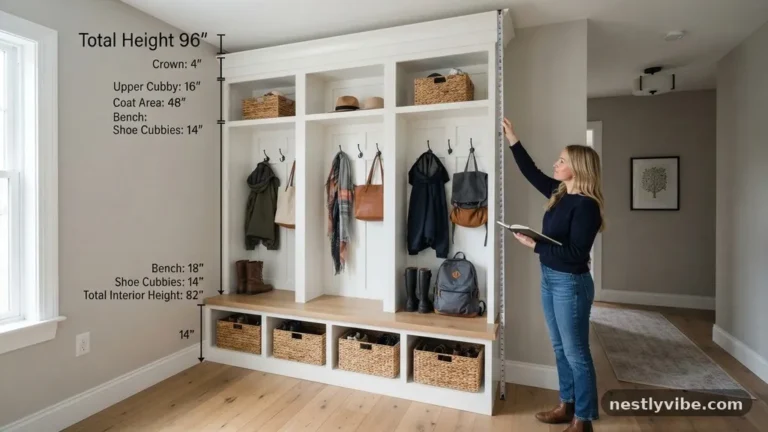

Open Cubbies vs Closed Locker Doors: Which Prevents Clutter in Hallways?
Deciding between open cubbies and closed locker doors for your home entryway depends largely on your household’s tolerance for visual chaos and your specific storage needs. While open systems encourage quick drop-offs, they often leave items exposed, whereas closed units provide a clean aesthetic by masking the mess.
Understanding how these two approaches impact your daily routine is the first step toward reclaiming your hallway from the accumulation of shoes, coats, and bags. This analysis breaks down the functional differences and aesthetic trade-offs of each system to help you determine which configuration best keeps clutter at bay.
The Verdict on Clutter Prevention

If you want to know which system is objectively better at hiding mess, the answer is closed locker doors. A closed door creates a visual boundary that instantly conceals the contents of a shelf or hook, making a hallway look tidy even if the interior is disorganized. Open cubbies, by contrast, require a higher level of discipline to maintain a clean appearance because every item stored inside remains visible to anyone walking past.
If your goal is a minimalist aesthetic that hides the daily accumulation of life, doors are the superior choice. However, if your household struggles with the habit of actually opening a door to put items away, open cubbies might actually reduce clutter on the floor by being more accessible.
Assessing Your Household Habits
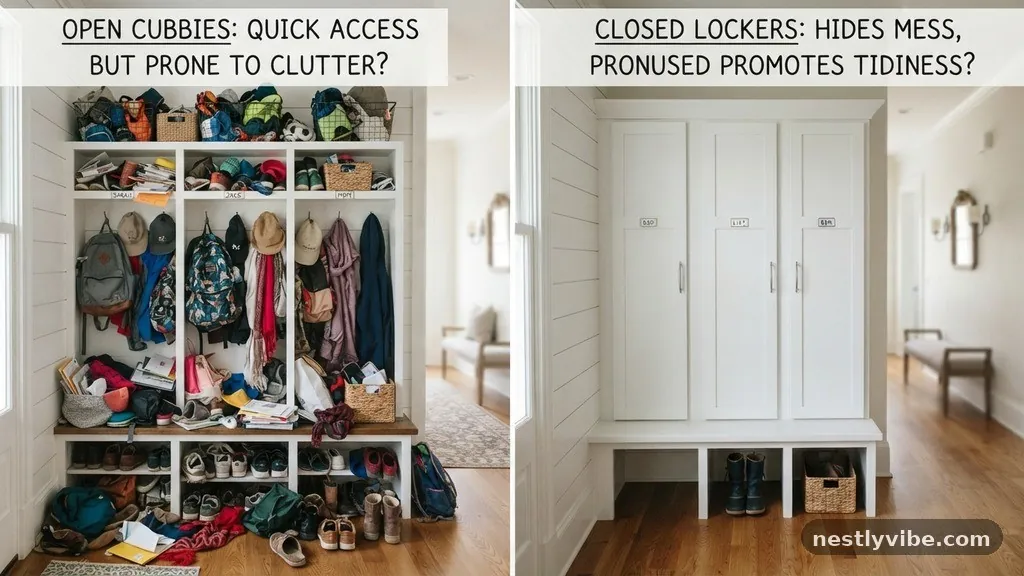
Storage solutions only work if they match the behavioral patterns of the people using them. If your family members are prone to dropping backpacks, jackets, and shoes the moment they cross the threshold, you need a system that minimizes the effort required to stow gear. Open cubbies excel here because they remove the “barrier to entry” that a door creates.
Children, in particular, are significantly more likely to use a storage space if they do not have to manipulate a hinge or latch to put their belongings away. If you find that items end up on the floor despite having a closet, the issue is likely the extra step of opening a door, not the storage capacity itself.
Visual Impact and Aesthetic Flow
The visual impact of your entryway furniture determines how large or cramped a space feels. Closed locker doors act as a solid wall, which can make a small hallway appear more uniform and polished. This is particularly effective in open-plan homes where the entryway is visible from the living room or kitchen.
A row of doors provides a clean, architectural line that blends into the wall, whereas open cubbies often introduce visual noise. If you have a collection of colorful coats and mismatched shoes, open shelves will highlight that variety and potentially make the room feel busier.
Accessibility and Daily Workflow

Ease of use is the primary driver of organizational longevity in a busy home. When you arrive home with groceries, a laptop, and a toddler in tow, the last thing you want to navigate is a heavy door. Open cubbies offer instant access, allowing you to toss items into their designated slots without a second thought.
This efficiency can be the difference between a tidy hallway and a pile of items on the floor. While closed doors are better for long-term storage or items you rarely use, open units support the rapid-fire pace of a morning departure and an evening return.
The Role of Hooks and Pegs
Regardless of whether you choose doors or open units, the internal configuration is what truly dictates how well you manage your space. Hooks and pegs are essential for coats, scarves, and bags, as they utilize vertical space more effectively than shelves. In an open cubby system, these pegs are exposed, which means your coats contribute to the decor of the room.
When hidden behind a door, you have more flexibility to use bulky, mismatched hangers without worrying about the visual impact. Always consider the height of these pegs to ensure that every member of the family can reach them, as accessibility is the ultimate key to preventing floor clutter.
Comparison of Storage Features

To visualize how these two systems stack up, consider the following breakdown of features and their impact on your daily hallway management.
| Feature | Open Cubbies | Closed Locker Doors |
|---|---|---|
| Visual Clutter | High visibility | Concealed |
| Ease of Use | High (no barriers) | Moderate (requires opening) |
| Maintenance | Requires frequent tidying | Low (out of sight) |
| Design Style | Casual, accessible | Formal, minimalist |
Managing Small Entryways
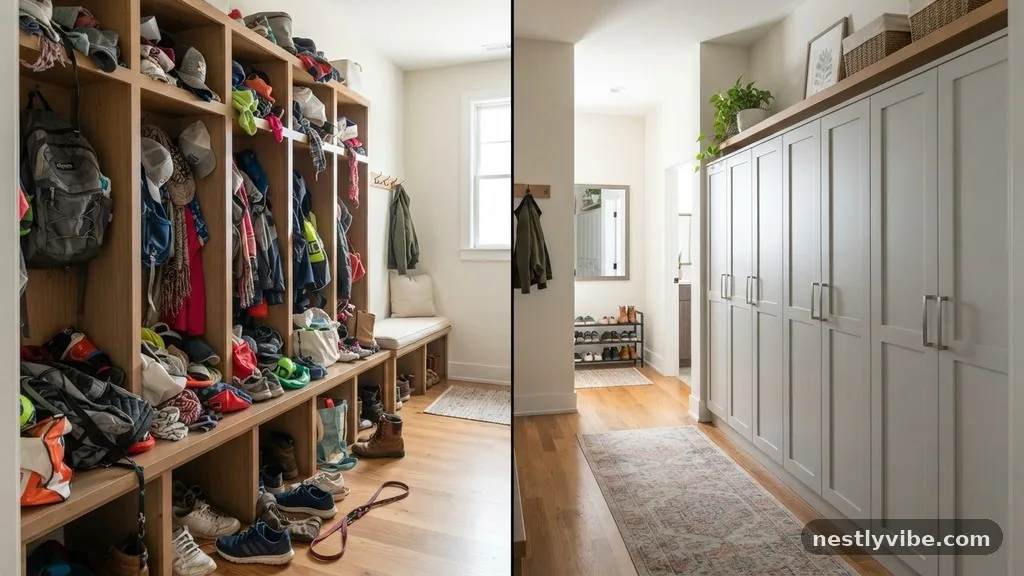
In a small home, every square inch of floor space carries a premium. Closed doors can sometimes feel bulky in narrow corridors, especially if the doors swing outward into the path of travel. If you are dealing with a tight footprint, sliding doors or open cubbies are often more practical than traditional hinges.
Open cubbies allow you to use the full depth of the unit without needing clearance for door swings. Conversely, if the hallway is so small that any clutter feels overwhelming, you might prefer a shallow, closed cabinet that keeps the walkway completely clear of visual distraction.
The Hybrid Storage Approach
You do not necessarily have to choose one extreme over the other. Many modern homes utilize a hybrid design that offers the best of both worlds. For example, you might install a bank of lockers where the top half is closed for seasonal storage, while the bottom half remains open for daily shoe and bag access.
This allows you to hide the items that don’t need to be seen while keeping essential gear within arm’s reach. This tiered approach is often the most successful strategy for families because it recognizes that different items have different storage requirements.
Maintenance and Long-Term Durability
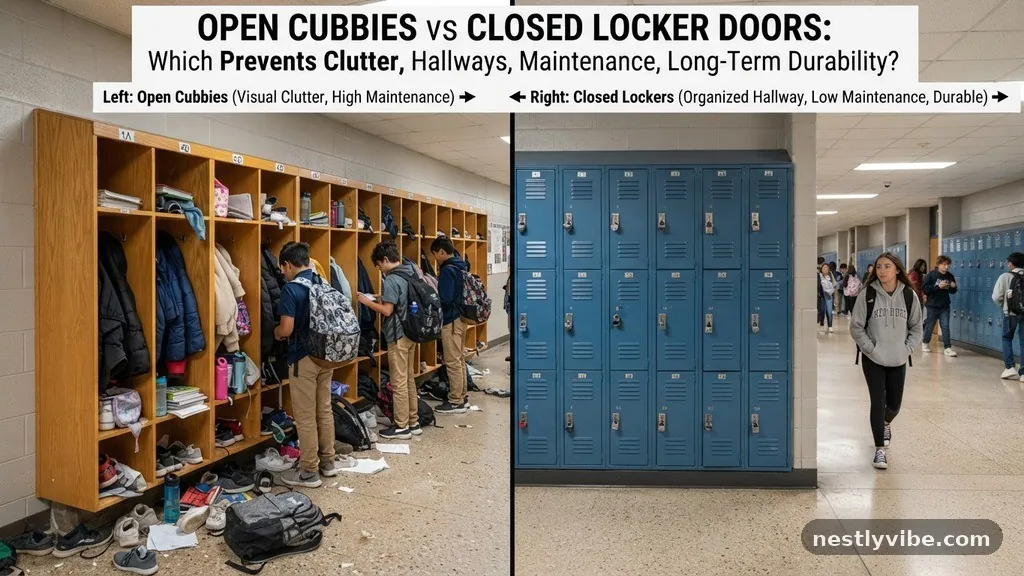
Choosing between open cubbies and closed locker doors also involves considering the long-term upkeep of the materials. Doors involve moving parts like hinges, latches, and magnetic catches, all of which can wear down over years of heavy use. Open cubbies are inherently more durable because they lack these mechanical failure points.
If you have young children or pets, a simple open-faced unit is less likely to suffer from broken hardware. However, open units do tend to collect dust more quickly than closed cabinets, meaning you will need to wipe down those surfaces more often to keep the area looking pristine.
Essential Organizational Accessories
To maximize the efficiency of your chosen system, you should look into specific organizational tools that bridge the gap between open and closed storage. Baskets and bins are the best way to manage open cubbies, as they effectively “close” the space without the need for doors. A basket keeps small items like gloves and hats grouped together, preventing them from scattering across the shelf.
You can find more information on effective home organization strategies through the International Association of Certified Home Inspectors, which provides insights into maintaining home systems and functional spaces. Adding labeled bins to your cubbies creates a sense of order that makes the open design feel intentional rather than chaotic.
Frequently Asked Questions
Are closed locker doors better for hiding clutter in a small entryway?
Yes, closed doors are significantly better at masking visual chaos. In a small space, the ability to hide coats, bags, and shoes behind a flat surface prevents the room from feeling cramped or overwhelmed by the sheer volume of daily items.
Will my children use open cubbies more often than closed lockers?
Most children find open cubbies easier to use because there is no physical barrier between them and the storage space. Reducing the number of steps required to put away a backpack or jacket increases the likelihood that it will actually end up in the cubby rather than on the floor.
How can I make an open cubby system look less messy?
Use matching bins or baskets for each cubby to create a uniform, cohesive look. By containing small, loose items within these containers, you minimize visual noise and make the open storage feel like a deliberate design choice.
Is it expensive to add doors to an existing open cubby unit?
Adding doors to an existing unit can be a significant project, as it requires precise measurements, new hinges, and potentially structural modifications to the frame. It is often more cost-effective to build the doors into the initial design or purchase a unit that already includes them.
What is the best material for high-traffic hallway storage?
For high-traffic areas, durable materials like solid wood, high-quality plywood, or heavy-duty laminate are ideal. These materials handle the weight of heavy coats and bags better than thin particleboard, ensuring your storage system lasts for many years of daily use.
Final Thoughts on Hallway Efficiency
The debate between open cubbies and closed locker doors ultimately comes down to your personal balance between accessibility and visual peace. If you prioritize a tidy, minimalist look, closed units are the better option, provided your family commits to using them. If your primary struggle is getting items off the floor, open cubbies offer the most straightforward and effective solution for daily management.
Many people find success by combining the two, using closed doors for long-term storage and open cubbies for the items they grab every single day. By selecting the configuration that aligns with your specific habits, you can transform your entryway into a functional space that supports your life rather than complicating it. Take the time to observe your family’s flow before committing to a design, and you will likely find a setup that keeps the clutter at bay for years to come.