How to Design a Mudroom Drop Zone on a Tight 5-Foot Wall
Designing a Mudroom Drop Zone on a Tight 5-Foot Wall requires a strategic approach to vertical space and multi-functional furniture. When you have exactly sixty inches of horizontal real estate, every single inch must serve a purpose to keep your entryway organized. This article will show you how to maximize your limited footprint by selecting the right hardware, storage solutions, and layout configurations.
You will learn how to transition from a cluttered floor to a streamlined system that handles shoes, coats, and mail without feeling cramped. By focusing on smart, wall-mounted designs, you can create a functional mudroom drop zone that transforms even the smallest home entry into a highly efficient staging area.
Prioritizing Vertical Storage Solutions
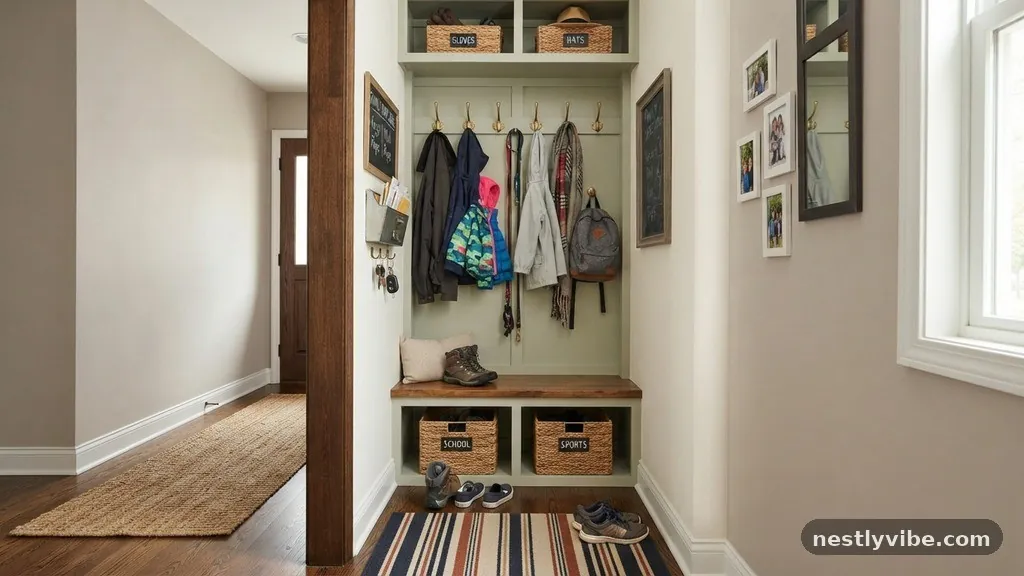
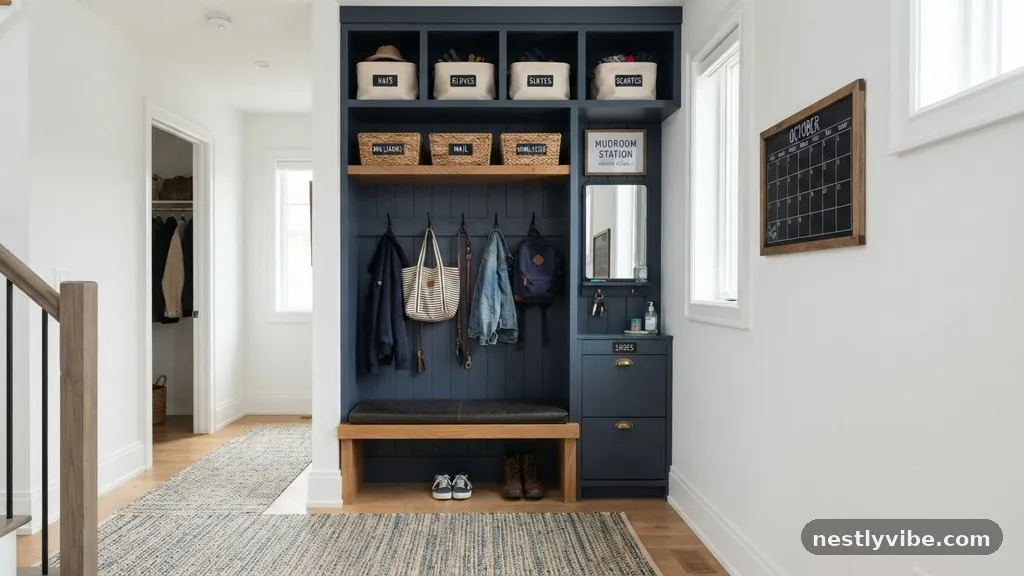
When you only have five feet of wall space, you cannot afford to waste the area above eye level or below the standard coat hook height. The most effective way to handle this is to treat the wall as a three-tiered system: the floor zone, the mid-level reach zone, and the upper storage zone. By stacking these functions vertically, you effectively triple your usable square footage without needing a wider wall.
Start by installing a heavy-duty bench that spans the full 60-inch width or perhaps 48 inches if you want a small buffer for a floor lamp or umbrella stand. This bench acts as the foundation for your drop zone, offering a place to sit while putting on shoes.
More importantly, the space beneath the seat is prime real estate for baskets or open cubbies. Avoid bulky doors or drawers that swing out and block the walkway; open bins are faster for children and guests to use.
Above the bench, the mid-level zone is where you place your hooks. On a 5-foot wall, you can comfortably fit five to seven hooks if you stagger them.
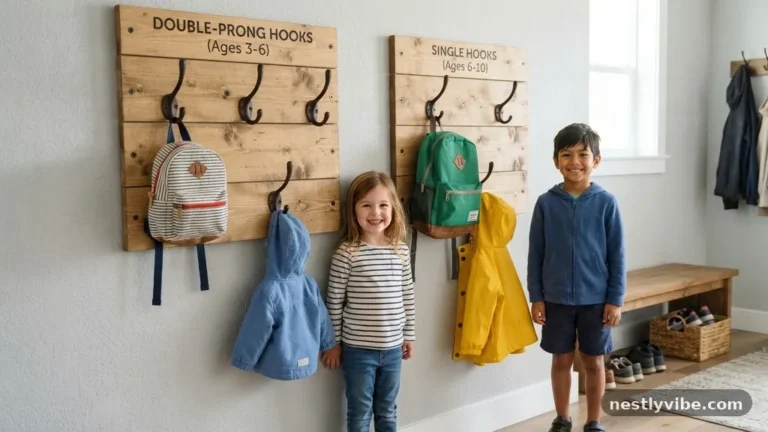
Place these hooks at two different heights: one row at 60 inches for adult coats and a lower row at 40 inches for backpacks and kids’ jackets. This simple staggered pattern prevents the “clump” effect where all your items overlap and become impossible to retrieve.
Finally, the upper zone—anything above 72 inches—should be reserved for long-term storage or seasonal items. A single, deep shelf running the length of the wall can hold baskets for hats, scarves, and gloves. By keeping these items high, you clear the visual clutter from the eye-level area, making the entire entryway feel significantly larger and more open.
Selecting the Right Bench for Small Entryways
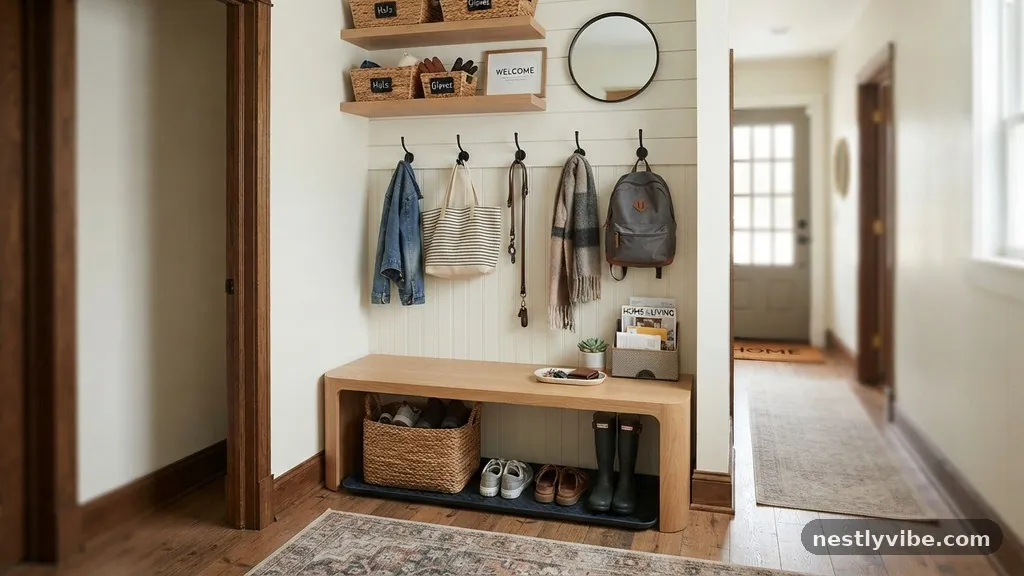
The bench is the anchor of your mudroom project, but it must be chosen with the specific limitations of a 5-foot wall in mind. A standard depth for a mudroom bench is 16 to 18 inches, which leaves enough room for a person to sit without obstructing a narrow hallway. If your entryway is exceptionally tight, consider a bench with a depth of just 12 inches, which is sufficient for most shoe sizes.
Material choice matters as much as dimensions. Solid wood or heavy-duty plywood provides the necessary structural integrity to hold the weight of multiple people sitting at once.
Avoid particle board, which tends to sag over time when used as a seat. You can find more information on standard home construction and ergonomic measurements at the International Association of Certified Home Inspectors to ensure your build meets safety standards.
Consider a wall-mounted floating bench if you want to keep the floor clear for easy vacuuming and cleaning. This creates a clean, modern aesthetic and prevents the “heavy” look that floor-standing units can sometimes create in a small space. If you prefer a floor-based unit, ensure it has recessed legs or a recessed base to provide toe clearance, which makes the bench feel less like a wall and more like a piece of furniture.
If you choose a unit with storage underneath, avoid closed cabinetry. In a tight space, doors are often left open, creating a tripping hazard and visual chaos.
Instead, use canvas bins or wire baskets that slide in and out easily. This keeps the items contained, hidden from plain sight, but allows for quick access when you are rushing out the door.
Maximizing Hook Placement and Capacity
Hooks are the workhorses of any drop zone, but they are frequently misused. On a 5-foot wall, you have 60 inches of horizontal space to manage.
If you space your hooks too closely, coats will overlap and create a messy, bulky pile. The golden rule for hook spacing is to keep them at least 8 to 10 inches apart if you plan to hang heavy winter coats.
For lighter items like hats, umbrellas, or smaller bags, you can squeeze the spacing down to 5 or 6 inches. A great trick is to use a “hook rail” rather than individual screw-in hooks. A rail provides a unified look and, more importantly, allows you to adjust the position of the hooks after installation if you find the spacing is off.
Consider the “depth” of your hooks as well. Heavy-duty double hooks are ideal because they provide two points of contact; you can hang a coat on the top hook and a bag or dog leash on the bottom hook. This effectively doubles your storage capacity without taking up any extra horizontal wall space.
Be mindful of the wall material when installing these. If you are mounting heavy items on a 5-foot section, you must anchor them into the wall studs. Use a stud finder to locate the vertical framing members behind your drywall.
If the studs don’t align with your desired hook placement, install a horizontal backer board—a piece of finished wood—across the wall first. This allows you to mount the hooks anywhere you like while ensuring they are securely fastened.
Integrating Vertical Organization for Daily Essentials
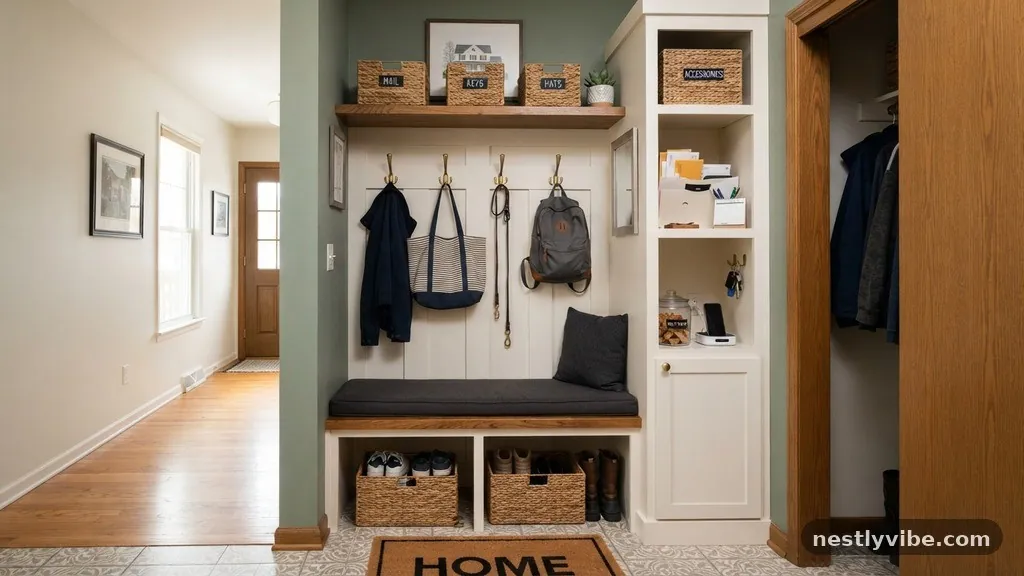
A mudroom is more than just a place to hang coats; it is a transition point for your daily life. On a 5-foot wall, you should dedicate a small section to “active” items like keys, mail, and sunglasses. This prevents these small, easily lost items from ending up on the kitchen counter or dining table.
Install a small, wall-mounted organizer or a magnetic strip above the bench but to the side of the coat hooks. This keeps the mail and keys separate from the heavier clothing items. If you have the budget, a shallow, wall-mounted drop-down desk can serve as a mail sorting station that folds completely flat when not in use.
Don’t overlook the potential of a small mirror. Placing a mirror on one end of your 5-foot wall serves two purposes: it allows for a final appearance check before leaving, and it reflects light to make the small space feel larger. A mirror can be mounted directly onto a cabinet door or simply hung on the wall to add depth.
Think about the “landing strip” concept. This is a designated, small surface area—even just 6 inches wide—where you drop things immediately upon entering.
If you don’t have enough room for a shelf, a wall-mounted pocket organizer can hold a wallet, phone, or keys. Keeping these items in one specific spot is the secret to reducing morning stress.
Comparing Storage Configuration Options
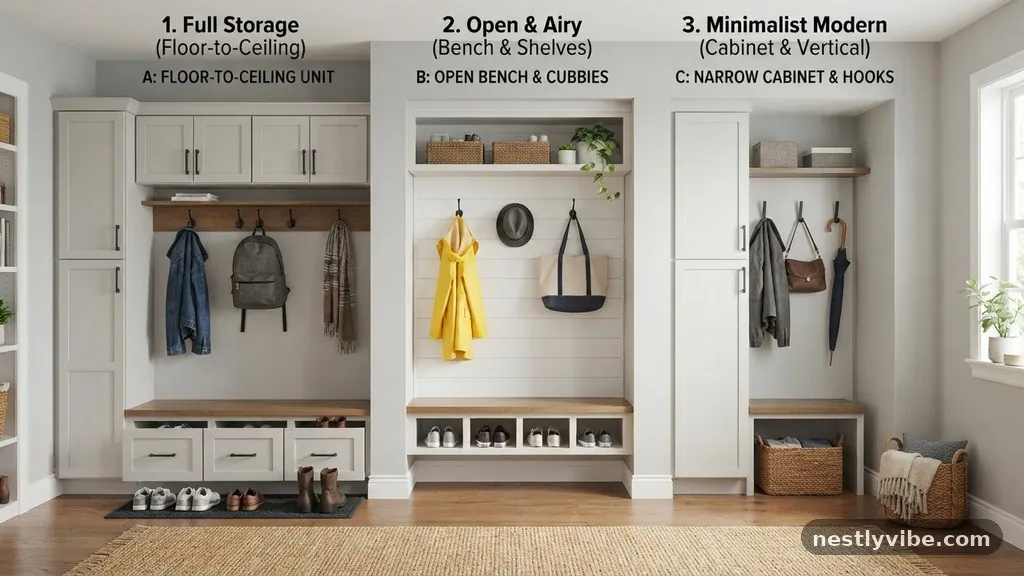
When planning your 5-foot wall, you have several ways to divide the space. The following table outlines how different configurations perform based on utility and space constraints.
| Configuration | Best For | Storage Capacity | Floor Space Used |
|---|---|---|---|
| Floating Bench + Hooks | Minimalist aesthetics | Moderate | Zero |
| Floor-to-Ceiling Cubbies | High-volume family use | Maximum | Full depth |
| Wall-Mounted Rail System | Tightest hallways | Low to moderate | Zero |
| Bench with Under-seat Bins | Shoe organization | High | Moderate |
Each of these designs has trade-offs. The floor-to-ceiling cubby system offers the most storage but can feel imposing in a narrow hallway.
Conversely, a simple rail system is virtually invisible but offers less organization for smaller items like shoes or mail. Choose the one that matches your family’s actual needs rather than just selecting the most popular aesthetic.
Optimizing Shoe Storage in Narrow Areas
Shoes are the primary cause of clutter in any entryway. On a 5-foot wall, you need a solution that prevents shoes from piling up on the floor.
The best solution is a tiered shoe rack that fits under your bench. A rack with two or three shelves can hold between 10 and 15 pairs of shoes, which is plenty for most households.
If you don’t want a bench, consider wall-mounted shoe cabinets that feature a “tilt-out” design. These cabinets are incredibly slim—often only 6 to 9 inches deep—and can be mounted directly to the wall. They hide your shoes completely, which is ideal if you want your entry to look pristine.
Another option is a simple, low-profile tray that sits on the floor. While not as organized as a rack, it contains the mud and water that inevitably come in with your shoes.
Ensure the tray is made of a durable, easy-to-clean material like rubber or heavy-duty plastic. If you have the space, a boot tray is a must-have for winter months.
Labeling is a great way to keep the shoe area organized. If you have children, place a small, removable label on the bin or rack section assigned to them. This simple step encourages them to put their own shoes away rather than just kicking them off in the middle of the doorway.
Incorporating Lighting and Finishing Touches
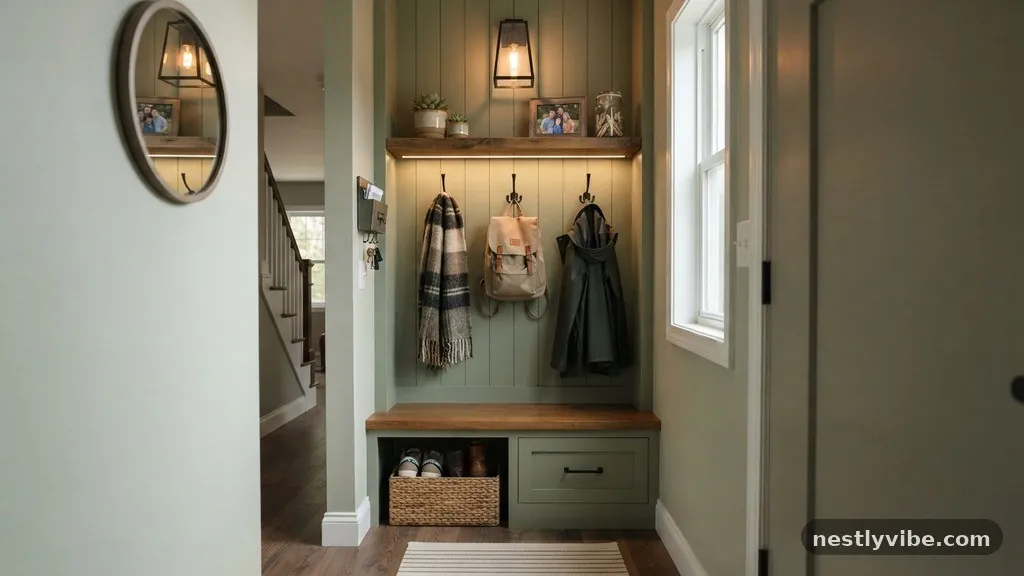
Lighting is often overlooked in small mudrooms, but it is essential for functionality. If your 5-foot wall is in a dim hallway, you won’t be able to find what you need quickly.
Install a motion-sensor LED light strip under your upper shelf or even behind the hooks. This provides a soft, ambient glow that illuminates the drop zone as soon as you enter the room.
Consider the wall finish as well. A mudroom is a high-traffic area, so use a semi-gloss or high-gloss paint that can be wiped down easily.
Better yet, install a beadboard or shiplap paneling on the wall where the hooks are attached. These materials are incredibly durable and add a classic, textured look to the space.
Don’t forget the floor. A high-quality, low-pile rug or a durable runner is essential.
It should be wide enough to cover the walking path but not so thick that it prevents your bench or doors from opening. Choose a pattern or color that hides dirt well, as this will be the first place mud settles after a rainstorm.
Finally, add a few hooks for non-clothing items like a dog leash, a reusable shopping bag, or a flashlight. Having these items right by the door makes them part of your “grab-and-go” routine. When everything has a designated home, the 5-foot wall becomes a powerful tool for maintaining household order.
Common Mistakes to Avoid in Small Entryways
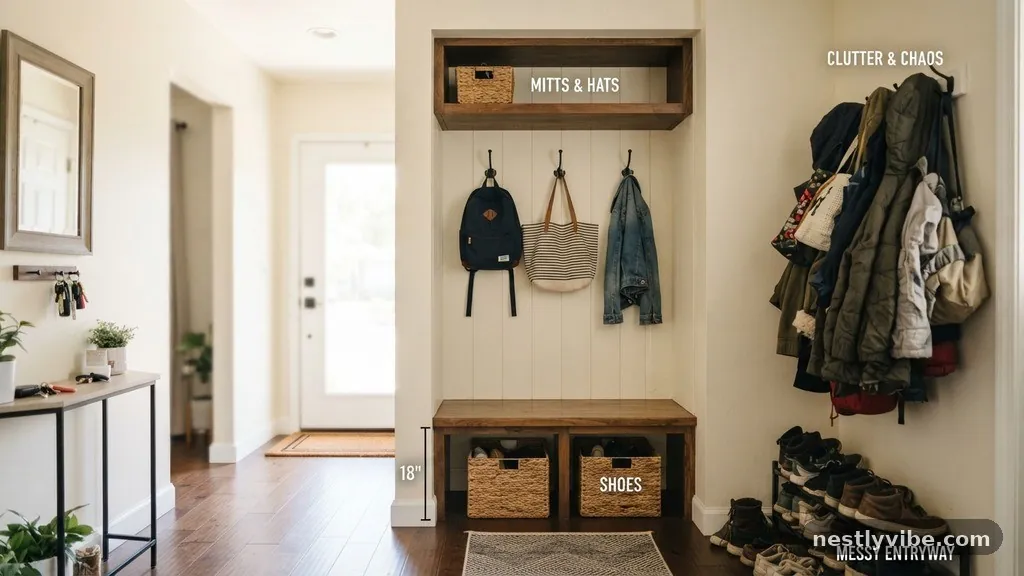
Many people fail when designing a small mudroom because they try to force too many items into the space. A common mistake is using oversized, bulky furniture that makes the entryway feel like a tunnel. Remember that your goal is to create a transition zone, not a storage warehouse.
Another error is failing to account for the “swing” of the front door. Ensure that any hooks, benches, or shelves do not interfere with the door opening fully. If you have a door that swings into the mudroom area, you might need to limit your bench depth or shift your storage to the opposite wall.
Avoid using too many different materials or colors in a small space. Stick to a simple, monochromatic palette to keep the area looking clean and cohesive. A busy, multi-colored wall will only serve to make the space feel more chaotic and smaller than it actually is.
Finally, don’t ignore the importance of maintenance. A drop zone is only as good as the system you maintain.
Spend five minutes at the end of every week clearing out the items that don’t belong there. If you allow the clutter to accumulate, even the best-designed 5-foot wall will quickly lose its utility.
Frequently Asked Questions
How many hooks can I fit on a 5-foot wall?
You can comfortably fit between 5 and 7 hooks on a 60-inch wall if you space them correctly. Aim for at least 8 to 10 inches of separation for heavy coats and 5 to 6 inches for lighter items or accessories. Staggering them at different heights is the best way to increase your capacity without creating a cluttered look.
What is the best depth for a mudroom bench?
A depth of 12 to 16 inches is ideal for a mudroom bench in a tight space. This provides enough room to sit comfortably while putting on shoes without taking up too much floor space in your hallway. If your hallway is exceptionally narrow, even a 10-inch deep bench can provide a useful surface for bags and bins.
Should I use closed cabinets or open storage?
Open storage is generally better for a small, high-traffic mudroom. Closed cabinets require space for the doors to swing open, which can be a tripping hazard in tight entryways. Open cubbies or bins allow for quick, easy access and prevent the “door-clutter” that often happens when people leave cabinet doors hanging open.
How do I keep a small mudroom from looking messy?
The key is to give every item a specific “home” and keep the floor as clear as possible. Use wall-mounted hooks and shelves to get items off the floor. Keep daily essentials like keys and mail in a dedicated tray or pocket organizer, and use bins under your bench to hide shoes and seasonal accessories.
What materials are best for a mudroom wall?
Beadboard, shiplap, or high-gloss paint are excellent choices for a mudroom wall. These materials are durable, easy to clean, and resistant to the wear and tear that comes with hanging coats and bags. Avoid wallpaper or flat-finish paints, which can be difficult to wipe down when they get dirty.
Essential Items for Your Drop Zone
To ensure your setup is truly functional, consider this list of items to include in your design. These components work together to turn a plain wall into a professional-grade drop zone.
- Heavy-duty coat hooks with at least two prongs for maximum storage.
- A sturdy bench with open cubbies or baskets underneath for shoes.
- A high-quality, low-pile runner rug to protect the floor from mud and dirt.
- A wall-mounted mail or key sorter to manage daily paper clutter.
- An upper shelf for seasonal items like hats, scarves, and gloves.
- A small mirror for final appearance checks before exiting.
- Motion-sensor LED lighting to improve visibility in the dark.
Conclusion
Designing a Mudroom Drop Zone on a Tight 5-Foot Wall is about balancing utility with simplicity. By focusing on vertical storage, choosing the right furniture dimensions, and keeping the floor clear, you can create an entry that works for your whole family. You don’t need a massive dedicated room to stay organized; you only need a clear plan for every square inch of your available space.
Start by measuring your wall and selecting the most important components—the bench, the hooks, and the upper storage. Once these are installed, the small additions like mirrors or mail sorters will naturally fall into place.
Take your time with the installation, ensure everything is anchored securely to the studs, and enjoy the peace of mind that comes with a tidy home. Your entryway is the first thing you see when you walk through the door, so make it a space that welcomes you home rather than adding to your daily stress.