
How to Decorate a Living Room with a Cozy Atmosphere
A cozy living room isn’t created by simply adding more pillows and blankets. The spaces that feel genuinely inviting usually have a thoughtful combination of comfortable furniture, warm lighting, layered textures, practical layouts, and personal details.
The goal is to make the room feel comfortable the moment you walk in while still keeping it attractive and organized enough for everyday life.
Whether you’re decorating a large family room, a compact apartment, or an open-concept space, coziness starts with how the room functions. Furniture should encourage conversation rather than simply face a television. Lighting should create several levels of warmth instead of relying entirely on one ceiling fixture. Textures should invite you to touch them, while the color palette should feel calming rather than visually chaotic.
I’ve noticed that the most comfortable living rooms usually aren’t filled with expensive pieces. They feel good because the elements work together.
A soft rug anchors the seating.
Curtains soften the windows.
A warm lamp creates an evening glow.
Wood and woven materials add natural character.
And a few meaningful objects make the room feel like someone’s home rather than a showroom.
The following ideas will help you create that atmosphere step by step. You can use them whether you’re starting with an empty room or simply want to make your existing living room feel warmer and more welcoming.
Table of Contents
1. Comfortable Seating
Build the room around furniture people actually want to use.
2. Warm Layered Lighting
Create a soft atmosphere with multiple light sources.
3. Soft Area Rugs
Add warmth and visual structure beneath the furniture.
4. Layered Textures
Combine fabrics and materials for tactile depth.
5. Warm Neutral Colors
Create a calming foundation with inviting tones.
6. Natural Wood Accents
Bring organic warmth into the living room.
7. Cozy Window Treatments
Soften windows while improving the overall atmosphere.
8. Intimate Furniture Layout
Arrange furniture to encourage connection.
9. Personal Decor
Add meaningful objects that make the room feel lived-in.
10. Evening Ambiance
Finish the room with details that make nighttime relaxing.
1. Comfortable Seating
Quick Benefits
- Makes the room more inviting
- Encourages conversation
- Supports everyday relaxation
- Creates a stronger focal point
- Works for family and guests
Why It Works
Comfortable seating is the foundation of a cozy living room.
No amount of decorative styling can compensate for a sofa that feels uncomfortable or chairs that are awkwardly positioned.
The best seating arrangement gives people a natural place to sit, talk, read, watch television, or simply relax.
Consider how your household actually uses the room rather than arranging furniture solely for appearance.
How To Style It
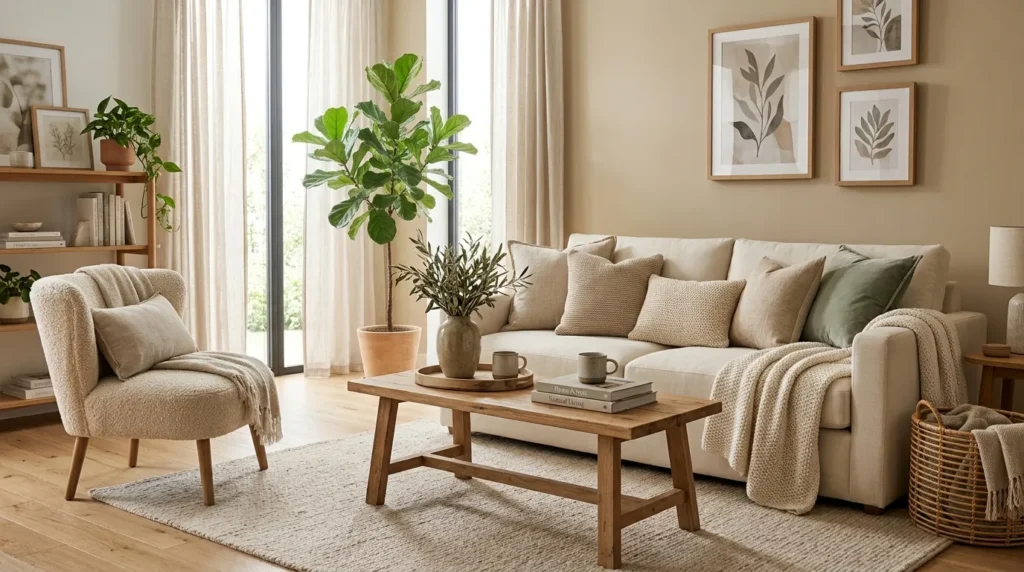
Start with the main sofa.
Choose upholstery that feels comfortable and suits your lifestyle.
Add one or two complementary chairs if the room has enough space.
Layer cushions in different sizes and textures, but avoid filling every inch of the sofa.
A soft throw casually placed over an arm or back can make the seating feel immediately more welcoming.
2. Warm Layered Lighting
Quick Benefits
- Creates evening warmth
- Reduces harsh shadows
- Adds decorative interest
- Defines different zones
- Makes the room feel relaxing
Why It Works
Lighting has a major influence on mood.
A single bright overhead fixture can make a living room feel functional but not particularly cozy.
Multiple light sources allow you to change the atmosphere throughout the day.
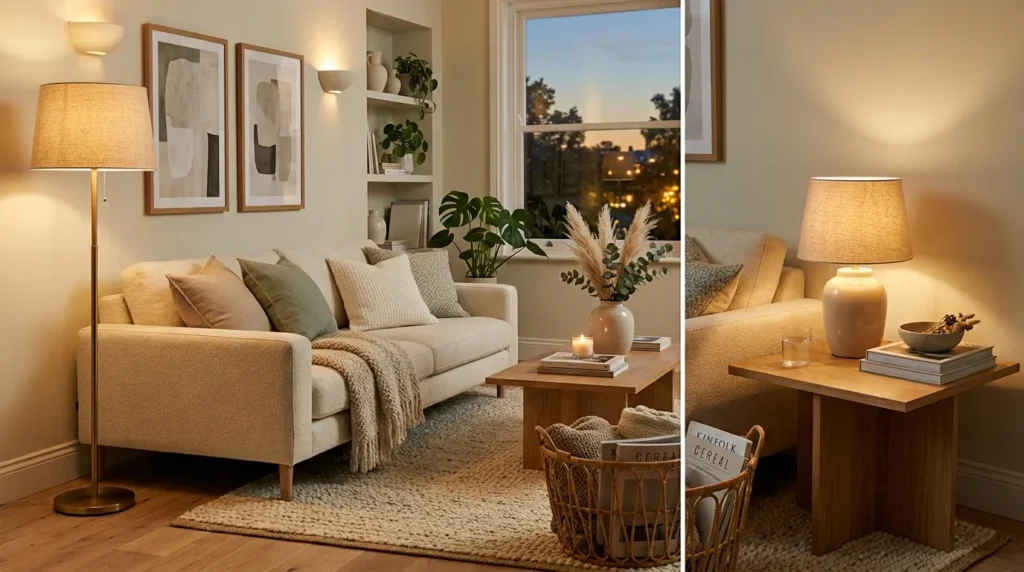
Table lamps, floor lamps, wall lighting, and appropriately positioned accent lighting can create a much softer environment.
How To Style It
Use a combination of ambient, task, and accent lighting.
Place a floor lamp beside a reading chair.
Add a table lamp to a console or side table.
Use decorative lighting near artwork or shelving when appropriate.
Choose warm-toned bulbs that create a comfortable glow while still providing sufficient illumination.
3. Soft Area Rugs
Quick Benefits
- Defines the seating area
- Adds warmth
- Softens hard flooring
- Introduces texture
- Makes furniture feel connected
Why It Works
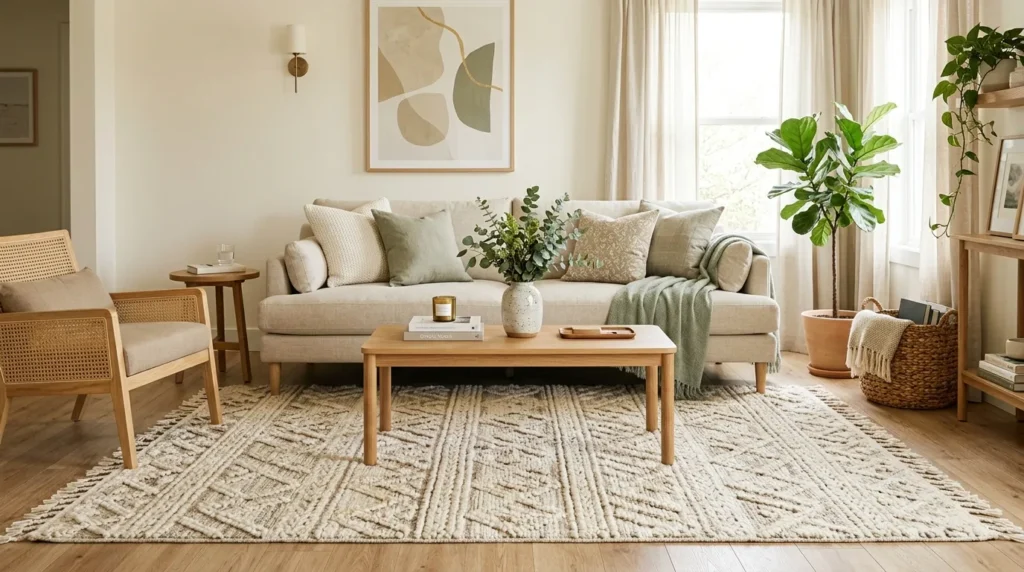
A rug can visually pull an entire seating arrangement together.
Without one, furniture can sometimes appear scattered across a large floor.
Texture also contributes significantly to perceived comfort.
A plush or woven surface gives the room another tactile layer.
How To Style It
Choose a rug large enough to relate to the major seating pieces.
Whenever possible, place at least the front legs of the sofa and chairs on the rug.
Warm neutrals work well for a timeless appearance.
If the room is already neutral, consider a subtle pattern or textured weave for additional depth.
4. Layered Textures
Quick Benefits
- Creates visual depth
- Makes neutrals more interesting
- Adds tactile comfort
- Prevents flat styling
- Works across decorating styles
Why It Works
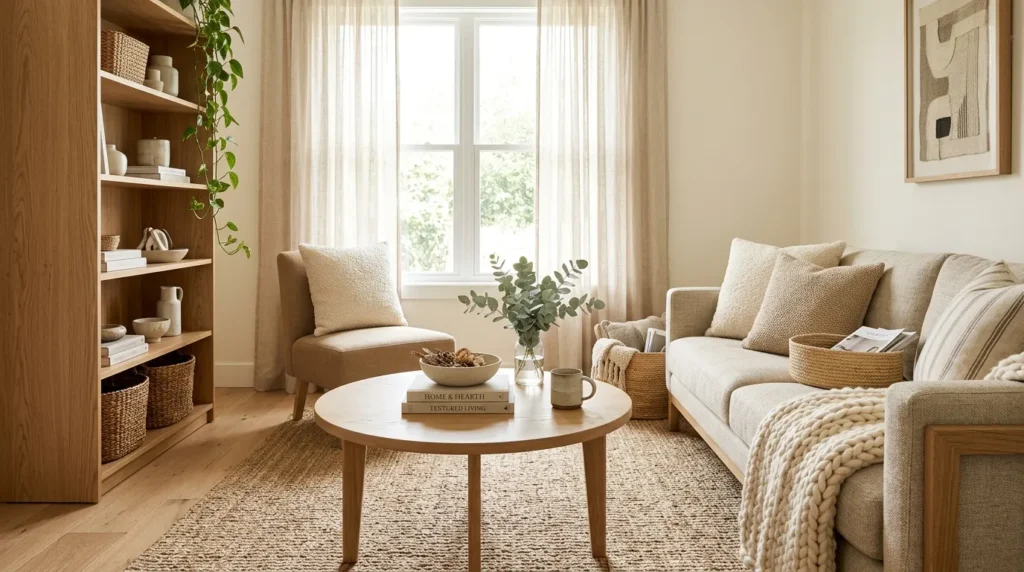
A room can have a beautiful color palette and still feel cold if everything has the same texture.
Layering creates variation.
Think about combining smooth wood, soft linen, woven baskets, plush upholstery, ceramic surfaces, and textured rugs.
The contrast makes the room feel richer without requiring more color.
How To Style It
Start with the largest textures.
Use an area rug and upholstered sofa as the foundation.
Then introduce smaller layers through cushions, throws, baskets, curtains, and decorative objects.
Don’t make every piece heavily textured.
A few smooth surfaces create useful contrast.
5. Warm Neutral Colors
Quick Benefits
- Creates a calming backdrop
- Works with many furniture styles
- Makes rooms feel welcoming
- Provides decorating flexibility
- Ages well
Why It Works
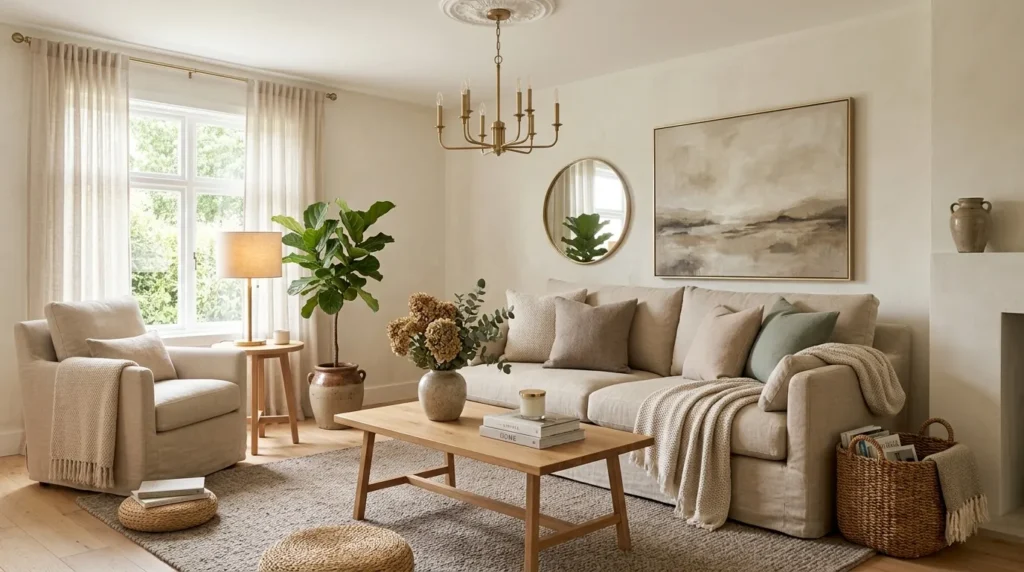
Warm neutrals create an easy foundation for cozy interiors.
Cream, oatmeal, taupe, warm beige, soft brown, and muted greige can create depth without making the room visually busy.
They also work beautifully with natural materials.
How To Style It
Choose one dominant neutral for the walls or largest furniture.
Add one or two supporting shades through textiles and accessories.
Use natural wood to introduce another warm layer.
If you want color, add it through muted green, dusty blue, terracotta, or warm rust rather than highly saturated accents.
6. Natural Wood Accents
Quick Benefits
- Adds organic warmth
- Balances upholstery
- Creates visual contrast
- Works with neutral rooms
- Feels timeless
Why It Works
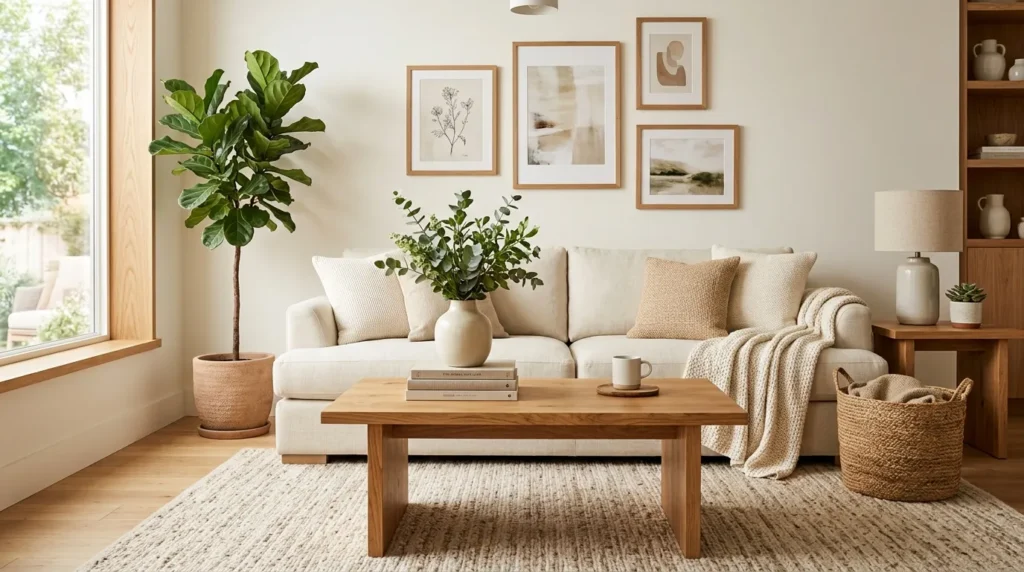
Wood brings natural variation into a living room.
Grain patterns and warm undertones make the space feel less manufactured.
Even a small wooden side table or picture frame can introduce that organic quality.
How To Style It
Use wood through coffee tables, side tables, shelving, frames, or decorative bowls.
Try to repeat a similar wood tone two or three times.
For example, pair an oak coffee table with an oak frame and small wooden tray.
Avoid matching every piece exactly.
Slight variations can make the room feel more collected.
7. Cozy Window Treatments
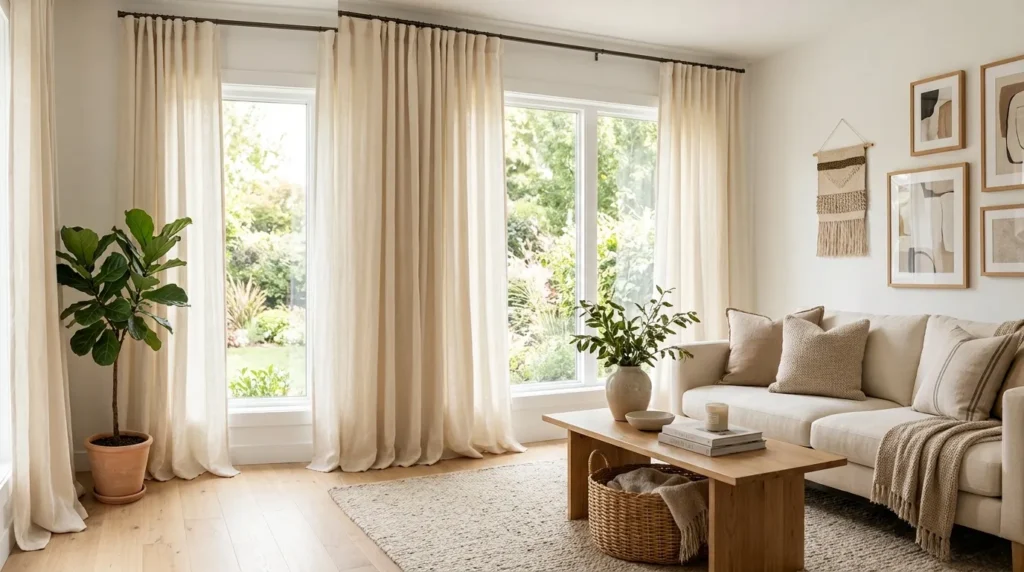
Quick Benefits
- Softens the room
- Adds privacy
- Frames natural light
- Improves visual warmth
- Creates a finished appearance
Why It Works
Bare windows can sometimes make a living room feel unfinished.
Curtains add softness and vertical texture.
They can also influence how natural light enters the room.
How To Style It
Choose linen, cotton, or suitable fabric curtains in warm neutral tones.
Hang curtains high and wide where appropriate to create a taller, more spacious appearance.
Avoid overly heavy fabrics if you want the room to remain bright.
Layer curtains with shades or blinds when additional privacy or light control is needed.
8. Intimate Furniture Layout
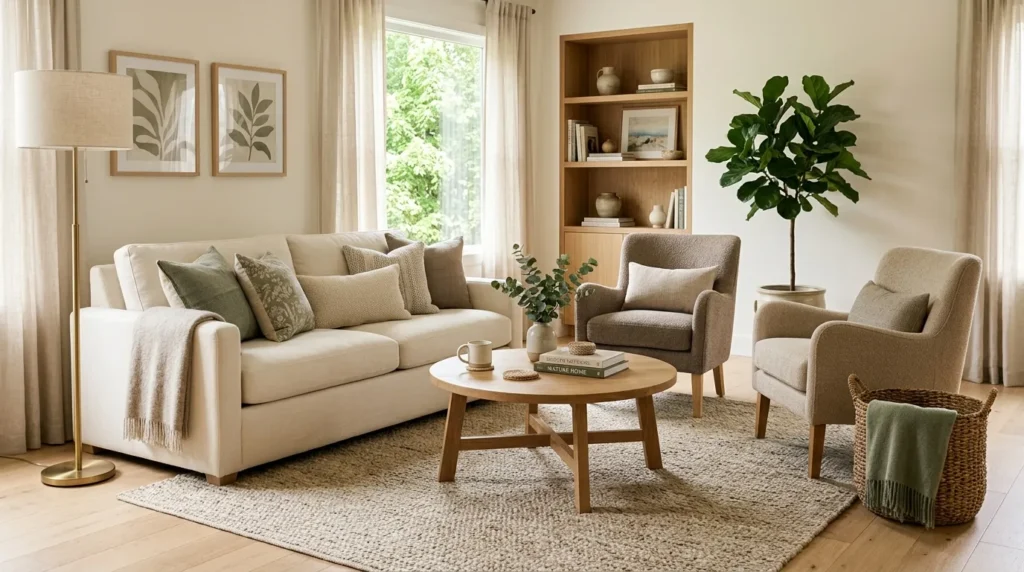
Quick Benefits
- Encourages conversation
- Improves functionality
- Creates a welcoming atmosphere
- Defines the room
- Makes large spaces feel comfortable
Why It Works
Furniture placement determines how people interact with the room.
A sofa pushed against one wall with every chair facing the television can make conversation feel secondary.
A more intentional arrangement creates a sense of connection.
How To Style It
Create a central seating zone.
Position chairs so they relate to the sofa.
Use a coffee table to visually connect the seating.
Maintain comfortable walking paths around the arrangement.
If the room is large, create separate zones rather than leaving furniture scattered around the perimeter.
9. Personal Decor
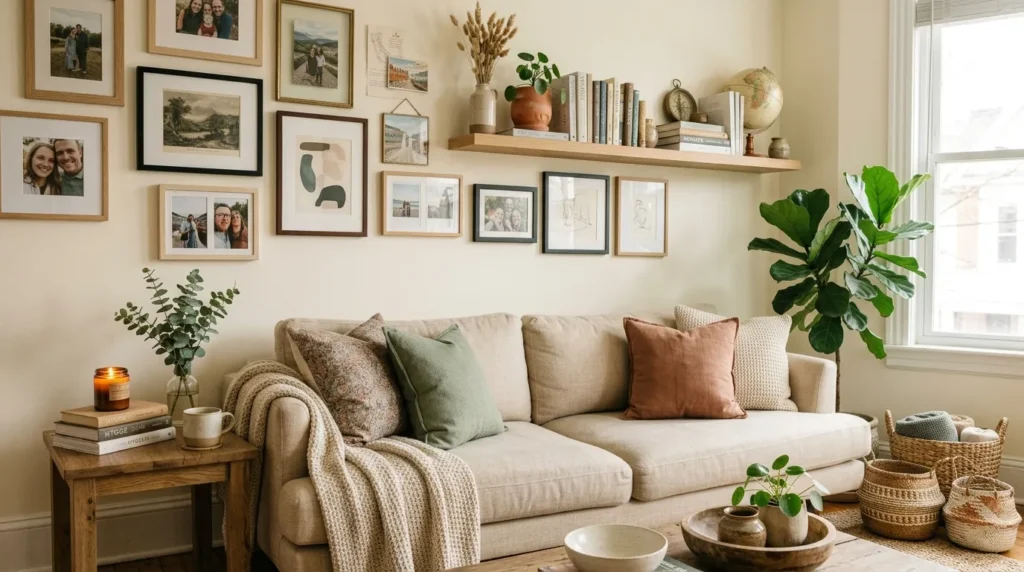
Quick Benefits
- Makes the room feel unique
- Adds emotional character
- Creates conversation points
- Prevents showroom styling
- Reflects your personality
Why It Works
A cozy room should feel lived in.
Personal photographs, collected books, artwork, travel finds, handmade objects, and meaningful accessories can add the character that mass-produced decor cannot provide.
How To Style It
Choose a small collection of objects you genuinely enjoy.
Display books on a coffee table or shelf.
Use framed photographs or artwork in places that feel natural.
Mix personal pieces with neutral decorative objects.
Avoid displaying everything at once.
Rotating accessories seasonally can keep the room interesting without adding permanent clutter.
10. Evening Ambiance
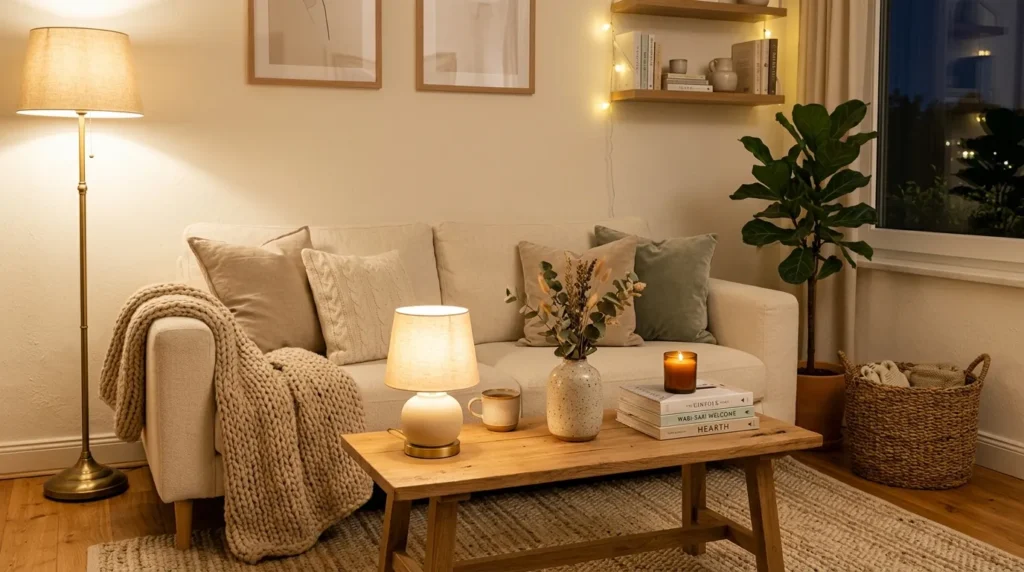
Quick Benefits
- Makes nighttime relaxing
- Creates warmth
- Highlights textures
- Encourages slower moments
- Finishes the cozy atmosphere
Why It Works
A living room can look beautiful during daylight but feel completely different at night.
Evening ambiance comes from the combination of lighting, textiles, scent, sound, and visual warmth.
The goal isn’t to make the room dark.
It’s to create softer layers of illumination.
How To Style It
Turn on table and floor lamps rather than relying exclusively on overhead lighting.
Add a soft throw to the sofa.
Use a candle or another appropriate ambient element if safe for your household.
Keep a small tray nearby for drinks, books, or remotes.
The result should feel effortless rather than heavily decorated.
How To Make A Living Room Cozy Without Buying New Furniture
You can often create a noticeable difference using what you already own.
Start by rearranging the furniture.
Pull seating into a more connected conversation area.
Move a rug underneath the furniture if possible.
Add your softest throws and cushions.
Group books and decorative objects instead of spreading them across every surface.
Replace harsh overhead lighting with lamps when possible.
Move a few plants into the room.
Then remove anything that doesn’t contribute to comfort or function.
Sometimes editing the room creates more coziness than adding another accessory.
Best Cozy Living Room Colors
Consider:
- Warm white
- Cream
- Oatmeal
- Beige
- Taupe
- Greige
- Caramel
- Soft brown
- Muted sage
- Dusty blue
- Terracotta
A neutral foundation gives you plenty of flexibility.
If you love color, introduce it through smaller elements so the room remains visually calm.
How To Make A Large Living Room Feel Cozy
Large rooms can feel impersonal when furniture is spread too far apart.
Create smaller zones.
A main seating area can occupy the center.
A reading chair can create a secondary corner.
A small console or cabinet can define another area.
Use rugs and lighting to visually separate zones.
The goal is to make the room feel intentionally divided without physically closing it off.
How To Make A Small Living Room Cozy
Small rooms benefit from editing.
Choose furniture with appropriate proportions.
Use a rug to define the seating area.
Select lighter colors if you want an airy appearance.
Use mirrors strategically when appropriate.
Keep pathways clear.
Choose furniture with hidden storage where useful.
Don’t assume that filling every empty corner will make the room feel complete.
In a small living room, breathing space is part of the design.
Common Cozy Living Room Mistakes
Too Many Throw Pillows
Comfort is important, but seating still needs to be usable.
One Harsh Light Source
Layer lighting instead.
Furniture Pushed Against Every Wall
Create a connected seating zone.
Too Many Decorative Objects
Edit your surfaces regularly.
Matching Everything
Mix materials and subtle variations.
Ignoring Function
A beautiful living room should still work for everyday life.
FAQ
How do I make my living room feel cozy?
Start with comfortable seating, a properly sized rug, warm layered lighting, soft textiles, and a warm neutral color palette. Natural wood and personal accessories can add additional warmth and character without making the room feel cluttered.
What colors make a living room feel cozy?
Warm white, cream, beige, oatmeal, taupe, caramel, soft brown, muted sage, dusty blue, and terracotta can all create a cozy atmosphere. The best choice depends on the room’s natural light and existing furniture.
How can I make a living room cozy without buying anything?
Rearrange the furniture into a more intimate layout, bring out blankets and cushions you already own, adjust your lighting, remove unnecessary clutter, and group personal objects together. Small layout changes can make a surprisingly large difference.
What type of lighting is best for a cozy living room?
Layered lighting generally works best. Combine floor lamps, table lamps, wall fixtures, and suitable overhead lighting. Warm-toned illumination can create a more relaxing evening atmosphere.
Does a rug make a living room feel cozier?
Yes. A properly sized rug can visually connect furniture while adding softness and texture underfoot. Choose a size that accommodates at least the front legs of major seating pieces whenever possible.
How do I make a large living room feel less empty?
Create distinct functional zones using furniture, rugs, lighting, and accessories. A central conversation area, reading corner, or small workspace can give the room structure while keeping it open.
How can I make a small living room feel cozy without clutter?
Choose appropriately scaled furniture, maintain clear pathways, use one well-sized rug, layer textures selectively, and rely on vertical storage when needed. A small room often feels cozier when it has fewer but more useful pieces.
Conclusion
Creating a cozy living room is less about buying more decor and more about making thoughtful choices.
Start with comfort.
Choose seating that encourages you to sit down and stay awhile.
Then add a rug to anchor the furniture, warm lighting to change the evening mood, and layers of texture to make the room feel inviting.
Natural wood, warm neutral colors, soft curtains, woven materials, and personal objects can build on that foundation.
Most importantly, arrange the room around real life.
Leave enough space to walk comfortably.
Give people a place to talk.
Keep everyday objects within reach.
Let the room have some breathing space.
You don’t need a perfectly styled designer living room to create an atmosphere that feels special.
Sometimes the coziest spaces are the ones that look slightly collected and naturally lived in.
Start with one change today—move the furniture, add a softer lamp, layer a rug, or bring out a favorite throw.
Then build gradually.
The result should be a living room that isn’t just beautiful in photographs but genuinely enjoyable to live in every day.
Related Articles
- 10 Modern Living Room Ideas with Cozy Neutral Furniture
- 10 Small Living Room Ideas That Feel Warm All Year
- 10 Small Living Room Ideas That Work in Every Apartment
- 10 Modern Living Room Ideas with Designer Finishes
- 10 DIY Coffee Tables That Upgrade Your Living Room